Major Key Cheat Sheets
♫ Need a refresher? Read more on key signatures here.
Click on a major key below to get everything you need to know at a glance—including major scales, key signatures, intervals, diatonic chords, diatonic seventh chords, inversions, and more.
Click on a major key below to get started!
C Major Scale
C D E F G A B C
Scale Pattern: T - T - S - T - T - T - S
-
All major scales consist of eight notes that follow a specific pattern of tones (T) and semitones (S). A tone (also known as a whole step) corresponds to a two-fret distance on a guitar or a two-key distance on a piano, while a semitone (also known as a half step) corresponds to a one-fret distance on a guitar or a one-key distance on a piano. The formula is as follows:
T - T - S - T - T - T - S
Using the C major scale as an example, we apply the tone (T) or semitone (S) pattern starting from the note C:
C - D - E - F - G - A - B - C
^ ^ ^ ^ ^ ^ ^
T T S T T T SBy following this pattern, you can construct major scales in any key using tones (T) and semitones (S).
C Major Diatonic Chords
“Diatonic” means “Within the key.” Below are the chords that naturally belong to the key of C major, without any chromatic alteration.
Common major chord symbols: M, maj, +, △ Common minor chord symbols: m, min, -
Chord Type
Nash. #
Rom. #
Chord
Notes
Chord Type
Nash. #
Rom. #
Chord
Notes
Major
1
I
C
C E G
minor
2m
ii
Dm
D F A
minor
3m
iii
Em
E G B
Major
4
IV
F
F A C
Major
5
V
G
G B D
minor
6m
vi
Am
A C E
diminished
7°
vii°
Bdim
B D F
C Major Diatonic 7th Chords
These are the same as above, but in the form of 7th chords.
Common major chord symbols: M7, maj7, +7, △7 Common minor chord symbols: m7, min7, -7
Major 7
1
Imaj7
CMaj7
C E G B
minor 7
2m7
ii7
Dm7
D F A C
minor 7
3m7
iii7
Em7
E G B D
Major 7
4
IVmaj7
Fmaj7
F A C E
Dominant 7*
5
V7
G7
G B D F
minor 7
6m
vi7
Am7
A C E G
half dim 7*
7ø
viiø7
Bø7
B D F A
C Major Intervals
“Interval” refers to the distance between two notes. Below are the scale degrees and intervals in the key of C Major.
Major 2nd
C → D
Major 3rd
C → E
Perfect 4th
C → F
Perfect 5th
C → G
Major 6th
C → A
Major 7th
C → B
Octave
C → C
Unison
C → C
C Major Chord Inversions
“Inversion” describes the relationship of a triad’s lowest note to the other notes in the chord.
Choosing the right inversion will help to smooth out motion from chord to chord.
Root
C E G
1st Inversion
E G C
2nd Inversion
G C E
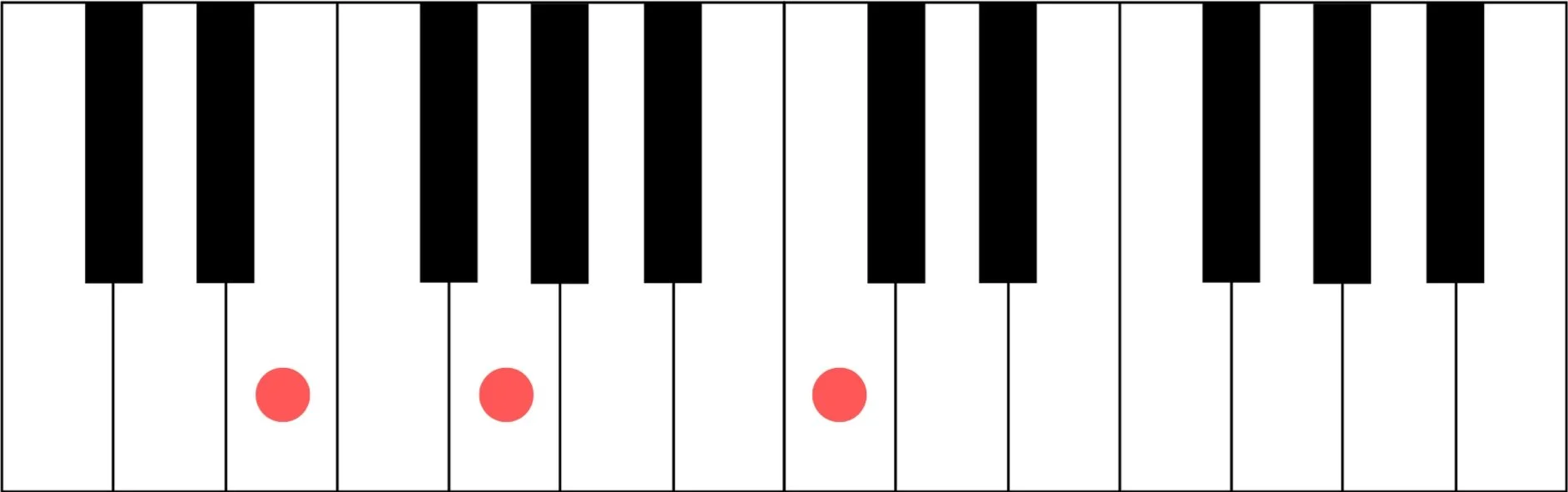
C Major 7th Chord Inversions
“Inversion” describes the relationship of a chord’s lowest notes to the other notes in the chord.
It is common for the left hand to play octaves or fifths, while the right hand plays the chord in part or in full.
Root
C E G B
1st Inversion
E G B C
2nd Inversion
G B C E
3rd Inversion
B C E G



-
Inversions allow for smoother voice leading and create more fluid chord progressions. When moving from one chord to another, inversions help minimize large jumps or leaps between chord tones. This makes it easier to play chords and contributes to a more seamless and connected sound, enhancing the overall musical flow.
-
The highest note of a chord is naturally more noticeable to the human ear, making it useful when selecting chord inversions for song beginnings or endings.
The root position chord provides a stable and solid sound, serving as a strong foundation for harmony. However, since the top note is the 5th of the scale, it may leave listeners with a sense of incompleteness or anticipation of further musical development.
The 1st inversion chord, with the top note being the tonic note of the key, is the most suitable inversion for concluding a song, establishing a new key center, or signaling the end of a piece.
The second inversion chord has a brighter and expansive sound, emphasizing the third note of the home key. It is a pleasant choice for both song beginnings and endings due to its emphasis on the chord's major tonality.


-
When playing a C major scale with your right hand on the piano, you can use the following finger pattern:
C - D - E - F - G - A - B - C
1 2 3 1 2 3 4 5When playing a C major scale with your left hand on the piano, you can use the following finger pattern:
C - D - E - F - G - A - B - C
5 4 3 2 1 3 2 1


-
When playing 7th chords on the piano, it is important to understand that not all notes of the chord need to be played with one hand. You can disperse the notes between both the left hand and the right hand. Here is our recommended structure:
Left Hand - 1, 5, (optional 8)
Right Hand - 3, 5, 7, (optional 2 for flavor)
Note: This is just a recommendation. The notes do not have to be played specifically as shown. You can choose your own voicing.
-
Use the following mnemonic to help you remember:
Order of Sharps - Father Charles Goes Down And Ends Battle
Order of Flats - Battle Ends And Down Goes Charles’ Father
Note: In both cases, the first letter of each word in the phrase corresponds to the order of sharps or flats.
-
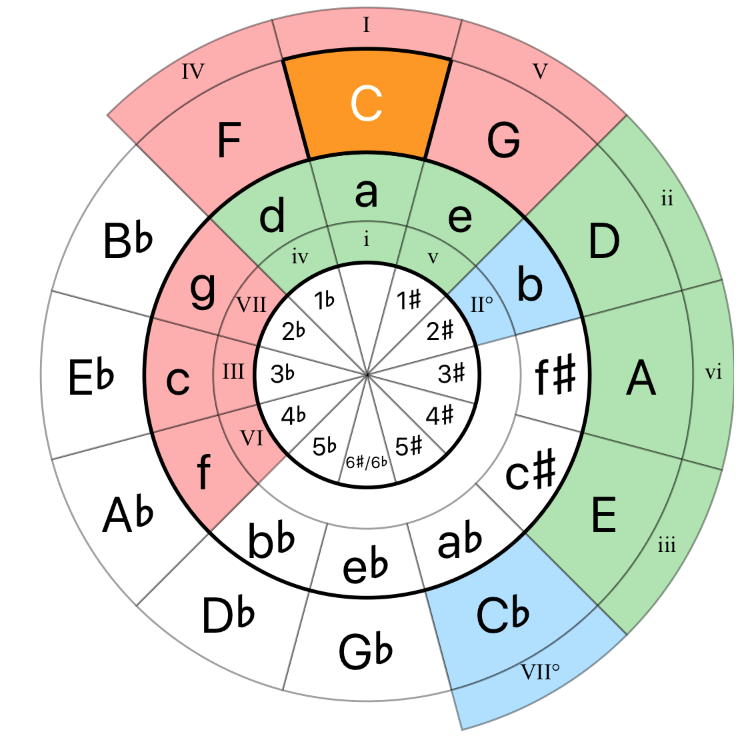
The circle of fifths can help you determine key signatures by providing a visual representation of the relationships between different keys. Here's how you can use the circle of fifths to determine key signatures:
Start at the top: The top of the circle represents the key of C major or A minor, which has no sharps or flats in its key signature.
Moving clockwise: Moving clockwise around the circle, each key is a fifth higher than the previous one. As you move around the circle, each clockwise movement adds one sharp to the key signature. For example, the first key after C major is G major, which has one sharp (F#). The next key, D major, has two sharps (F# and C#), and so on. To know which notes are sharp, use the following mnemonic: Father Charles Goes Down And Ends Battle.
Moving counter-clockwise: If you move counterclockwise from C major, each key is a fourth lower than the previous one. As you move around the circle, each movement adds one flat to the key signature. For example, the first key after C major is F major, which has 1 flat (Bb). Followed by Bb major (Bb, Eb), and then Eb major (Bb, Eb, Ab), and so on. To know which notes are flat, use the previous mnemonic but in reverse: Battle Ends And Down Goes Charles’ Father.
Note: Major keys and their relative minor keys share the same key signature. For example, C major and A minor have no sharps or flats, while G major and E minor have one sharp (F#), and so on.
C Key Signature:
0 Sharps or Flats
Order of Sharps: F C G D A E B
Order of Flats: B E A D G C F
-
To remember which diatonic chords are major and minor within a key, you can use the following pattern:
Major - minor - minor - Major - Major - minor - diminished
M m m M M m d
1 2 3 4 5 6 7This pattern is consistent in all key signatures. In other words, the 1 chord is always major, the 2 chord is always minor, the 3 chord is always minor, and so on.
-
The Nashville Number System is a method of music notation that uses numbers to represent the chords and their relationships within a key. It is commonly used in the music industry–particularly in Nashville, Tennessee, hence its name–and is very common within worship teams. The reason why it is used is because it is the most flexible and efficient way to communicate chord progressions and harmonic structures in various keys without relying on specific chord names.
In the Nashville Number System, the numbers correspond to chords built on specific scale degrees of the major scale. Here’s how the system works for diatonic chords:
Chords 1, 4, 5 are always major chords.
Chords 2, 3, 6 are always minor chords.
The 7 chord is always diminished.
-
The Roman numeral system in diatonic chords is a way to represent chords based on their position within a major or minor key. It provides a standardized method to notate chords regardless of the key in which they are used. Here's how the Roman numeral system works for diatonic chords:
Uppercase Roman numerals (I, IV, V) represent major chords.
Lowercase Roman numerals (ii, iii, vi) represent minor chords.
A lowercase Roman numeral with a degree symbol (vii°) represents a diminished chord.
-
Learning the intervals in a major scale is important because it helps you:
Enhance familiarity with specific key signatures.
Build chords by understanding the intervallic relationships.
Transpose music to different keys accurately.
Improvise melodies more fluently by navigating intervals.
Understand music theory concepts like scales, modes, and chord progressions.
-
The perfect intervals consist of the unison (P1), fourth (P4), fifth (P5), and octave (P8). They are highly stable, possessing a strong, pure, and distinct sound. These intervals are often associated with resolution and stability, contributing to consonance and harmony in harmonic contexts.
On the other hand, the major intervals comprise the major 2nd (M2), major 3rd (M3), major 6th (M6), and major 7th (M7). They are not referred to as “perfect” because they are the only intervals that can be lowered to create "minor" intervals. For instance, a major third can be lowered to become a minor 3rd. In contrast, if you were to lower perfect intervals, they would become major intervals. For example, if you lower a perfect 4th, it becomes a major third. The exception to this rule is the perfect 5th, which becomes a diminished 5th when lowered, not a minor 5th.
-
Practice singing or playing the intervals of a major scale without relying on a reference pitch. For example, play the first note of the scale, and then sing or play the second note using the correct interval (e.g., a major second). Continue this exercise for each subsequent note in the scale. Here are some reference points from familiar melodies to help you:
Major 2nd: Happy Birthday
Major 3rd: When the Saints Go Marching In
Perfect 4th: Amazing Grace
Perfect 5th: Star Wars (Main Theme)
Major 6th: My Bonnie Lies Over the Ocean
Major 7th: Take On Me
Perfect 8th: Somewhere Over the Rainbow


-
To remember which diatonic 7th chords are major and minor within a key, you can use the following pattern:
Major 7 - minor 7 - minor 7 - Major 7 - Dominant 7 - minor 7 - half diminished
M7 m7 m7 M7 7 m7 ø7Note: This pattern is consistent in all key signatures, no matter which key you choose to play in.
-
The term "dominant" signifies that the chord is built on the fifth degree of the major scale, while the "7" indicates a lowered seventh interval from the root note of the chord, not the 7th interval of the home key.
The dominant 7 chord has a specific interval structure, consisting of a major third, perfect fifth, and lowered seventh (minor seventh). This combination creates a distinct sound, generating a strong sense of tension that seeks resolution to the 1 chord.
The reason for lowering the 7th of the chord is to ensure all notes adhere to the key signature of the home key. In the key of C major, for instance, the dominant chord is the fifth note (G), which forms a G major chord (G-B-D). Adding a seventh transforms it into a dominant 7th chord (G-B-D-F). The lowered seventh occurs because the key signature of the G chord includes an F#, whereas the home key's key signature requires it to be lowered to an F natural (a regular F) due to C having no sharps or flats.
-
Half Diminished 7th Chord (ø7):
Interval Structure: A half diminished 7th chord consists of a root, a minor third, a diminished fifth, and a minor seventh.
Symbol: The symbol used to denote a half diminished 7th chord is "ø7" or "-7(b5)".
Example: In the key of C major, the half diminished 7th chord built on the seventh degree (Bø7) would contain the notes B-D-F-A.
Diminished 7th Chord (°7):
Interval Structure: A diminished 7th chord consists of a root, a minor third, a diminished fifth, and a diminished seventh. It is essentially a stack of minor thirds.
Symbol: The symbol used to denote a diminished 7th chord is "dim7" or °7.
Example: In the key of C major, the diminished 7th chord built on the seventh degree (Bdim7) would contain the notes B-D-F-Ab.
Note: The diminished 7th chord is known for its symmetrical structure, as each interval between its notes is a minor third. It creates a highly dissonant and unresolved sound and can be used as a passing chord or for chromatic movement in chord progressions.
Bb Major Scale
Bb C D Eb F G A Bb
Scale Pattern: T - T - S - T - T - T - S
-
All major scales consist of eight notes that follow a specific pattern of tones (T) and semitones (S). A tone (also known as a whole step) corresponds to a two-fret distance on a guitar or a two-key distance on a piano, while a semitone (also known as a half step) corresponds to a one-fret distance on a guitar or a one-key distance on a piano. The formula is as follows:
T - T - S - T - T - T - S
Using the Bb major scale as an example, we apply the tone (T) or semitone (S) pattern starting from the note Bb:
Bb - C - D - Eb - F - G - A - Bb
^ ^ ^ ^ ^ ^ ^
T T S T T T SBy following this pattern, you can construct major scales in any key using tones (T) and semitones (S).
Bb Major Diatonic Chords
“Diatonic” means “Within the key.” Below are the chords that naturally belong to the key of Bb major, without any chromatic alteration.
Common major chord symbols: M, maj, +, △ Common minor chord symbols: m, min, -
Chord Type
Nash. #
Rom. #
Chord
Notes
Chord Type
Nash. #
Rom. #
Chord
Notes
Major
1
I
Bb
Bb D F
minor
2m
ii
Cm
C Eb G
minor
3m
iii
Dm
D F A
Major
4
IV
Eb
Eb G Bb
Major
5
V
F
F A C
minor
6m
vi
Gm
G Bb D
diminished
7°
vii°
Adim
A C Eb
Bb Major Diatonic 7th Chords
These are the same as above, but in the form of 7th chords.
Common major chord symbols: M7, maj7, +7, △7 Common minor chord symbols: m7, min7, -7
Major 7
1
Imaj7
BbM7
Bb D F A
minor 7
2m7
ii7
Cm7
C Eb G Bb
minor 7
3m7
iii7
Dm7
D F A C
Major 7
4
IVmaj7
EbM7
Eb G Bb D
Dominant 7*
5
V7
F7
F A C Eb
minor 7
6m
vi7
Gm7
G Bb D F
half dim 7*
7ø
viiø7
Aø7
A C Eb G
Bb Major Intervals
“Interval” refers to the distance between two notes. Below are the scale degrees and intervals in the key of Bb Major.
Major 2nd
C
Major 3rd
D
Perfect 4th
Eb
Perfect 5th
F
Major 6th
G
Major 7th
A
Octave
Bb
-
To remember which diatonic chords are major and minor within a key, you can use the following pattern:
Major - minor - minor - Major - Major - minor - diminished
M m m M M m d
1 2 3 4 5 6 7Note: This pattern is consistent in all key signatures. In other words, the 1 chord is always major, the 2 chord is always minor, the 3 chord is always minor, and so on.
-
The Nashville Number System is a method of music notation that uses numbers to represent the chords and their relationships within a key. It is commonly used in the music industry–particularly in Nashville, Tennessee, hence its name–and is very common within worship teams. The reason why it is used is because it is the most flexible and efficient way to communicate chord progressions and harmonic structures in various keys without relying on specific chord names.
In the Nashville Number System, the numbers correspond to chords built on specific scale degrees of the major scale. Here’s how the system works for diatonic chords:
Chords 1, 4, 5 are always major chords.
Chords 2, 3, 6 are always minor chords.
The 7 chord is always diminished.
-
The Roman numeral system in diatonic chords is a way to represent chords based on their position within a major or minor key. It provides a standardized method to notate chords regardless of the key in which they are used. Here's how the Roman numeral system works for diatonic chords:
Uppercase Roman numerals (I, IV, V) represent major chords.
Lowercase Roman numerals (ii, iii, vi) represent minor chords.
A lowercase Roman numeral with a degree symbol (vii°) represents a diminished chord.
Unison
Bb
Bb Major Chord Inversions
“Inversion” describes the relationship of a triad’s lowest note to the other notes in the chord.
Choosing the right inversion will help to smooth out motion from chord to chord.
Root
Bb D F
1st Inversion
D F Bb
2nd Inversion
F Bb D
Bb Major 7th Chord Inversions
“Inversion” describes the relationship of a chord’s lowest notes to the other notes in the chord.
It is common for the left hand to play octaves or fifths, while the right hand plays the chord in part or in full.
Root
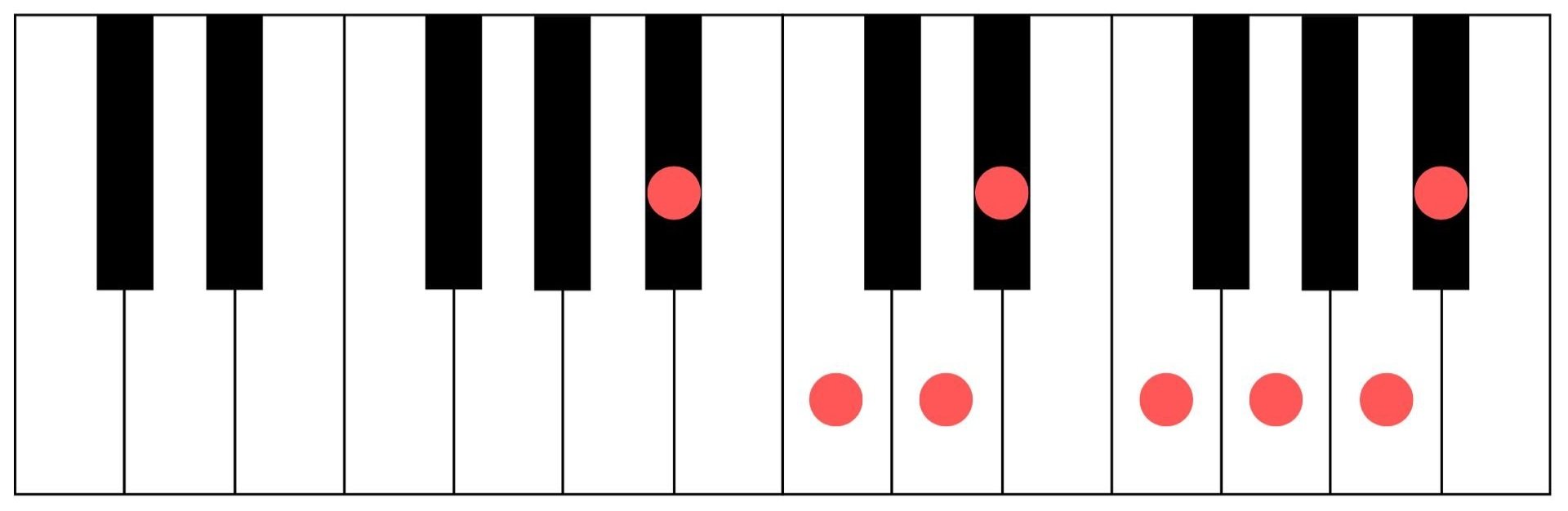
Bb D F A
1st Inversion
D F A Bb
2nd Inversion
F A Bb D
3rd Inversion
A Bb D F


-
Inversions allow for smoother voice leading and create more fluid chord progressions. When moving from one chord to another, inversions help minimize large jumps or leaps between chord tones. This makes it easier to play chords and contributes to a more seamless and connected sound, enhancing the overall musical flow.
-
The highest note of a chord is naturally more noticeable to the human ear, making it useful when selecting chord inversions for song beginnings or endings.
The root position chord provides a stable and solid sound, serving as a strong foundation for harmony. However, since the top note is the 5th of the scale, it may leave listeners with a sense of incompleteness or anticipation of further musical development.
The 1st inversion chord, with the top note being the tonic note of the key, is the most suitable inversion for concluding a song, establishing a new key center, or signaling the end of a piece.
The second inversion chord has a brighter and expansive sound, emphasizing the third note of the home key. It is a pleasant choice for both song beginnings and endings due to its emphasis on the chord's major tonality.


-
When playing a Bb major scale with your right hand on the piano, you can use the following finger pattern:
Bb - C - D - Eb - F - G - A - Bb
2 1 2 3 1 2 3 4When playing a Bb major scale with your left hand on the piano, you can use the following finger pattern:
Bb - C - D - Eb - F - G - A - Bb
3 2 1 4 3 2 1 2


-
When playing 7th chords on the piano, it is important to understand that not all notes of the chord need to be played with one hand. You can disperse the notes between both the left hand and the right hand. Here is our recommended structure:
Left Hand - 1, 5, (optional 8)
Right Hand - 3, 5, 7, (optional 2 for flavor)
Note: This is just a recommendation. The notes do not have to be played specifically as shown. You can choose your own voicing.
-
Use the following mnemonic to help you remember:
Order of Sharps - Father Charles Goes Down And Ends Battle
Order of Flats - Battle Ends And Down Goes Charles’ Father
Note: In both cases, the first letter of each word in the phrase corresponds to the order of sharps or flats.
-
The circle of fifths can help you determine key signatures by providing a visual representation of the relationships between different keys. Here's how you can use the circle of fifths to determine key signatures:
Start at the top: The top of the circle represents the key of C major or A minor, which has no sharps or flats in its key signature.
Moving clockwise: Moving clockwise around the circle, each key is a fifth higher than the previous one. As you move around the circle, each clockwise movement adds one sharp to the key signature. For example, the first key after C major is G major, which has one sharp (F#). The next key, D major, has two sharps (F# and C#), and so on. To know which notes are sharp, use the following mnemonic: Father Charles Goes Down And Ends Battle.
Moving counter-clockwise: If you move counterclockwise from C major, each key is a fourth lower than the previous one. As you move around the circle, each movement adds one flat to the key signature. For example, the first key after C major is F major, which has 1 flat (Bb). Followed by Bb major (Bb, Eb), and then Eb major (Bb, Eb, Ab), and so on. To know which notes are flat, use the previous mnemonic but in reverse: Battle Ends And Down Goes Charles’ Father.
Note: Major keys and their relative minor keys share the same key signature. For example, C major and A minor have no sharps or flats, while G major and E minor have one sharp (F#), and so on.
Bb Key Signature
2 Flats: Bb Eb
Order of Sharps: F C G D A E B
Order of Flats: B E A D G C F
-
Learning the intervals in a major scale is important because it helps you:
Enhance familiarity with specific key signatures.
Build chords by understanding the intervallic relationships.
Transpose music to different keys accurately.
Improvise melodies more fluently by navigating intervals.
Understand music theory concepts like scales, modes, and chord progressions.
-
The perfect intervals consist of the unison (P1), fourth (P4), fifth (P5), and octave (P8). They are highly stable, possessing a strong, pure, and distinct sound. These intervals are often associated with resolution and stability, contributing to consonance and harmony in harmonic contexts.
On the other hand, the major intervals comprise the major 2nd (M2), major 3rd (M3), major 6th (M6), and major 7th (M7). They are not referred to as “perfect” because they are the only intervals that can be lowered to create "minor" intervals. For instance, a major third can be lowered to become a minor 3rd. In contrast, if you were to lower perfect intervals, they would become major intervals. For example, if you lower a perfect 4th, it becomes a major third. The exception to this rule is the perfect 5th, which becomes a diminished 5th when lowered, not a minor 5th.
-
Practice singing or playing the intervals of a major scale without relying on a reference pitch. For example, play the first note of the scale, and then sing or play the second note using the correct interval (e.g., a major second). Continue this exercise for each subsequent note in the scale. Here are some reference points from familiar melodies to help you:
Major 2nd: Happy Birthday
Major 3rd: When the Saints Go Marching In
Perfect 4th: Amazing Grace
Perfect 5th: Star Wars (Main Theme)
Major 6th: My Bonnie Lies Over the Ocean
Major 7th: Take On Me
Perfect 8th: Somewhere Over the Rainbow




-
To remember which diatonic 7th chords are major and minor within a key, you can use the following pattern:
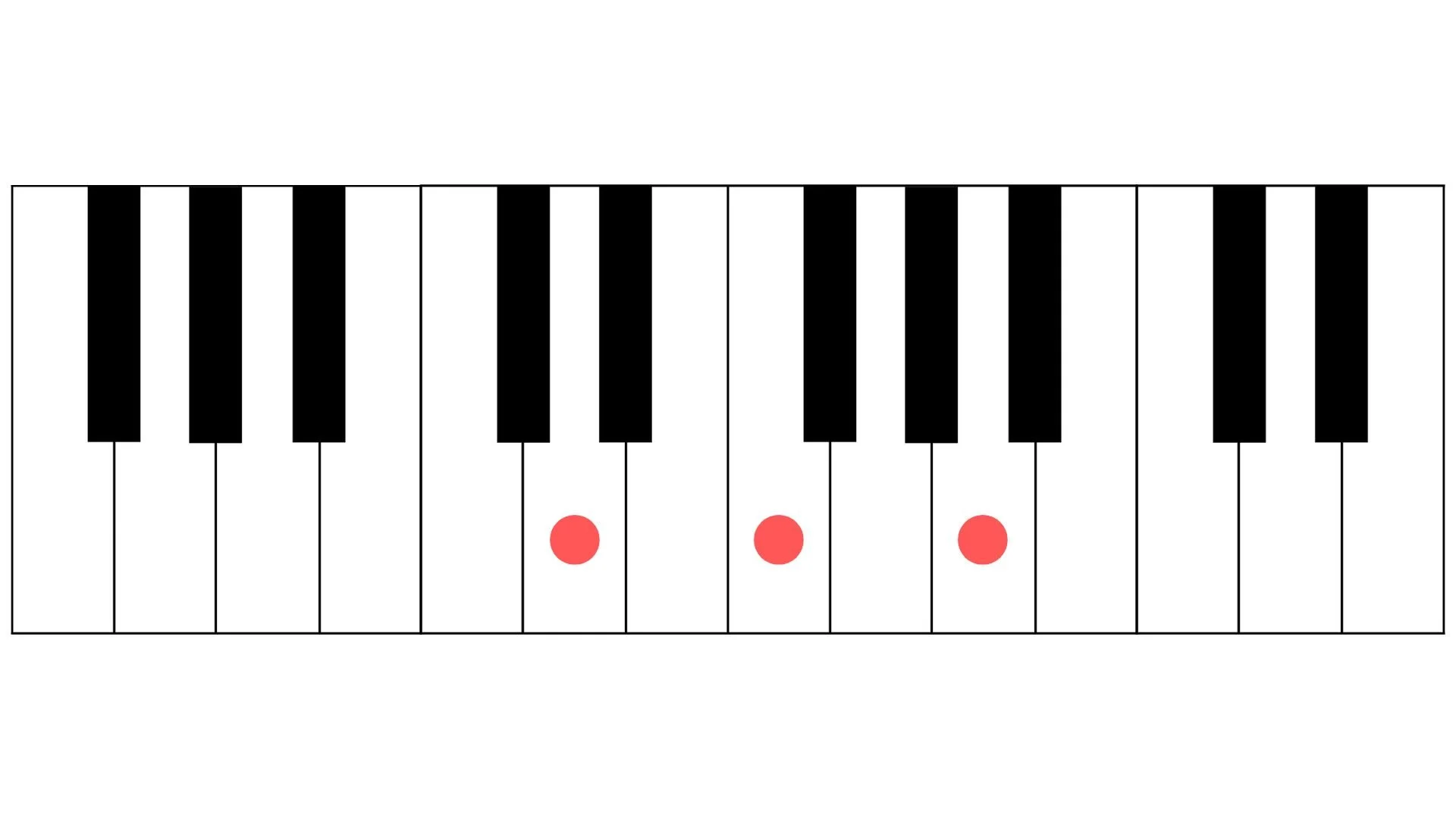
Major 7 - minor 7 - minor 7 - Major 7 - Dominant 7 - minor 7 - half diminished
M7 m7 m7 M7 7 m7 ø7
1 2 3 4 5 6 7Note: This pattern is consistent in all key signatures, no matter which key you choose to play in.
-
The term "dominant" signifies that the chord is built on the fifth degree of the major scale, while the "7" indicates a lowered seventh interval from the root note of the chord, not the 7th interval of the home key.
The dominant 7 chord has a specific interval structure, consisting of a major third, perfect fifth, and lowered seventh (minor seventh). This combination creates a distinct sound, generating a strong sense of tension that seeks resolution to the 1 chord.
The reason for lowering the 7th of the chord is to ensure all notes adhere to the key signature of the home key. In the key of C major, for instance, the dominant chord is the fifth note (G), which forms a G major chord (G-B-D). Adding a seventh transforms it into a dominant 7th chord (G-B-D-F). The lowered seventh occurs because the key signature of the G chord includes an F#, whereas the home key's key signature requires it to be lowered to an F natural (a regular F) due to C having no sharps or flats.
-
Half Diminished 7th Chord (ø7):
Interval Structure: A half diminished 7th chord consists of a root, a minor third, a diminished fifth, and a minor seventh.
Symbol: The symbol used to denote a half diminished 7th chord is "ø7" or "-7(b5)".
Example: In the key of C major, the half diminished 7th chord built on the seventh degree (Bø7) would contain the notes B-D-F-A.
Diminished 7th Chord (°7):
Interval Structure: A diminished 7th chord consists of a root, a minor third, a diminished fifth, and a diminished seventh. It is essentially a stack of minor thirds.
Symbol: The symbol used to denote a diminished 7th chord is "dim7" or °7.
Example: In the key of C major, the diminished 7th chord built on the seventh degree (Bdim7) would contain the notes B-D-F-Ab.
Note: The diminished 7th chord is known for its symmetrical structure, as each interval between its notes is a minor third. It creates a highly dissonant and unresolved sound and can be used as a passing chord or for chromatic movement in chord progressions.
B Major Scale
B C# D# E F# G# A# B
Scale Pattern: T - T - S - T - T - T - S
-
All major scales consist of eight notes that follow a specific pattern of tones (T) and semitones (S). A tone (also known as a whole step) corresponds to a two-fret distance on a guitar or a two-key distance on a piano, while a semitone (also known as a half step) corresponds to a one-fret distance on a guitar or a one-key distance on a piano. The formula is as follows:
T - T - S - T - T - T - S
Using the B major scale as an example, we apply the tone (T) or semitone (S) pattern starting from the note B:
B - C# - D# - E - F# - G# - A# - B
^ ^ ^ ^ ^ ^ ^
T T S T T T SBy following this pattern, you can construct major scales in any key using tones (T) and semitones (S).
B Major Diatonic Chords
“Diatonic” means “Within the key.” Below are the chords that naturally belong to the key of B major, without any chromatic alteration.
Common major chord symbols: M, maj, +, △ Common minor chord symbols: m, min, -
Chord Type
Nash. #
Rom. #
Chord
Notes
Chord Type
Nash. #
Rom. #
Chord
Notes
Major
1
I
B
B D# F#
minor
2m
ii
C#m
C# E G#
minor
3m
iii
D#m
D# F# A#
Major
4
IV
E
E G# B
Major
5
V
F#
F# A# C#
minor
6m
vi
G#m
G# B D#
diminished
7°
vii°
A#dim
A# C# E
B Major Diatonic 7th Chords
These are the same as above, but in the form of 7th chords.
Common major chord symbols: M7, maj7, +7, △7 Common minor chord symbols: m7, min7, -7
Major 7
1
Imaj7
Bmaj7
B D# F# A#
minor 7
2m7
ii7
C#m7
C# E G# B
minor 7
3m7
iii7
D#m7
D# F# A# C#
Major 7
4
IVmaj7
Emaj7
E G# B D#
Dominant 7*
5
V7
F#7
F# A# C# E
minor 7
6m
vi7
G#m7
G# B D# F#
half dim 7*
7ø
viiø7
A#ø7
A# C# E G#
B Major Intervals
“Interval” refers to the distance between two notes. Below are the scale degrees and intervals in the key of B Major.
Major 2nd
C#
Major 3rd
D#
Perfect 4th
E
Perfect 5th
F#
Major 6th
G#
Major 7th
A#
Octave
B
Unison
B
B Major Chord Inversions
“Inversion” describes the relationship of a triad’s lowest note to the other notes in the chord.
Choosing the right inversion will help to smooth out motion from chord to chord.
Root
B D# F#
1st Inversion
D# F# B
2nd Inversion
F# B D#
B Major 7th Chord Inversions
“Inversion” describes the relationship of a chord’s lowest notes to the other notes in the chord.
It is common for the left hand to play octaves or fifths, while the right hand plays the chord in part or in full.
Root
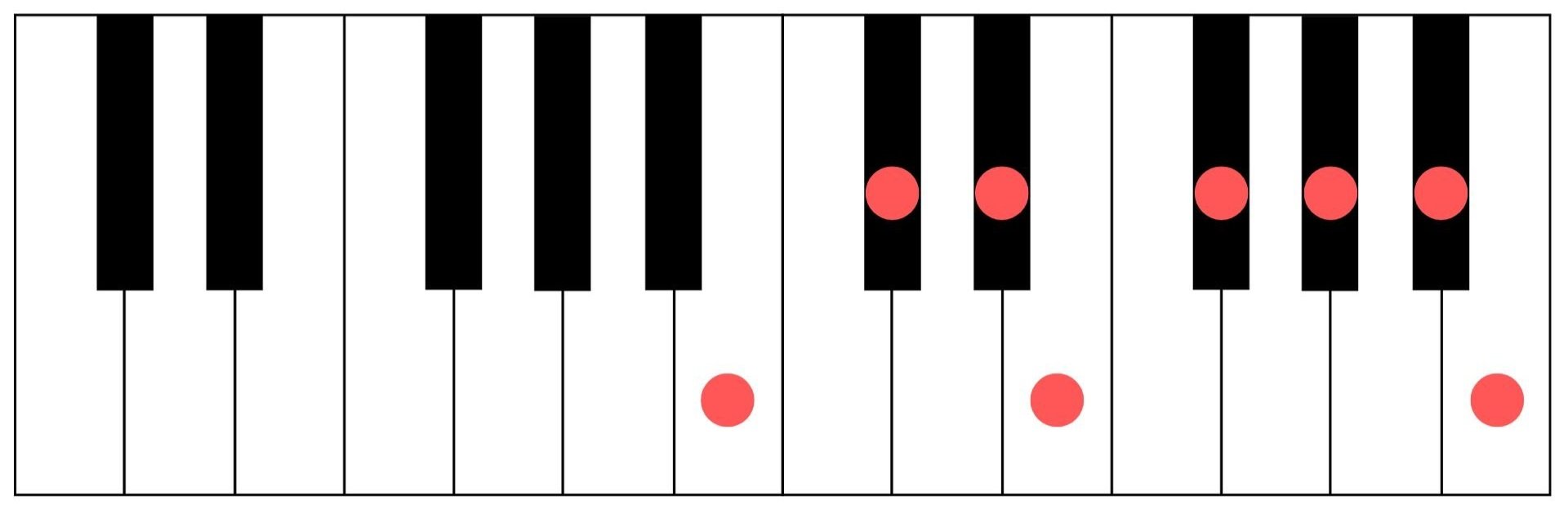
B D# F# A#
1st Inversion
D# F# A# B
2nd Inversion
F# A# B D#
3rd Inversion
A# B D# F#


-
Inversions allow for smoother voice leading and create more fluid chord progressions. When moving from one chord to another, inversions help minimize large jumps or leaps between chord tones. This makes it easier to play chords and contributes to a more seamless and connected sound, enhancing the overall musical flow.
-
The highest note of a chord is naturally more noticeable to the human ear, making it useful when selecting chord inversions for song beginnings or endings.
The root position chord provides a stable and solid sound, serving as a strong foundation for harmony. However, since the top note is the 5th of the scale, it may leave listeners with a sense of incompleteness or anticipation of further musical development.
The 1st inversion chord, with the top note being the tonic note of the key, is the most suitable inversion for concluding a song or establishing a new key center.
The second inversion chord has a brighter and expansive sound, emphasizing the third note of the home key. It is a pleasant choice for both song beginnings and endings due to its emphasis on the chord's major tonality.


-
When playing a B major scale with your right hand on the piano, you can use the following finger pattern:
B - C# - D# - E - F# - G# - A# - B
1 2 3 1 2 3 4 5When playing a B major scale with your left hand on the piano, you can use the following finger pattern:
B - C# - D# - E - F# - G# - A# - B
4 3 2 1 4 3 2 1


-
When playing 7th chords on the piano, it is important to understand that not all notes of the chord need to be played with one hand. You can disperse the notes between both the left hand and the right hand. Here is our recommended structure:
Left Hand - 1, 5, (optional 8)
Right Hand - 3, 5, 7, (optional 2 for flavor)
Note: This is just a recommendation. The notes do not have to be played specifically as shown. You can choose your own voicing.
-
Use the following mnemonic to help you remember:
Order of Sharps - Father Charles Goes Down And Ends Battle
Order of Flats - Battle Ends And Down Goes Charles’ Father
Note: In both cases, the first letter of each word in the phrase corresponds to the order of sharps or flats.
-
The circle of fifths can help you determine key signatures by providing a visual representation of the relationships between different keys. Here's how you can use the circle of fifths to determine key signatures:
Start at the top: The top of the circle represents the key of C major or A minor, which has no sharps or flats in its key signature.
Moving clockwise: Moving clockwise around the circle, each key is a fifth higher than the previous one. As you move around the circle, each clockwise movement adds one sharp to the key signature. For example, the first key after C major is G major, which has one sharp (F#). The next key, D major, has two sharps (F# and C#), and so on. To know which notes are sharp, use the following mnemonic: Father Charles Goes Down And Ends Battle.
Moving counter-clockwise: If you move counterclockwise from C major, each key is a fourth lower than the previous one. As you move around the circle, each movement adds one flat to the key signature. For example, the first key after C major is F major, which has 1 flat (Bb). Followed by Bb major (Bb, Eb), and then Eb major (Bb, Eb, Ab), and so on. To know which notes are flat, use the previous mnemonic but in reverse: Battle Ends And Down Goes Charles’ Father.
Note: Major keys and their relative minor keys share the same key signature. For example, C major and A minor have no sharps or flats, while G major and E minor have one sharp (F#), and so on.
B Key Signature
5 Sharps: F# C# G# D# A#
Order of Sharps: F C G D A E B
Order of Flats: B E A D G C F
-
Learning the intervals in a major scale is important because it helps you:
Enhance familiarity with specific key signatures.
Build chords by understanding the intervallic relationships.
Transpose music to different keys accurately.
Improvise melodies more fluently by navigating intervals.
Understand music theory concepts like scales, modes, and chord progressions.
-
The perfect intervals consist of the unison (P1), fourth (P4), fifth (P5), and octave (P8). They are highly stable, possessing a strong, pure, and distinct sound. These intervals are often associated with resolution and stability, contributing to consonance and harmony in harmonic contexts.
On the other hand, the major intervals comprise the major 2nd (M2), major 3rd (M3), major 6th (M6), and major 7th (M7). They are not referred to as “perfect” because they are the only intervals that can be lowered to create "minor" intervals. For instance, a major third can be lowered to become a minor 3rd. In contrast, if you were to lower perfect intervals, they would become major intervals. For example, if you lower a perfect 4th, it becomes a major third. The exception to this rule is the perfect 5th, which becomes a diminished 5th when lowered, not a minor 5th.
-
Practice singing or playing the intervals of a major scale without relying on a reference pitch. For example, play the first note of the scale, and then sing or play the second note using the correct interval (e.g., a major second). Continue this exercise for each subsequent note in the scale. Here are some reference points from familiar melodies to help you:
Major 2nd: Happy Birthday
Major 3rd: When the Saints Go Marching In
Perfect 4th: Amazing Grace
Perfect 5th: Star Wars (Main Theme)
Major 6th: My Bonnie Lies Over the Ocean
Major 7th: Take On Me
Perfect 8th: Somewhere Over the Rainbow




-
To remember which diatonic 7th chords are major and minor within a key, you can use the following pattern:
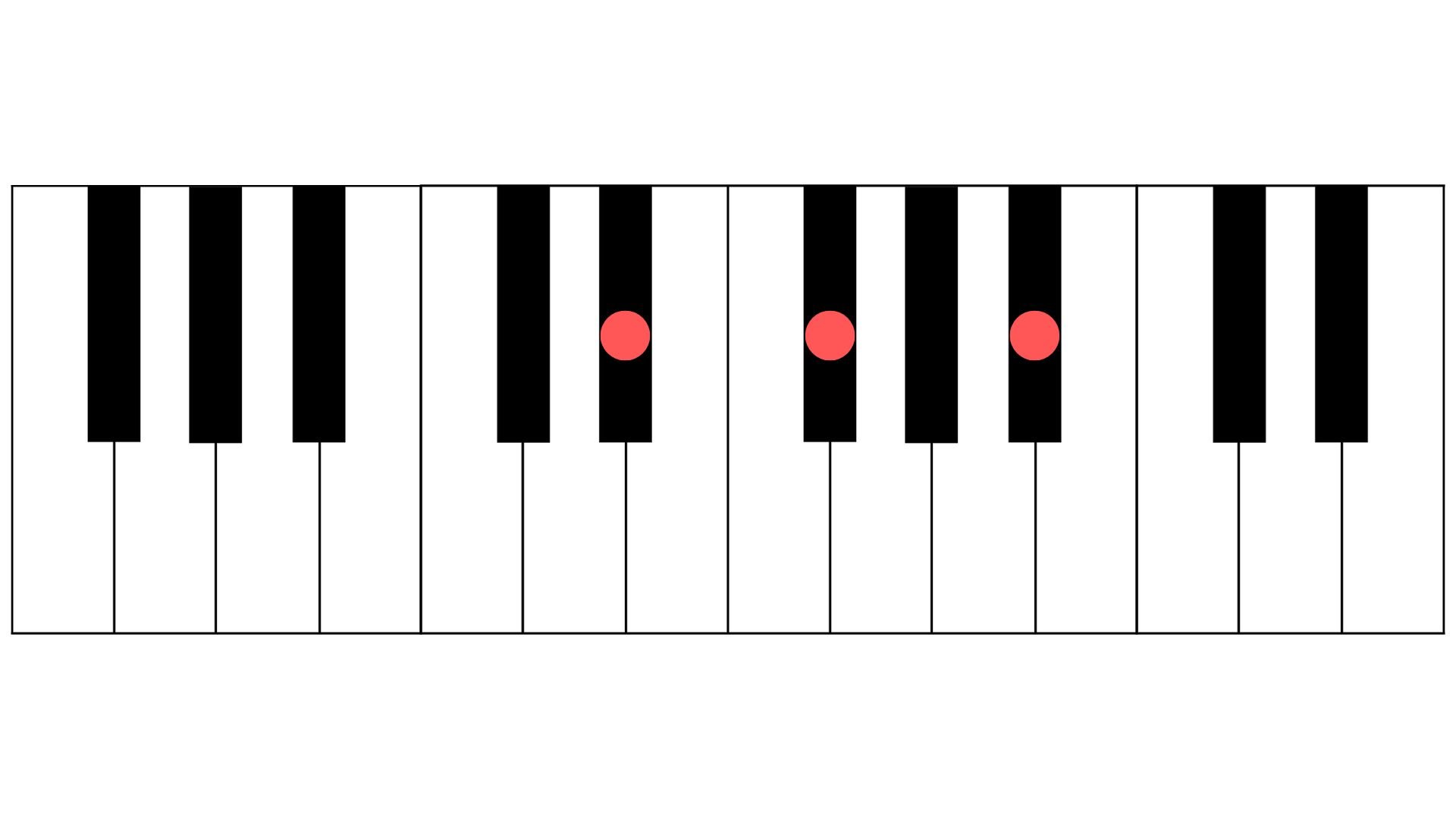
Major 7 - minor 7 - minor 7 - Major 7 - Dominant 7 - minor 7 - half diminished
M7 m7 m7 M7 7 m7 ø7
1 2 3 4 5 6 7Note: This pattern is consistent in all key signatures, no matter which key you choose to play in.
-
The term "dominant" signifies that the chord is built on the fifth degree of the major scale, while the "7" indicates a lowered seventh interval from the root note of the chord, not the 7th interval of the home key.
The dominant 7 chord has a specific interval structure, consisting of a major third, perfect fifth, and lowered seventh (minor seventh). This combination creates a distinct sound, generating a strong sense of tension that seeks resolution to the 1 chord.
The reason for lowering the 7th of the chord is to ensure all notes adhere to the key signature of the home key. In the key of C major, for instance, the dominant chord is the fifth note (G), which forms a G major chord (G-B-D). Adding a seventh transforms it into a dominant 7th chord (G-B-D-F). The lowered seventh occurs because the key signature of the G chord includes an F#, whereas the home key's key signature requires it to be lowered to an F natural (a regular F) due to C having no sharps or flats.
-
Half Diminished 7th Chord (ø7):
Interval Structure: A half diminished 7th chord consists of a root, a minor third, a diminished fifth, and a minor seventh.
Symbol: The symbol used to denote a half diminished 7th chord is "ø7" or "-7(b5)".
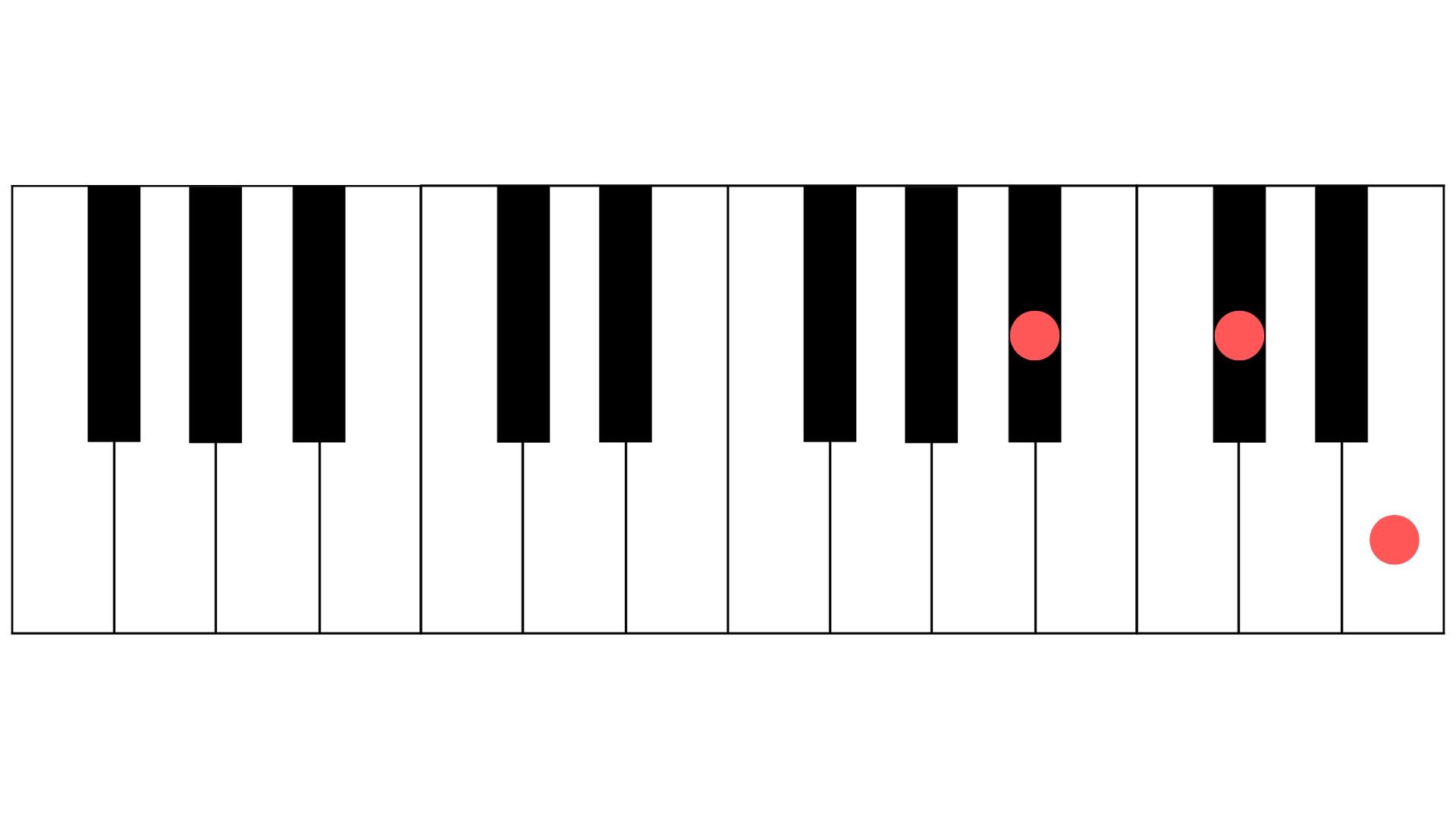
Example: In the key of C major, the half diminished 7th chord built on the seventh degree (Bø7) would contain the notes B-D-F-A.
Diminished 7th Chord (°7):
Interval Structure: A diminished 7th chord consists of a root, a minor third, a diminished fifth, and a diminished seventh. It is essentially a stack of minor thirds.
Symbol: The symbol used to denote a diminished 7th chord is "dim7" or °7.
Example: In the key of C major, the diminished 7th chord built on the seventh degree (Bdim7) would contain the notes B-D-F-Ab.
Note: The diminished 7th chord is known for its symmetrical structure, as each interval between its notes is a minor third. It creates a highly dissonant and unresolved sound and can be used as a passing chord or for chromatic movement in chord progressions.

-
To remember which diatonic chords are major and minor within a key, you can use the following pattern:
Major - minor - minor - Major - Major - minor - diminished
M m m M M m d
1 2 3 4 5 6 7Note: This pattern is consistent in all key signatures. In other words, the 1 chord is always major, the 2 chord is always minor, the 3 chord is always minor, and so on.
-
The Nashville Number System is a method of music notation that uses numbers to represent the chords and their relationships within a key. It is commonly used in the music industry–particularly in Nashville, Tennessee, hence its name–and is very common within worship teams. The reason why it is used is because it is the most flexible and efficient way to communicate chord progressions and harmonic structures in various keys without relying on specific chord names.
In the Nashville Number System, the numbers correspond to chords built on specific scale degrees of the major scale. Here’s how the system works for diatonic chords:
Chords 1, 4, 5 are always major chords.
Chords 2, 3, 6 are always minor chords.
The 7 chord is always diminished.
-
The Roman numeral system in diatonic chords is a way to represent chords based on their position within a major or minor key. It provides a standardized method to notate chords regardless of the key in which they are used. Here's how the Roman numeral system works for diatonic chords:
Uppercase Roman numerals (I, IV, V) represent major chords.
Lowercase Roman numerals (ii, iii, vi) represent minor chords.
A lowercase Roman numeral with a degree symbol (vii°) represents a diminished chord.
C# Major Scale
C# D# E# F# G# A# B# C#
Scale Pattern: T - T - S - T - T - T - S
-
All major scales consist of eight notes that follow a specific pattern of tones (T) and semitones (S). A tone (also known as a whole step) corresponds to a two-fret distance on a guitar or a two-key distance on a piano, while a semitone (also known as a half step) corresponds to a one-fret distance on a guitar or a one-key distance on a piano. The formula is as follows:
T - T - S - T - T - T - S
Using the C# major scale as an example, we apply the tone (T) or semitone (S) pattern starting from the note C#:
C# - D# - E# - F# - G# - A# - B# - C#
^ ^ ^ ^ ^ ^ ^
T T S T T T SBy following this pattern, you can construct major scales in any key using tones (T) and semitones (S).
C# Major Diatonic Chords
“Diatonic” means “Within the key.” Below are the chords that naturally belong to the key of C# major, without any chromatic alteration.
Common major chord symbols: M, maj, +, △ Common minor chord symbols: m, min, -
Chord Type
Nash. #
Rom. #
Chord
Notes
Chord Type
Nash. #
Rom. #
Chord
Notes
Major
1
I
C#
C# E# G#
minor
2m
ii
D#m
D# F# A#
minor
3m
iii
E#m
E# G# B#
Major
4
IV
F#
F# A# C#
Major
5
V
G#
G# B# D#
minor
6m
vi
A#m
A# C# E#
diminished
7°
vii°
B#dim
B# D# F#
C# Major Diatonic 7th Chords
These are the same as above, but in the form of 7th chords.
Common major chord symbols: M7, maj7, +7, △7 Common minor chord symbols: m7, min7, -7
Major 7
1
Imaj7
C#M7
C# E# G# B#
minor 7
2m7
ii7
D#m7
D# F# A# C#
minor 7
3m7
iii7
E#m7
E# G# B# D#
Major 7
4
IVmaj7
F#M7
F# A# C# E#
Dominant 7*
5
V7
G#7
G# B# D# F#
minor 7
6m
vi7
A#m7
A# C# E# G#
half dim 7*
7ø
viiø7
B#ø7
B# D# F# A#
C# Major Intervals
“Interval” refers to the distance between two notes. Below are the scale degrees and intervals in the key of C# Major.
Major 2nd
D#
Major 3rd
E#
Perfect 4th
F#
Perfect 5th
G#
Major 6th
A#
Major 7th
B#
Octave
C#
Unison
C#
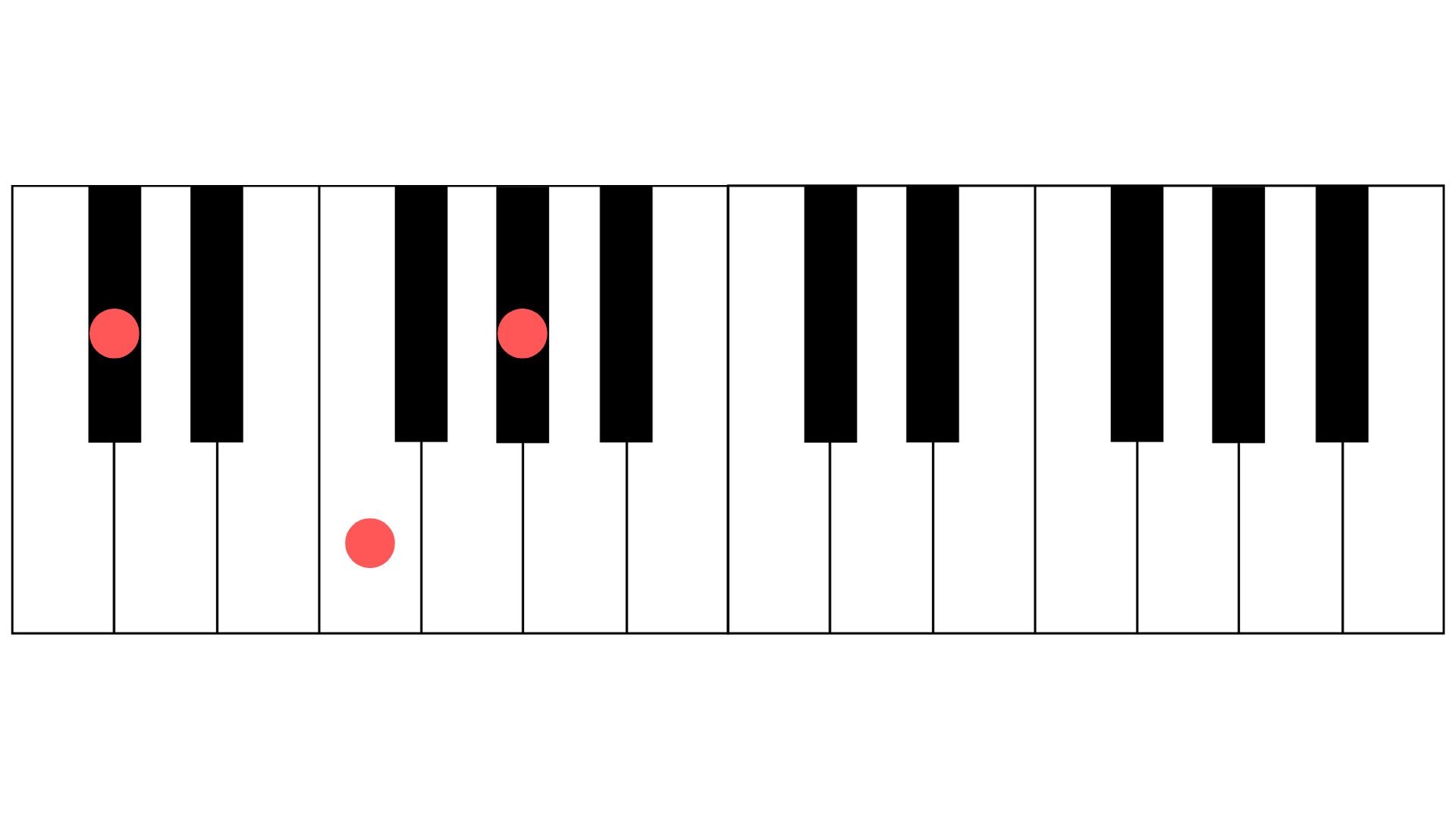
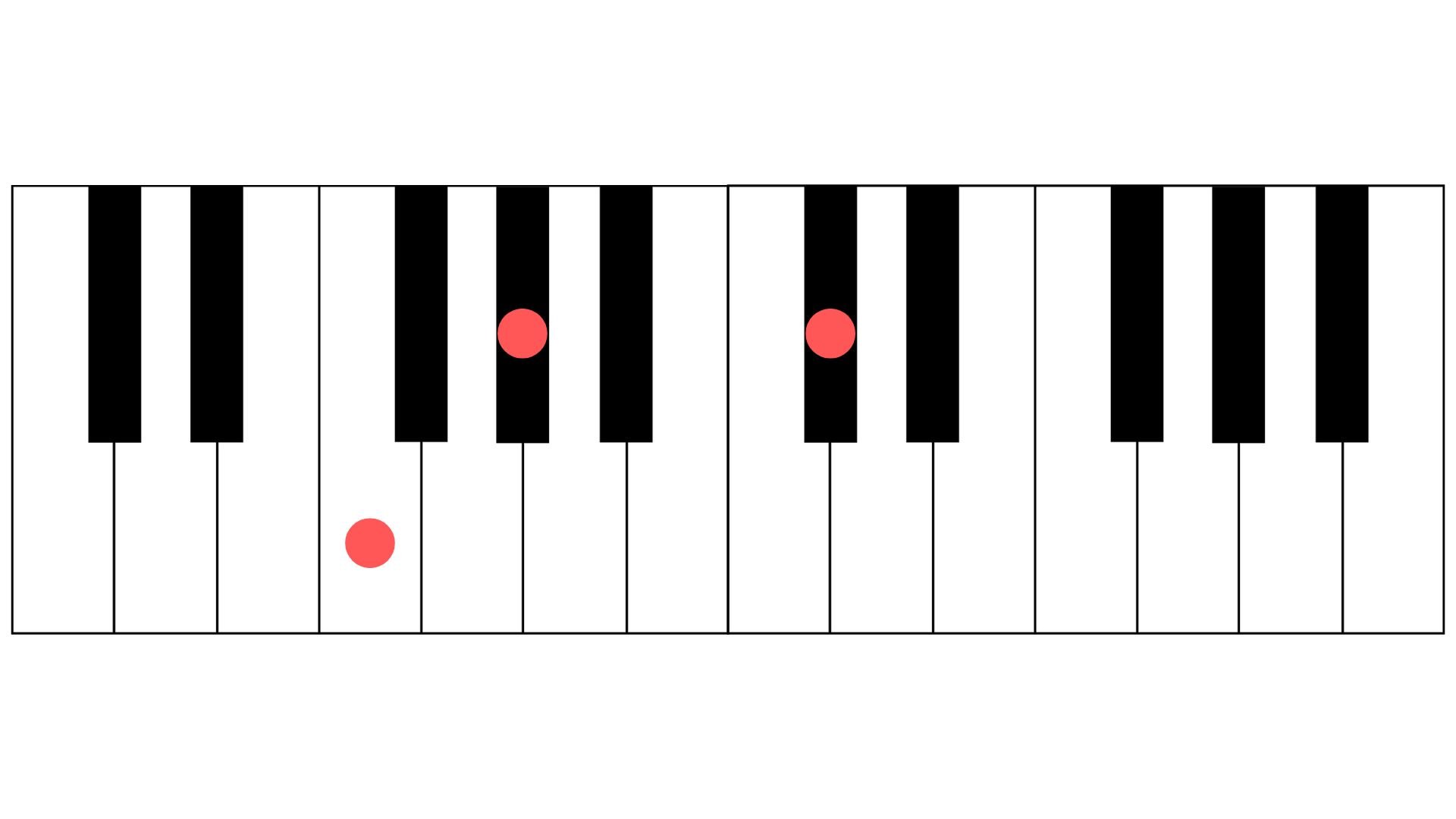
C# Major Chord Inversions
“Inversion” describes the relationship of a triad’s lowest note to the other notes in the chord.
Choosing the right inversion will help to smooth out motion from chord to chord.
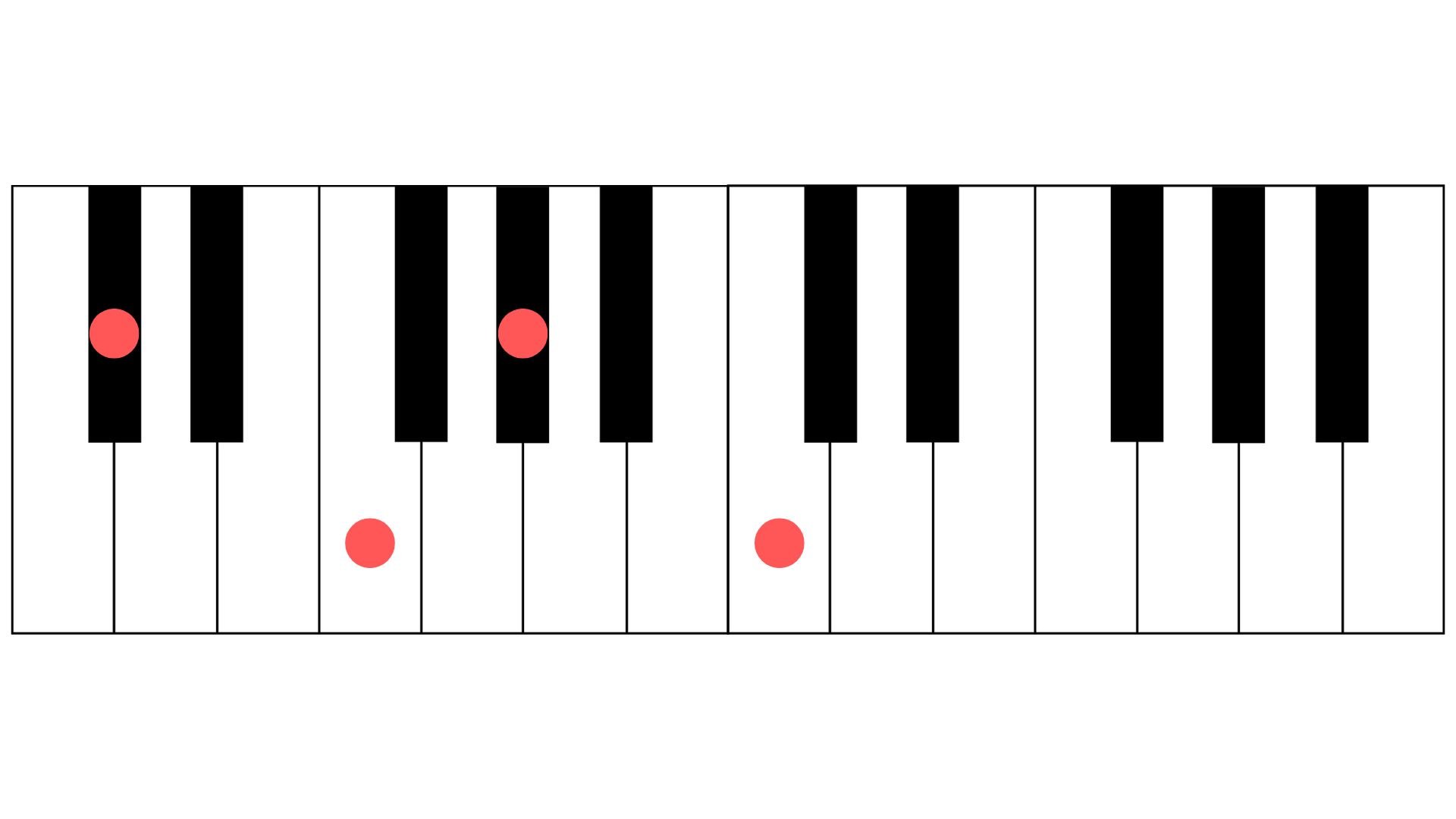
Root
C# E# G#
1st Inversion
E# G# C#
2nd Inversion
G# C# E#
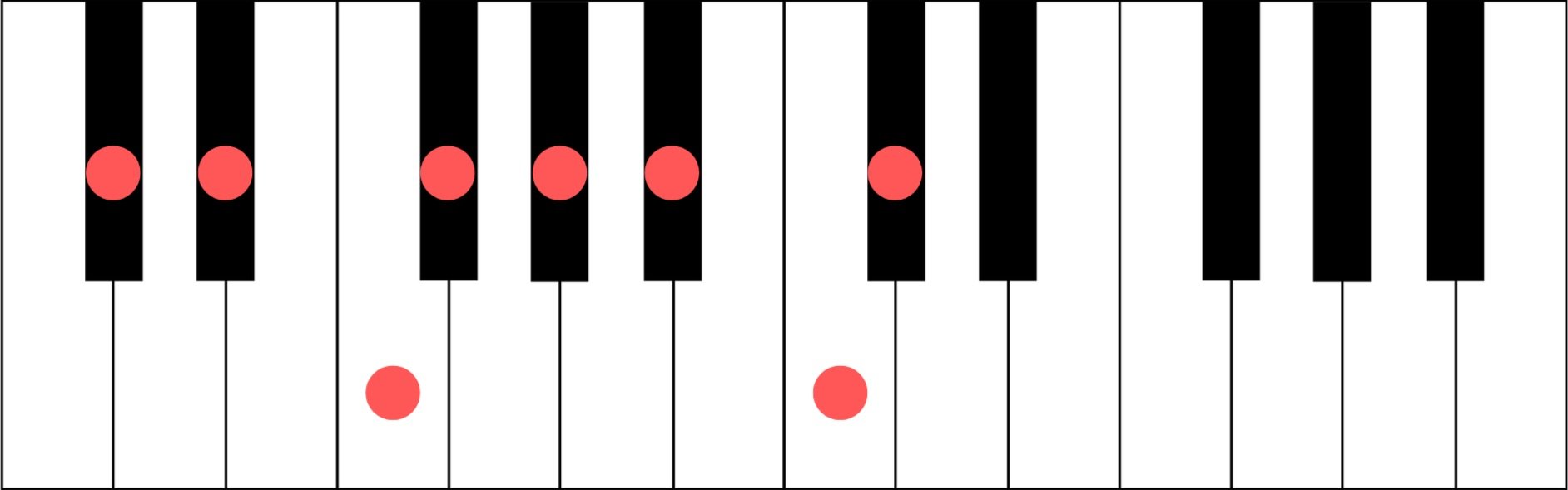
C# Major 7th Chord Inversions
“Inversion” describes the relationship of a chord’s lowest notes to the other notes in the chord.
It is common for the left hand to play octaves or fifths, while the right hand plays the chord in part or in full.
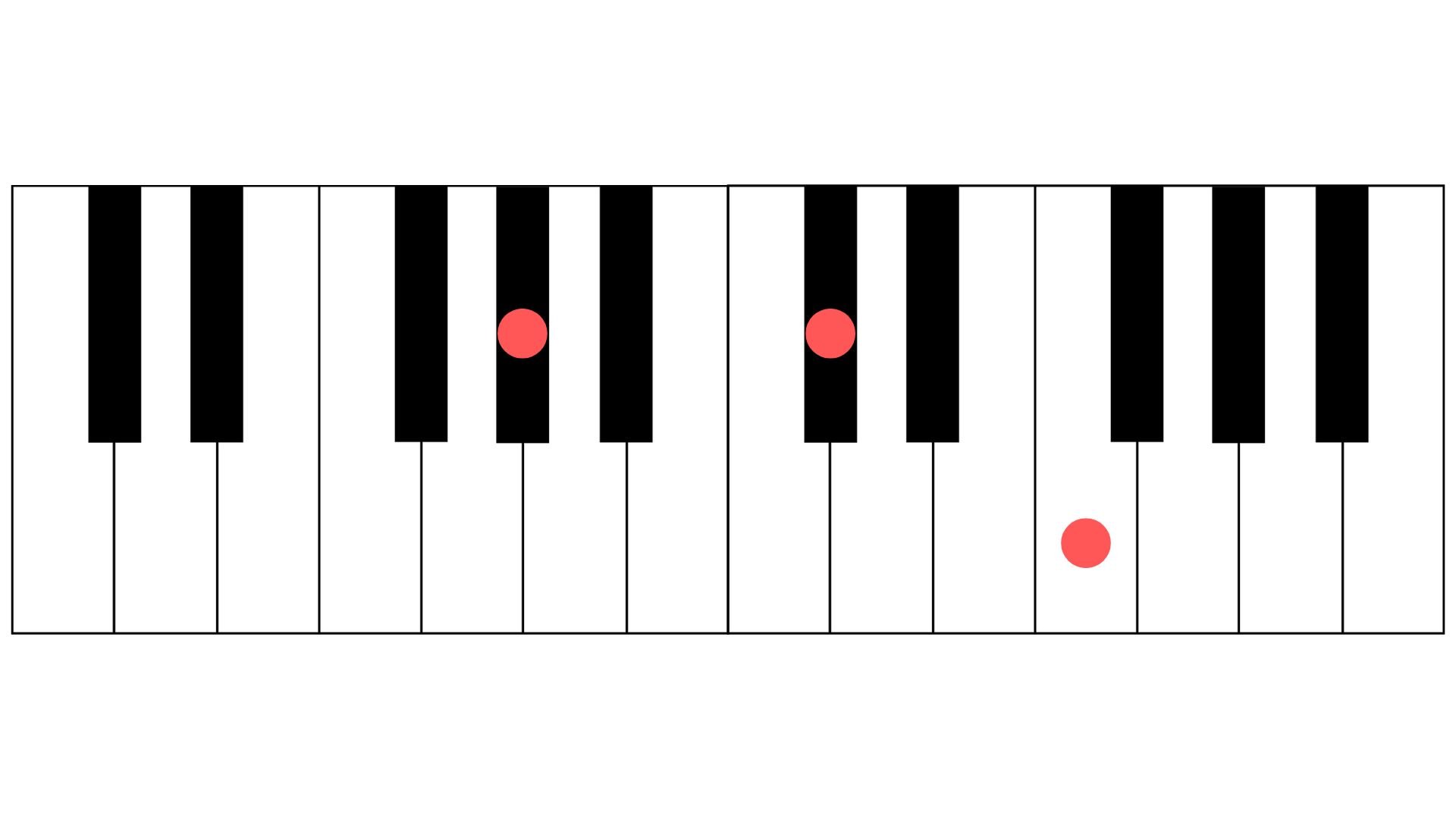
Root
C# E# G# B#
1st Inversion
E# G# B# C#
2nd Inversion
G# B# C# E#
3rd Inversion
B# C# E# G#
-
Inversions allow for smoother voice leading and create more fluid chord progressions. When moving from one chord to another, inversions help minimize large jumps or leaps between chord tones. This makes it easier to play chords and contributes to a more seamless and connected sound, enhancing the overall musical flow.
-
The highest note of a chord is naturally more noticeable to the human ear, making it useful when selecting chord inversions for song beginnings or endings.
The root position chord provides a stable and solid sound, serving as a strong foundation for harmony. However, since the top note is the 5th of the scale, it may leave listeners with a sense of incompleteness or anticipation of further musical development.
The 1st inversion chord, with the top note being the tonic note of the key, is the most suitable inversion for concluding a song, establishing a new key center, or signaling the end of a piece.
The second inversion chord has a brighter and expansive sound, emphasizing the third note of the home key. It is a pleasant choice for both song beginnings and endings due to its emphasis on the chord's major tonality.

-
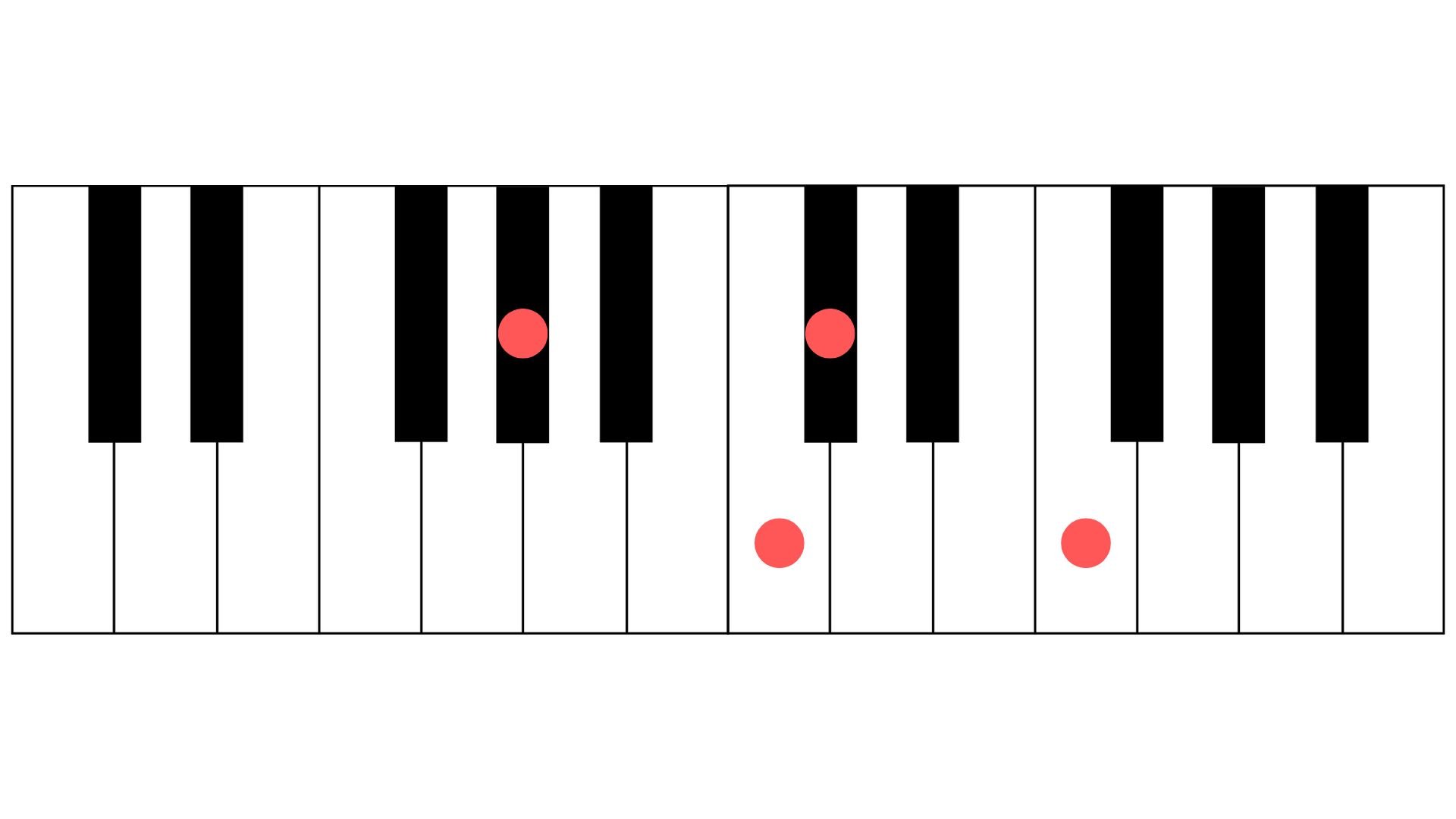
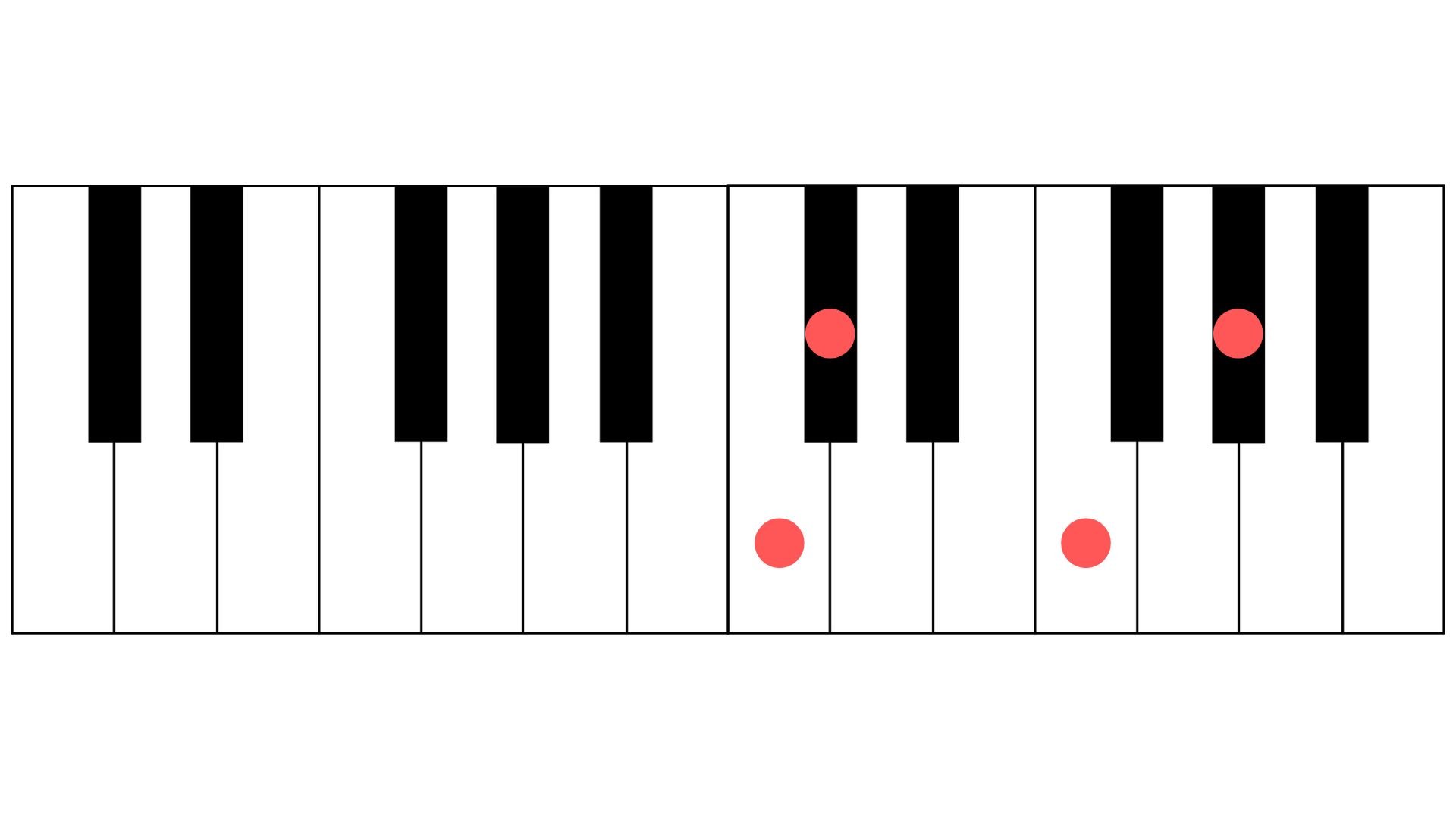
When playing a C# major scale with your right hand on the piano, you can use the following finger pattern:
C# - D# - E# - F# - G# - A# - B# - C#
2 3 1 2 3 4 1 2/3When playing a C# major scale with your left hand on the piano, you can use the following finger pattern:
C# - D# - E# - F# - G# - A# - B# - C#
3 2 1 4 3 2 1 3
-
When playing 7th chords on the piano, it is important to understand that not all notes of the chord need to be played with one hand. You can disperse the notes between both the left hand and the right hand. Here is our recommended structure:
Left Hand - 1, 5, (optional 8)
Right Hand - 3, 5, 7, (optional 2 for flavor)
Note: This is just a recommendation. The notes do not have to be played specifically as shown. You can choose your own voicing.
-
Use the following mnemonic to help you remember:
Order of Sharps - Father Charles Goes Down And Ends Battle
Order of Flats - Battle Ends And Down Goes Charles’ Father
Note: In both cases, the first letter of each word in the phrase corresponds to the order of sharps or flats.
-
The circle of fifths can help you determine key signatures by providing a visual representation of the relationships between different keys. Here's how you can use the circle of fifths to determine key signatures:
Start at the top: The top of the circle represents the key of C major or A minor, which has no sharps or flats in its key signature.
Moving clockwise: Moving clockwise around the circle, each key is a fifth higher than the previous one. As you move around the circle, each clockwise movement adds one sharp to the key signature. For example, the first key after C major is G major, which has one sharp (F#). The next key, D major, has two sharps (F# and C#), and so on. To know which notes are sharp, use the following mnemonic: Father Charles Goes Down And Ends Battle.
Moving counter-clockwise: If you move counterclockwise from C major, each key is a fourth lower than the previous one. As you move around the circle, each movement adds one flat to the key signature. For example, the first key after C major is F major, which has 1 flat (Bb). Followed by Bb major (Bb, Eb), and then Eb major (Bb, Eb, Ab), and so on. To know which notes are flat, use the previous mnemonic but in reverse: Battle Ends And Down Goes Charles’ Father.
Note: Major keys and their relative minor keys share the same key signature. For example, C major and A minor have no sharps or flats, while G major and E minor have one sharp (F#), and so on.
C# Key Signature
7 Sharps: F# C# G# D# A# E# B#
Order of Sharps: F C G D A E B
Order of Flats: B E A D G C F
-
Learning the intervals in a major scale is important because it helps you:
Enhance familiarity with specific key signatures.
Build chords by understanding the intervallic relationships.
Transpose music to different keys accurately.
Improvise melodies more fluently by navigating intervals.
Understand music theory concepts like scales, modes, and chord progressions.
-
The perfect intervals consist of the unison (P1), fourth (P4), fifth (P5), and octave (P8). They are highly stable, possessing a strong, pure, and distinct sound. These intervals are often associated with resolution and stability, contributing to consonance and harmony in harmonic contexts.
On the other hand, the major intervals comprise the major 2nd (M2), major 3rd (M3), major 6th (M6), and major 7th (M7). They are not referred to as “perfect” because they are the only intervals that can be lowered to create "minor" intervals. For instance, a major third can be lowered to become a minor 3rd. In contrast, if you were to lower perfect intervals, they would become major intervals. For example, if you lower a perfect 4th, it becomes a major third. The exception to this rule is the perfect 5th, which becomes a diminished 5th when lowered, not a minor 5th.
-
Practice singing or playing the intervals of a major scale without relying on a reference pitch. For example, play the first note of the scale, and then sing or play the second note using the correct interval (e.g., a major second). Continue this exercise for each subsequent note in the scale. Here are some reference points from familiar melodies to help you:
Major 2nd: Happy Birthday
Major 3rd: When the Saints Go Marching In
Perfect 4th: Amazing Grace
Perfect 5th: Star Wars (Main Theme)
Major 6th: My Bonnie Lies Over the Ocean
Major 7th: Take On Me
Perfect 8th: Somewhere Over the Rainbow
-
To remember which diatonic chords are major and minor within a key, you can use the following pattern:
Major - minor - minor - Major - Major - minor - diminished
M m m M M m d
1 2 3 4 5 6 7Note: This pattern is consistent in all key signatures. In other words, the 1 chord is always major, the 2 chord is always minor, the 3 chord is always minor, and so on.
-
The Nashville Number System is a method of music notation that uses numbers to represent the chords and their relationships within a key. It is commonly used in the music industry–particularly in Nashville, Tennessee, hence its name–and is very common within worship teams. The reason why it is used is because it is the most flexible and efficient way to communicate chord progressions and harmonic structures in various keys without relying on specific chord names.
In the Nashville Number System, the numbers correspond to chords built on specific scale degrees of the major scale. Here’s how the system works for diatonic chords:
Chords 1, 4, 5 are always major chords.
Chords 2, 3, 6 are always minor chords.
The 7 chord is always diminished.
-
The Roman numeral system in diatonic chords is a way to represent chords based on their position within a major or minor key. It provides a standardized method to notate chords regardless of the key in which they are used. Here's how the Roman numeral system works for diatonic chords:
Uppercase Roman numerals (I, IV, V) represent major chords.
Lowercase Roman numerals (ii, iii, vi) represent minor chords.
A lowercase Roman numeral with a degree symbol (vii°) represents a diminished chord.
-
To remember which diatonic 7th chords are major and minor within a key, you can use the following pattern:
Major 7 - minor 7 - minor 7 - Major 7 - Dominant 7 - minor 7 - half diminished
M7 m7 m7 M7 7 m7 ø7
1 2 3 4 5 6 7Note: This pattern is consistent in all key signatures, no matter which key you choose to play in.
-
The term "dominant" signifies that the chord is built on the fifth degree of the major scale, while the "7" indicates a lowered seventh interval from the root note of the chord, not the 7th interval of the home key.
The dominant 7 chord has a specific interval structure, consisting of a major third, perfect fifth, and lowered seventh (minor seventh). This combination creates a distinct sound, generating a strong sense of tension that seeks resolution to the 1 chord.
The reason for lowering the 7th of the chord is to ensure all notes adhere to the key signature of the home key. In the key of C major, for instance, the dominant chord is the fifth note (G), which forms a G major chord (G-B-D). Adding a seventh transforms it into a dominant 7th chord (G-B-D-F). The lowered seventh occurs because the key signature of the G chord includes an F#, whereas the home key's key signature requires it to be lowered to an F natural (a regular F) due to C having no sharps or flats.
-
Half Diminished 7th Chord (ø7):
Interval Structure: A half diminished 7th chord consists of a root, a minor third, a diminished fifth, and a minor seventh.
Symbol: The symbol used to denote a half diminished 7th chord is "ø7" or "-7(b5)".
Example: In the key of C major, the half diminished 7th chord built on the seventh degree (Bø7) would contain the notes B-D-F-A.
Diminished 7th Chord (°7):
Interval Structure: A diminished 7th chord consists of a root, a minor third, a diminished fifth, and a diminished seventh. It is essentially a stack of minor thirds.
Symbol: The symbol used to denote a diminished 7th chord is "dim7" or °7.
Example: In the key of C major, the diminished 7th chord built on the seventh degree (Bdim7) would contain the notes B-D-F-Ab.
Note: The diminished 7th chord is known for its symmetrical structure, as each interval between its notes is a minor third. It creates a highly dissonant and unresolved sound and can be used as a passing chord or for chromatic movement in chord progressions.
Db Major Scale
Db Eb F Gb Ab Bb C Db
Scale Pattern: T - T - S - T - T - T - S
-
All major scales consist of eight notes that follow a specific pattern of tones (T) and semitones (S). A tone (also known as a whole step) corresponds to a two-fret distance on a guitar or a two-key distance on a piano, while a semitone (also known as a half step) corresponds to a one-fret distance on a guitar or a one-key distance on a piano. The formula is as follows:
T - T - S - T - T - T - S
Using the Db major scale as an example, we apply the tone (T) or semitone (S) pattern starting from the note Db:
Db - Eb - F - Gb - Ab - Bb - C - Db
^ ^ ^ ^ ^ ^ ^
T T S T T T SNote: By following this pattern, you can construct major scales in any key using tones (T) and semitones (S).
Db Major Diatonic Chords
“Diatonic” means “Within the key.” Below are the chords that naturally belong to the key of Db major, without any chromatic alteration.
Common major chord symbols: M, maj, +, △ Common minor chord symbols: m, min, -
Chord Type
Nash. #
Rom. #
Chord
Notes
Chord Type
Nash. #
Rom. #
Chord
Notes
Major
1
I
Db
Db F Ab
minor
2m
ii
Ebm
Eb G Bb
minor
3m
iii
Fm
F Ab C
Major
4
IV
Gb
Gb Bb Db
Major
5
V
Ab
Ab C Eb
minor
6m
vi
Bbm
Bb Db F
diminished
7°
vii°
Cdim
C Eb Gb
Db Major Diatonic 7th Chords
These are the same as above, but in the form of 7th chords.
Common major chord symbols: M7, maj7, +7, △7 Common minor chord symbols: m7, min7, -7
Major 7
1
Imaj7
DbM7
Db F Ab C
minor 7
2m7
ii7
Ebm7
Eb G Bb Db
minor 7
3m7
iii7
Fm7
F Ab C Eb
Major 7
4
IVmaj7
GbM7
Gb Bb Db F
Dominant 7*
5
V7
Ab7
Ab C Eb Gb
minor 7
6m
vi7
Bbm7
Bb Db F Ab
half dim 7*
7ø
viiø7
Cø7
C Eb Gb Bb
Db Major Intervals
“Interval” refers to the distance between two notes. Below are the scale degrees and intervals in the key of Db Major.
Major 2nd
Eb
Major 3rd
F
Perfect 4th
Gb
Perfect 5th
Ab
Major 6th
Bb
Major 7th
C
Octave
Db
Unison
Db
Db Major Chord Inversions
“Inversion” describes the relationship of a triad’s lowest note to the other notes in the chord.
Choosing the right inversion will help to smooth out motion from chord to chord.
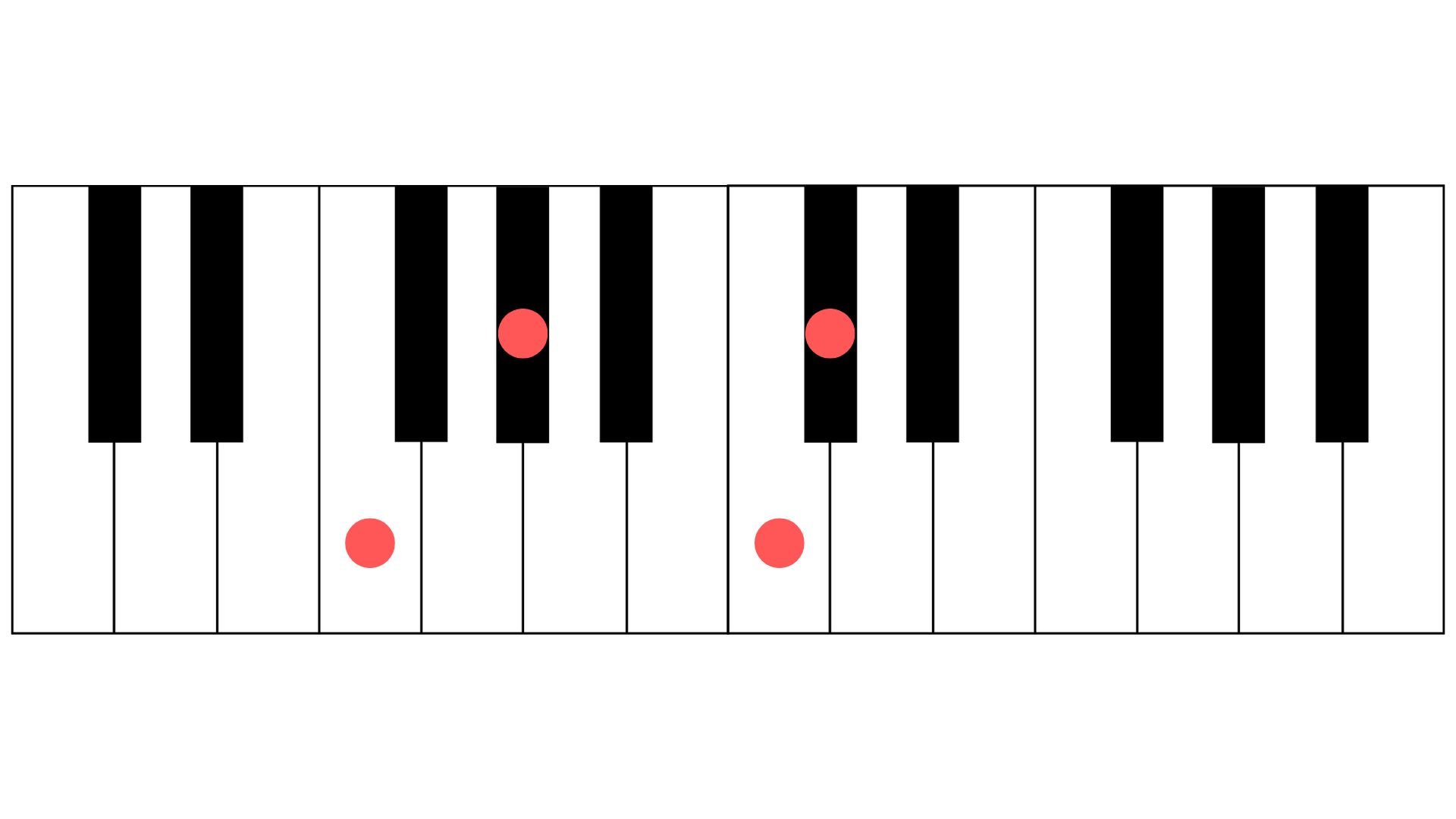
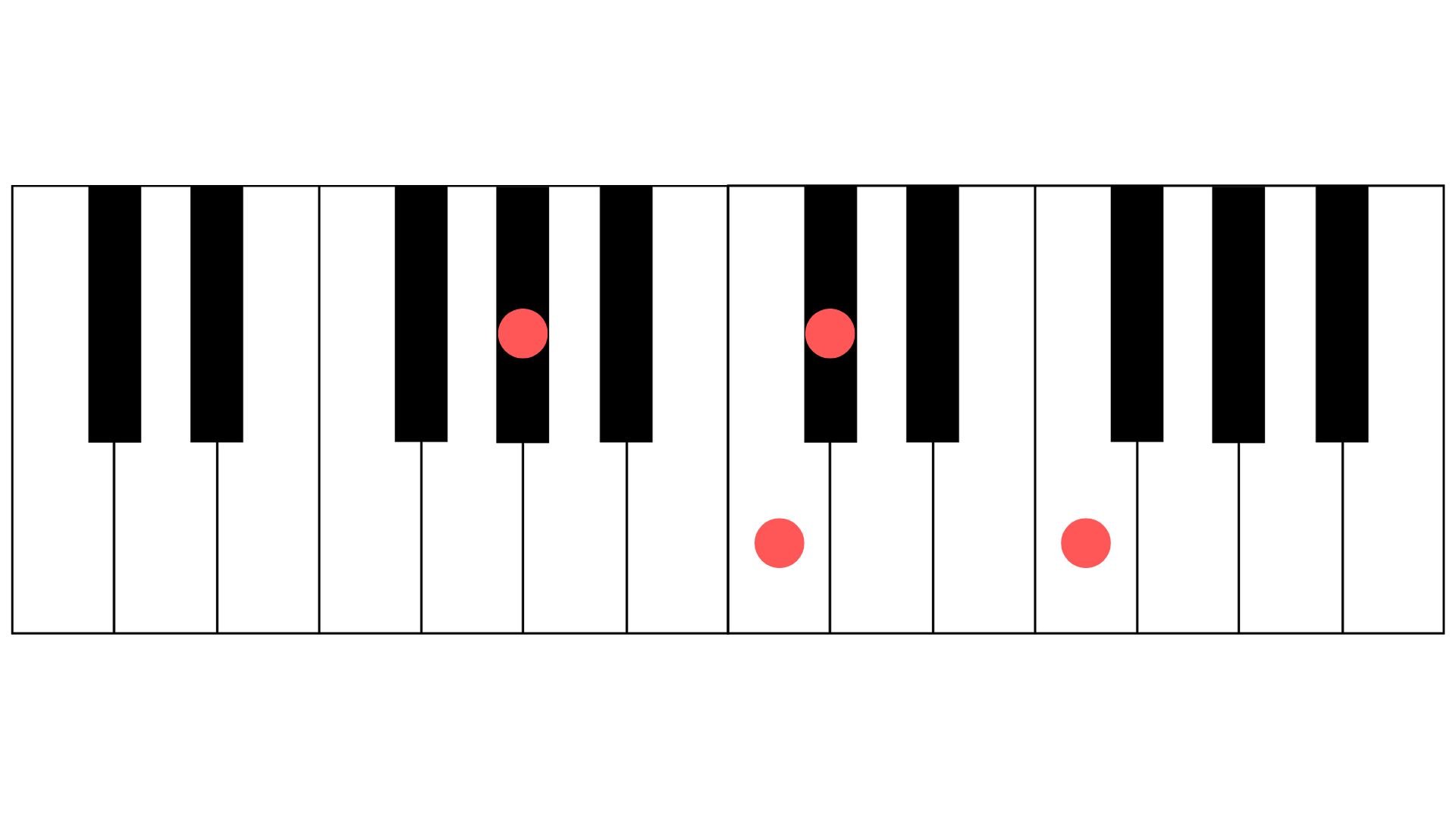
Root
Db F Ab
1st Inversion
F Ab Db
2nd Inversion
Ab Db F
Db Major 7th Chord Inversions
“Inversion” describes the relationship of a chord’s lowest notes to the other notes in the chord.
It is common for the left hand to play octaves or fifths, while the right hand plays the chord in part or in full.
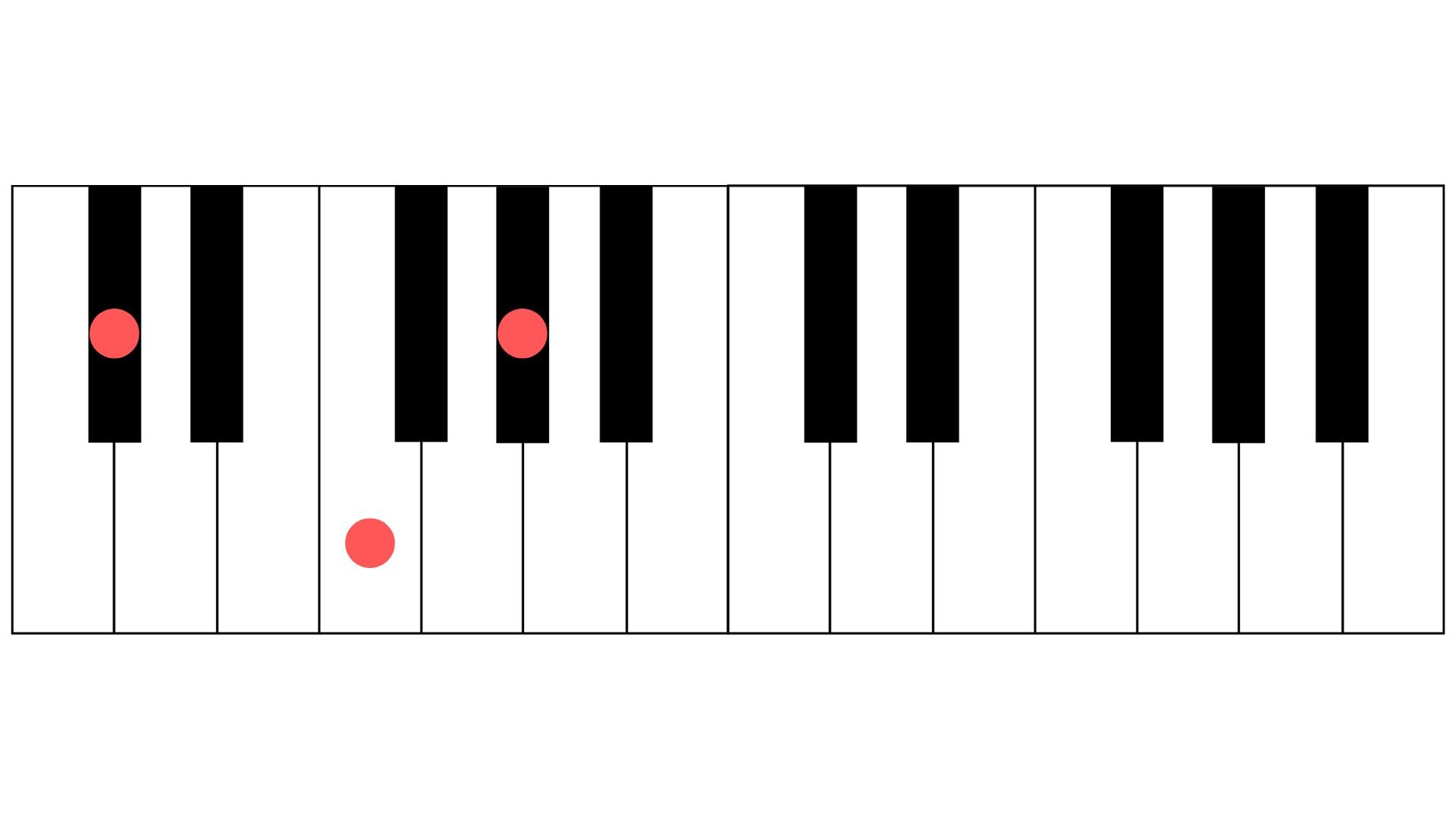
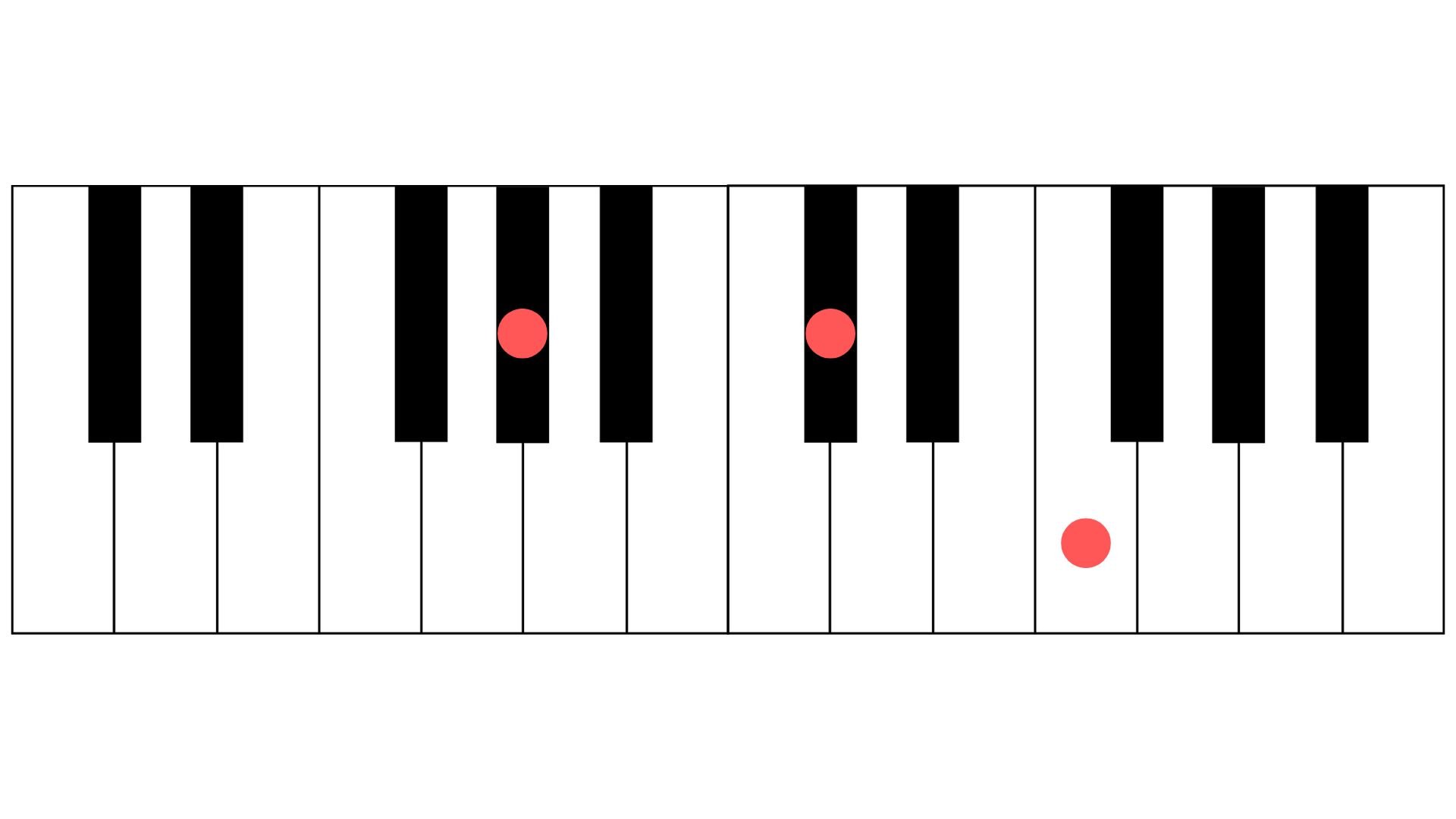
Root
Db F Ab C
1st Inversion
F Ab C Db
2nd Inversion
Ab C Db F
3rd Inversion
C Db F Ab


-
Inversions allow for smoother voice leading and create more fluid chord progressions. When moving from one chord to another, inversions help minimize large jumps or leaps between chord tones. This makes it easier to play chords and contributes to a more seamless and connected sound, enhancing the overall musical flow.
-
The highest note of a chord is naturally more noticeable to the human ear, making it useful when selecting chord inversions for song beginnings or endings.
The root position chord provides a stable and solid sound, serving as a strong foundation for harmony. However, since the top note is the 5th of the scale, it may leave listeners with a sense of incompleteness or anticipation of further musical development.
The 1st inversion chord, with the top note being the tonic note of the key, is the most suitable inversion for concluding a song, establishing a new key center, or signaling the end of a piece.
The second inversion chord has a brighter and expansive sound, emphasizing the third note of the home key. It is a pleasant choice for both song beginnings and endings due to its emphasis on the chord's major tonality.

-
When playing a Db major scale with your right hand on the piano, you can use the following finger pattern:
Db - Eb - F - Gb - Ab - Bb - C - Db
2 3 1 2 3 4 1 2/3When playing a Db major scale with your left hand on the piano, you can use the following finger pattern:
Db - Eb - F - Gb - Ab - Bb - C - Db
3 2 1 4 3 2 1 3

-
When playing 7th chords on the piano, it is important to understand that not all notes of the chord need to be played with one hand. You can disperse the notes between both the left hand and the right hand. Here is our recommended structure:
Left Hand - 1, 5, (optional 8)
Right Hand - 3, 5, 7, (optional 2 for flavor)
Note: This is just a recommendation. The notes do not have to be played specifically as shown. You can choose your own voicing.
-
Use the following mnemonic to help you remember:
Order of Sharps - Father Charles Goes Down And Ends Battle
Order of Flats - Battle Ends And Down Goes Charles’ Father
Note: In both cases, the first letter of each word in the phrase corresponds to the order of sharps or flats.
-
The circle of fifths can help you determine key signatures by providing a visual representation of the relationships between different keys. Here's how you can use the circle of fifths to determine key signatures:
Start at the top: The top of the circle represents the key of C major or A minor, which has no sharps or flats in its key signature.
Moving clockwise: Moving clockwise around the circle, each key is a fifth higher than the previous one. As you move around the circle, each clockwise movement adds one sharp to the key signature. For example, the first key after C major is G major, which has one sharp (F#). The next key, D major, has two sharps (F# and C#), and so on. To know which notes are sharp, use the following mnemonic: Father Charles Goes Down And Ends Battle.
Moving counter-clockwise: If you move counterclockwise from C major, each key is a fourth lower than the previous one. As you move around the circle, each movement adds one flat to the key signature. For example, the first key after C major is F major, which has 1 flat (Bb). Followed by Bb major (Bb, Eb), and then Eb major (Bb, Eb, Ab), and so on. To know which notes are flat, use the previous mnemonic but in reverse: Battle Ends And Down Goes Charles’ Father.
Note: Major keys and their relative minor keys share the same key signature. For example, C major and A minor have no sharps or flats, while G major and E minor have one sharp (F#), and so on.
Key Signature:
5 Flats: Bb Eb Ab Db Gb
Order of Sharps: F C G D A E B
Order of Flats: B E A D G C F
-
To remember which diatonic chords are major and minor within a key, you can use the following pattern:
Major - minor - minor - Major - Major - minor - diminished
M m m M M m d
1 2 3 4 5 6 7Note: This pattern is consistent in all key signatures. In other words, the 1 chord is always major, the 2 chord is always minor, the 3 chord is always minor, and so on.
-
The Nashville Number System is a method of music notation that uses numbers to represent the chords and their relationships within a key. It is commonly used in the music industry–particularly in Nashville, Tennessee, hence its name–and is very common within worship teams. The reason why it is used is because it is the most flexible and efficient way to communicate chord progressions and harmonic structures in various keys without relying on specific chord names.
In the Nashville Number System, the numbers correspond to chords built on specific scale degrees of the major scale. Here’s how the system works for diatonic chords:
Chords 1, 4, 5 are always major chords.
Chords 2, 3, 6 are always minor chords.
The 7 chord is always diminished.
-
The Roman numeral system in diatonic chords is a way to represent chords based on their position within a major or minor key. It provides a standardized method to notate chords regardless of the key in which they are used. Here's how the Roman numeral system works for diatonic chords:
Uppercase Roman numerals (I, IV, V) represent major chords.
Lowercase Roman numerals (ii, iii, vi) represent minor chords.
A lowercase Roman numeral with a degree symbol (vii°) represents a diminished chord.
-
Learning the intervals in a major scale is important because it helps you:
Enhance familiarity with specific key signatures.
Build chords by understanding the intervallic relationships.
Transpose music to different keys accurately.
Improvise melodies more fluently by navigating intervals.
Understand music theory concepts like scales, modes, and chord progressions.
-
The perfect intervals consist of the unison (P1), fourth (P4), fifth (P5), and octave (P8). They are highly stable, possessing a strong, pure, and distinct sound. These intervals are often associated with resolution and stability, contributing to consonance and harmony in harmonic contexts.
On the other hand, the major intervals comprise the major 2nd (M2), major 3rd (M3), major 6th (M6), and major 7th (M7). They are not referred to as “perfect” because they are the only intervals that can be lowered to create "minor" intervals. For instance, a major third can be lowered to become a minor 3rd. In contrast, if you were to lower perfect intervals, they would become major intervals. For example, if you lower a perfect 4th, it becomes a major third. The exception to this rule is the perfect 5th, which becomes a diminished 5th when lowered, not a minor 5th.
-
Practice singing or playing the intervals of a major scale without relying on a reference pitch. For example, play the first note of the scale, and then sing or play the second note using the correct interval (e.g., a major second). Continue this exercise for each subsequent note in the scale. Here are some reference points from familiar melodies to help you:
Major 2nd: Happy Birthday
Major 3rd: When the Saints Go Marching In
Perfect 4th: Amazing Grace
Perfect 5th: Star Wars (Main Theme)
Major 6th: My Bonnie Lies Over the Ocean
Major 7th: Take On Me
Perfect 8th: Somewhere Over the Rainbow
-
To remember which diatonic 7th chords are major and minor within a key, you can use the following pattern:
Major 7 - minor 7 - minor 7 - Major 7 - Dominant 7 - minor 7 - half diminished
M7 m7 m7 M7 7 m7 ø7
1 2 3 4 5 6 7Note: This pattern is consistent in all key signatures, no matter which key you choose to play in.
-
The term "dominant" signifies that the chord is built on the fifth degree of the major scale, while the "7" indicates a lowered seventh interval from the root note of the chord, not the 7th interval of the home key.
The dominant 7 chord has a specific interval structure, consisting of a major third, perfect fifth, and lowered seventh (minor seventh). This combination creates a distinct sound, generating a strong sense of tension that seeks resolution to the 1 chord.
The reason for lowering the 7th of the chord is to ensure all notes adhere to the key signature of the home key. In the key of C major, for instance, the dominant chord is the fifth note (G), which forms a G major chord (G-B-D). Adding a seventh transforms it into a dominant 7th chord (G-B-D-F). The lowered seventh occurs because the key signature of the G chord includes an F#, whereas the home key's key signature requires it to be lowered to an F natural (a regular F) due to C having no sharps or flats.
-
Half Diminished 7th Chord (ø7):
Interval Structure: A half diminished 7th chord consists of a root, a minor third, a diminished fifth, and a minor seventh.
Symbol: The symbol used to denote a half diminished 7th chord is "ø7" or "-7(b5)".
Example: In the key of C major, the half diminished 7th chord built on the seventh degree (Bø7) would contain the notes B-D-F-A.
Diminished 7th Chord (°7):
Interval Structure: A diminished 7th chord consists of a root, a minor third, a diminished fifth, and a diminished seventh. It is essentially a stack of minor thirds.
Symbol: The symbol used to denote a diminished 7th chord is "dim7" or °7.
Example: In the key of C major, the diminished 7th chord built on the seventh degree (Bdim7) would contain the notes B-D-F-Ab.
Note: The diminished 7th chord is known for its symmetrical structure, as each interval between its notes is a minor third. It creates a highly dissonant and unresolved sound and can be used as a passing chord or for chromatic movement in chord progressions.
D Major Scale
D E F# G A B C# D
Scale Pattern: T - T - S - T - T - T - S
-
All major scales consist of eight notes that follow a specific pattern of tones (T) and semitones (S). A tone (also known as a whole step) corresponds to a two-fret distance on a guitar or a two-key distance on a piano, while a semitone (also known as a half step) corresponds to a one-fret distance on a guitar or a one-key distance on a piano. The formula is as follows:
T - T - S - T - T - T - S
Using the D major scale as an example, we apply the tone (T) or semitone (S) pattern starting from the note D:
D - E - F# - G - A - B - C# - D
^ ^ ^ ^ ^ ^ ^
T T S T T T SNote: By following this pattern, you can construct major scales in any key using tones (T) and semitones (S).
D Major Diatonic Chords
“Diatonic” means “Within the key.” Below are the chords that naturally belong to the key of D major, without any chromatic alteration.
Common major chord symbols: M, maj, +, △ Common minor chord symbols: m, min, -
Chord Type
Nash. #
Rom. #
Chord
Notes
Chord Type
Nash. #
Rom. #
Chord
Notes
Major
1
I
D
D F# A
minor
2m
ii
Em
E G B
minor
3m
iii
F#m
F# A C#
Major
4
IV
G
G B D
Major
5
V
A
A C# E
minor
6m
vi
Bm
B D F#
diminished
7°
vii°
C#dim
C# E G
D Major Diatonic 7th Chords
These are the same as above, but in the form of 7th chords.
Common major chord symbols: M7, maj7, +7, △7 Common minor chord symbols: m7, min7, -7
Major 7
1
Imaj7
Dmaj7
D F# A C#
minor 7
2m7
ii7
Em7
E G B D
minor 7
3m7
iii7
F#m7
F# A C# E
Major 7
4
IVmaj7
Gmaj7
G B D F#
Dominant 7*
5
V7
A7
A C# E G
minor 7
6m
vi7
Bm7
B D F# A
half dim 7*
7ø
viiø7
C#ø7
C# E G B
D Major Intervals
“Interval” refers to the distance between two notes. Below are the scale degrees and intervals in the key of D Major.
Major 2nd
E
Major 3rd
F#
Perfect 4th
G
Perfect 5th
A
Major 6th
B
Major 7th
C#
Octave
D
Unison
D
D Major Chord Inversions
“Inversion” describes the relationship of a triad’s lowest note to the other notes in the chord.
Choosing the right inversion will help to smooth out motion from chord to chord.
Root
D F# A
1st Inversion
F# A D
2nd Inversion
A D F#
D Major 7th Chord Inversions
“Inversion” describes the relationship of a chord’s lowest notes to the other notes in the chord.
It is common for the left hand to play octaves or fifths, while the right hand plays the chord in part or in full.
Root
D F# A C#
1st Inversion
F# A C# D
2nd Inversion
A C# D F#
3rd Inversion
C# D F# A
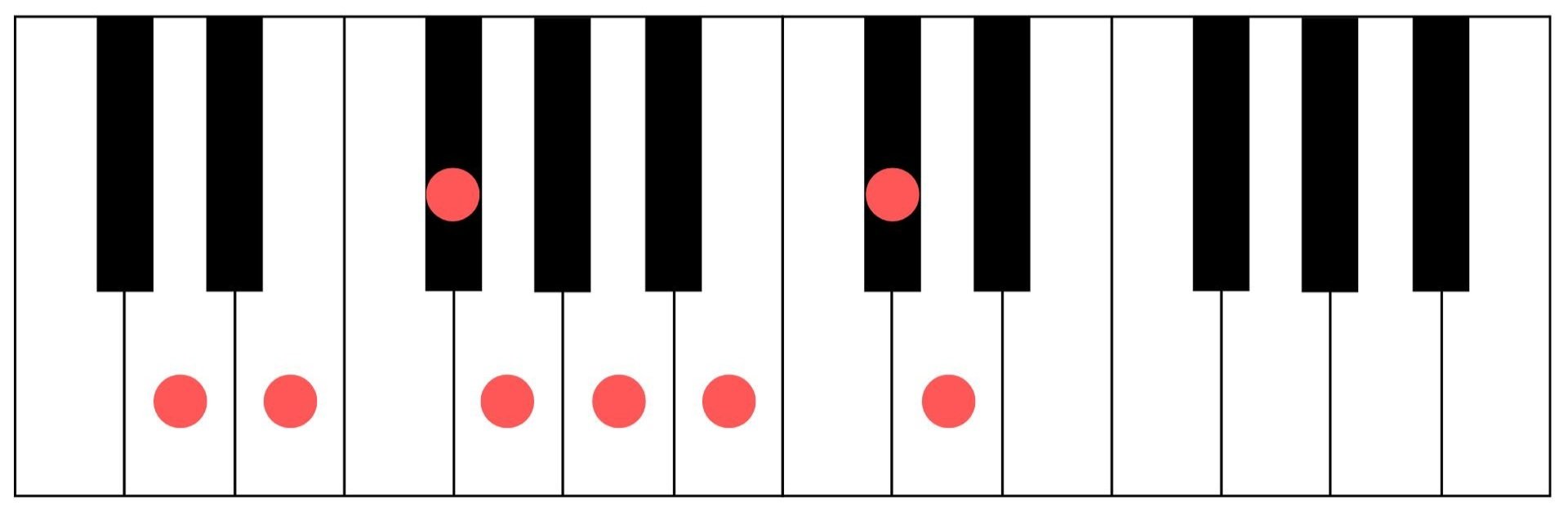
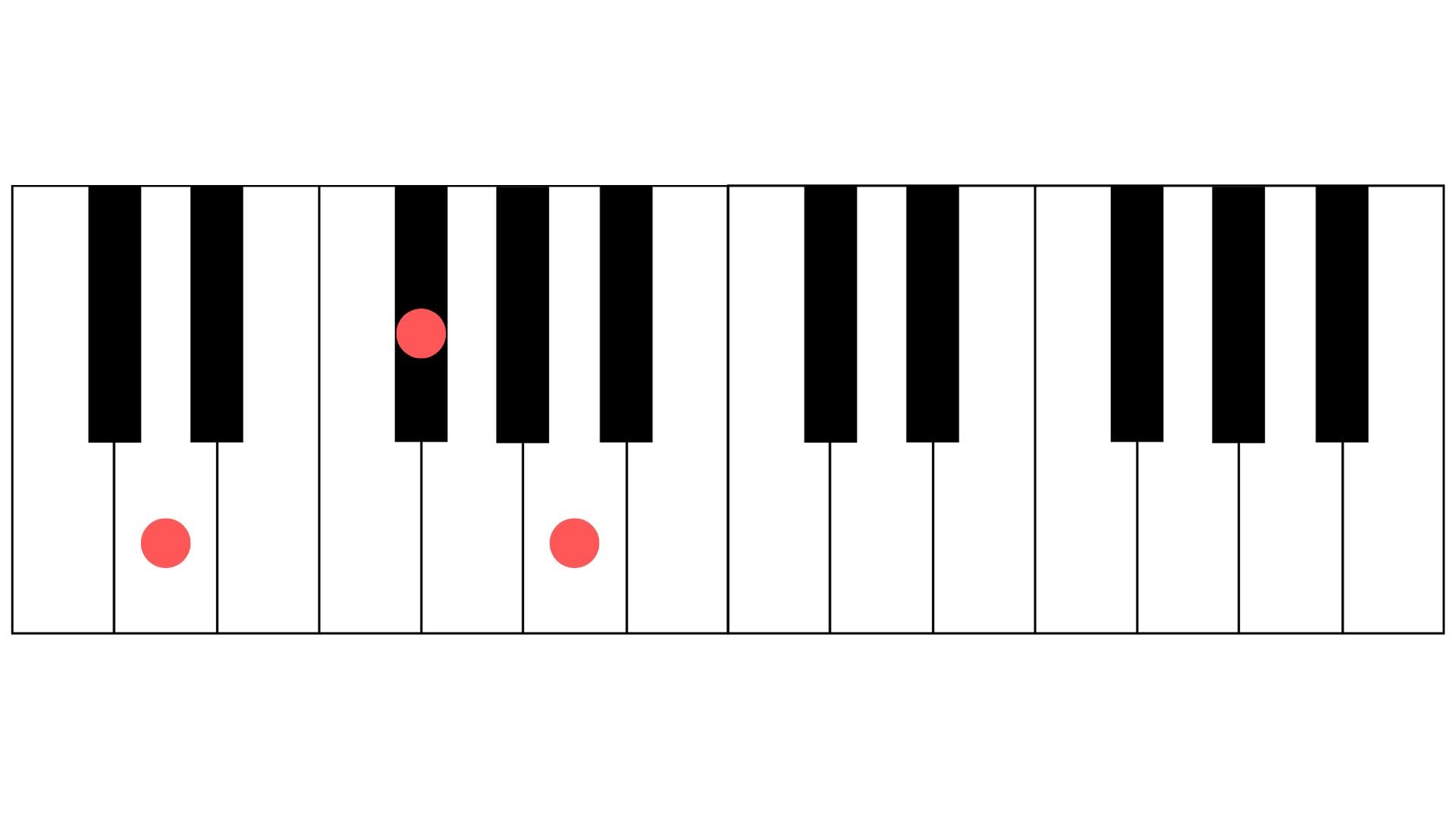

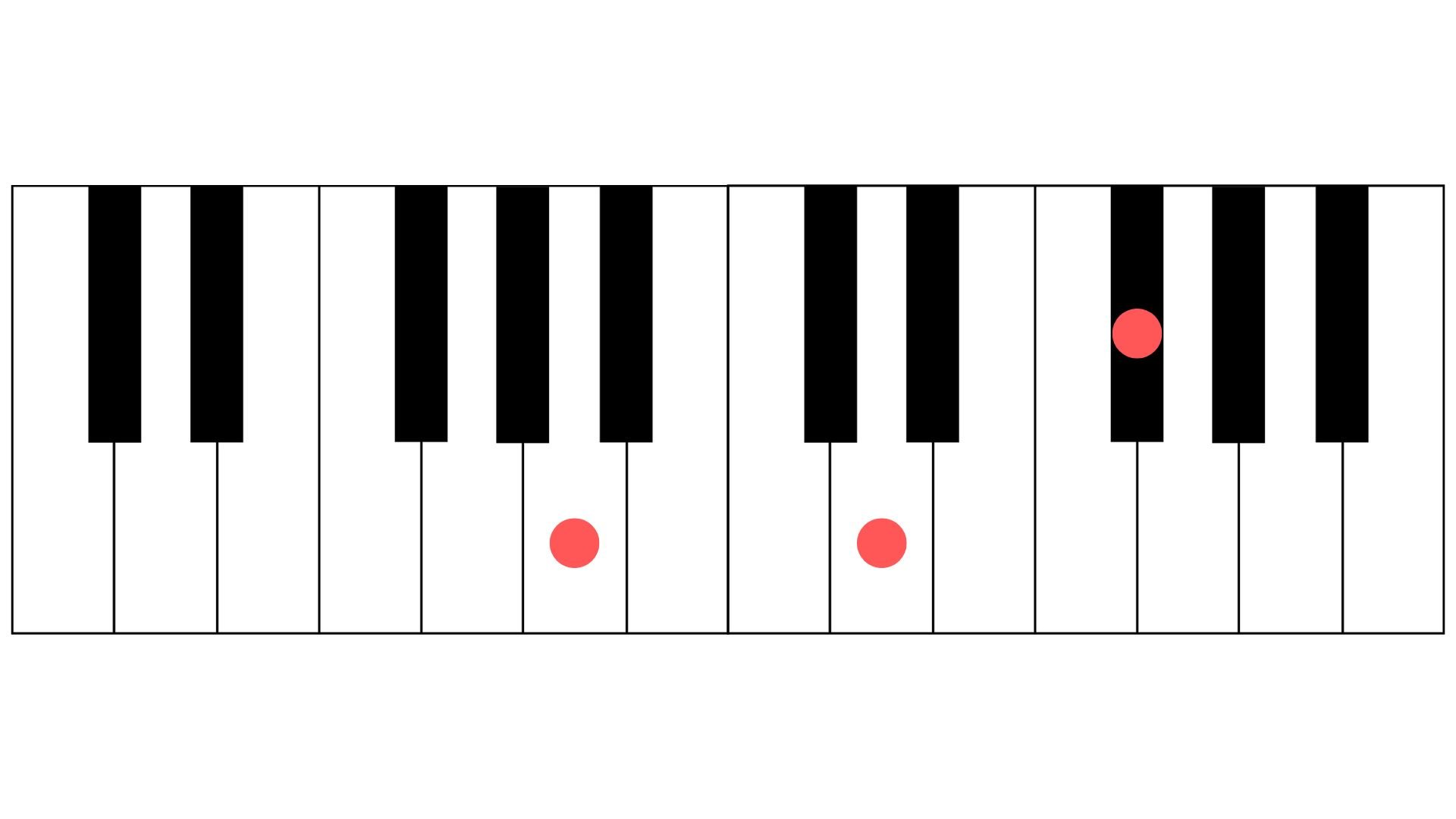
-
Inversions allow for smoother voice leading and create more fluid chord progressions. When moving from one chord to another, inversions help minimize large jumps or leaps between chord tones. This makes it easier to play chords and contributes to a more seamless and connected sound, enhancing the overall musical flow.
-
The highest note of a chord is naturally more noticeable to the human ear, making it useful when selecting chord inversions for song beginnings or endings.
The root position chord provides a stable and solid sound, serving as a strong foundation for harmony. However, since the top note is the 5th of the scale, it may leave listeners with a sense of incompleteness or anticipation of further musical development.
The 1st inversion chord, with the top note being the tonic note of the key, is the most suitable inversion for concluding a song, establishing a new key center, or signaling the end of a piece.
The second inversion chord has a brighter and expansive sound, emphasizing the third note of the home key. It is a pleasant choice for both song beginnings and endings due to its emphasis on the chord's major tonality.
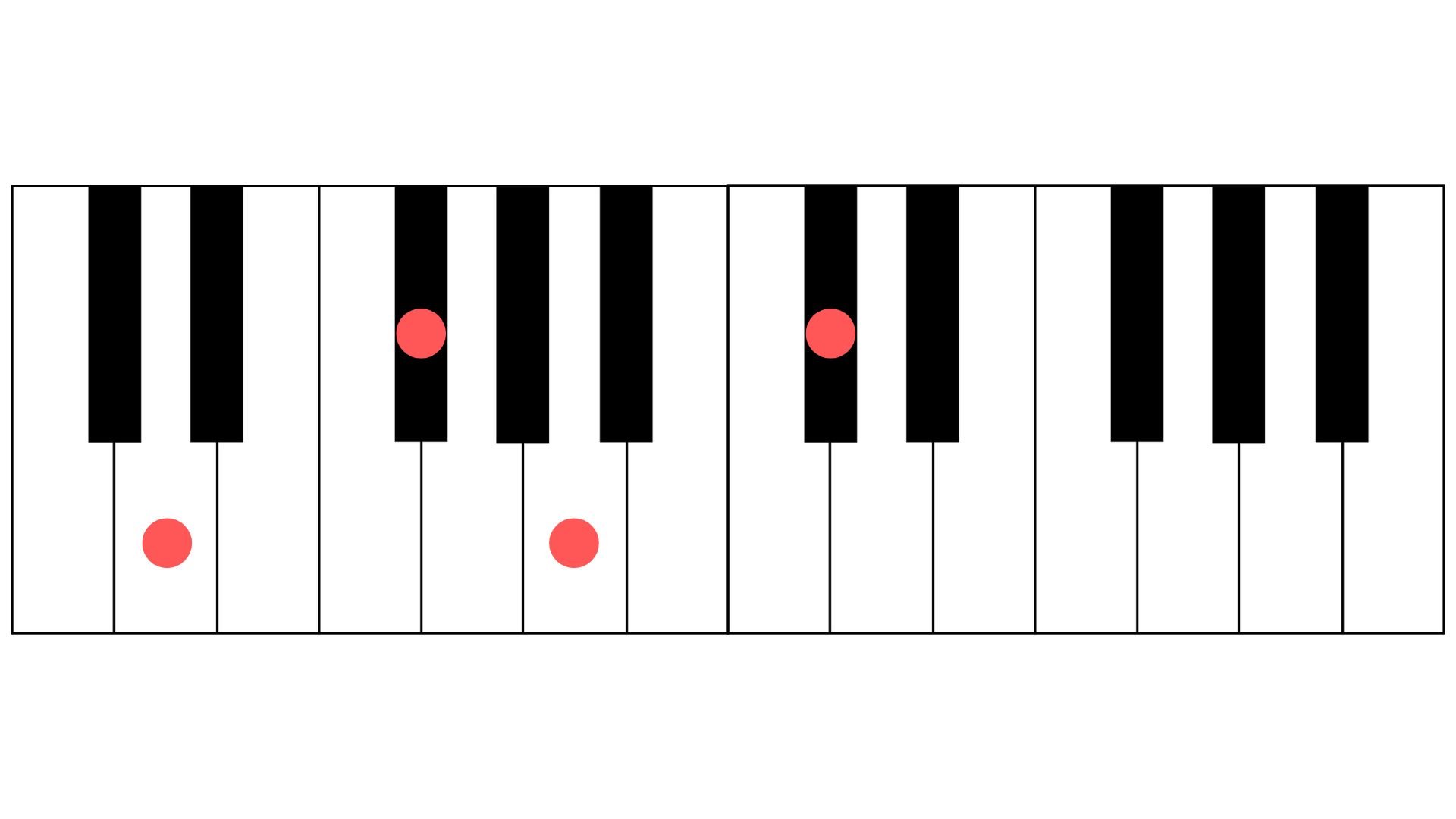

-
When playing a D major scale with your right hand on the piano, you can use the following finger pattern:
D - E - F# - G - A - B - C# - D
1 2 3 1 2 3 4 5When playing a D major scale with your left hand on the piano, you can use the following finger pattern:
D - E - F# - G - A - B - C# - D
5 4 3 2 1 3 2 1


-
When playing 7th chords on the piano, it is important to understand that not all notes of the chord need to be played with one hand. You can disperse the notes between both the left hand and the right hand. Here is our recommended structure:
Left Hand - 1, 5, (optional 8)
Right Hand - 3, 5, 7, (optional 2 for flavor)
Note: This is just a recommendation. The notes do not have to be played specifically as shown. You can choose your own voicing.
-
Use the following mnemonic to help you remember:
Order of Sharps - Father Charles Goes Down And Ends Battle
Order of Flats - Battle Ends And Down Goes Charles’ Father
Note: In both cases, the first letter of each word in the phrase corresponds to the order of sharps or flats.
-
The circle of fifths can help you determine key signatures by providing a visual representation of the relationships between different keys. Here's how you can use the circle of fifths to determine key signatures:
Start at the top: The top of the circle represents the key of C major or A minor, which has no sharps or flats in its key signature.
Moving clockwise: Moving clockwise around the circle, each key is a fifth higher than the previous one. As you move around the circle, each clockwise movement adds one sharp to the key signature. For example, the first key after C major is G major, which has one sharp (F#). The next key, D major, has two sharps (F# and C#), and so on. To know which notes are sharp, use the following mnemonic: Father Charles Goes Down And Ends Battle.
Moving counter-clockwise: If you move counterclockwise from C major, each key is a fourth lower than the previous one. As you move around the circle, each movement adds one flat to the key signature. For example, the first key after C major is F major, which has 1 flat (Bb). Followed by Bb major (Bb, Eb), and then Eb major (Bb, Eb, Ab), and so on. To know which notes are flat, use the previous mnemonic but in reverse: Battle Ends And Down Goes Charles’ Father.
Note: Major keys and their relative minor keys share the same key signature. For example, C major and A minor have no sharps or flats, while G major and E minor have one sharp (F#), and so on.
D Key Signature
2 Sharps: F# C#
Order of Sharps: F C G D A E B
Order of Flats: B E A D G C F
-
Learning the intervals in a major scale is important because it helps you:
Enhance familiarity with specific key signatures.
Build chords by understanding the intervallic relationships.
Transpose music to different keys accurately.
Improvise melodies more fluently by navigating intervals.
Understand music theory concepts like scales, modes, and chord progressions.
-
The perfect intervals consist of the unison (P1), fourth (P4), fifth (P5), and octave (P8). They are highly stable, possessing a strong, pure, and distinct sound. These intervals are often associated with resolution and stability, contributing to consonance and harmony in harmonic contexts.
On the other hand, the major intervals comprise the major 2nd (M2), major 3rd (M3), major 6th (M6), and major 7th (M7). They are not referred to as “perfect” because they are the only intervals that can be lowered to create "minor" intervals. For instance, a major third can be lowered to become a minor 3rd. In contrast, if you were to lower perfect intervals, they would become major intervals. For example, if you lower a perfect 4th, it becomes a major third. The exception to this rule is the perfect 5th, which becomes a diminished 5th when lowered, not a minor 5th.
-
Practice singing or playing the intervals of a major scale without relying on a reference pitch. For example, play the first note of the scale, and then sing or play the second note using the correct interval (e.g., a major second). Continue this exercise for each subsequent note in the scale. Here are some reference points from familiar melodies to help you:
Major 2nd: Happy Birthday
Major 3rd: When the Saints Go Marching In
Perfect 4th: Amazing Grace
Perfect 5th: Star Wars (Main Theme)
Major 6th: My Bonnie Lies Over the Ocean
Major 7th: Take On Me
Perfect 8th: Somewhere Over the Rainbow
-
To remember which diatonic 7th chords are major and minor within a key, you can use the following pattern:
Major 7 - minor 7 - minor 7 - Major 7 - Dominant 7 - minor 7 - half diminished
M7 m7 m7 M7 7 m7 ø7
1 2 3 4 5 6 7Note: This pattern is consistent in all key signatures, no matter which key you choose to play in.
-
The term "dominant" signifies that the chord is built on the fifth degree of the major scale, while the "7" indicates a lowered seventh interval from the root note of the chord, not the 7th interval of the home key.
The dominant 7 chord has a specific interval structure, consisting of a major third, perfect fifth, and lowered seventh (minor seventh). This combination creates a distinct sound, generating a strong sense of tension that seeks resolution to the 1 chord.
The reason for lowering the 7th of the chord is to ensure all notes adhere to the key signature of the home key. In the key of C major, for instance, the dominant chord is the fifth note (G), which forms a G major chord (G-B-D). Adding a seventh transforms it into a dominant 7th chord (G-B-D-F). The lowered seventh occurs because the key signature of the G chord includes an F#, whereas the home key's key signature requires it to be lowered to an F natural (a regular F) due to C having no sharps or flats.
-
Half Diminished 7th Chord (ø7):
Interval Structure: A half diminished 7th chord consists of a root, a minor third, a diminished fifth, and a minor seventh.
Symbol: The symbol used to denote a half diminished 7th chord is "ø7" or "-7(b5)".
Example: In the key of C major, the half diminished 7th chord built on the seventh degree (Bø7) would contain the notes B-D-F-A.
Diminished 7th Chord (°7):
Interval Structure: A diminished 7th chord consists of a root, a minor third, a diminished fifth, and a diminished seventh. It is essentially a stack of minor thirds.
Symbol: The symbol used to denote a diminished 7th chord is "dim7" or °7.
Example: In the key of C major, the diminished 7th chord built on the seventh degree (Bdim7) would contain the notes B-D-F-Ab.
Note: The diminished 7th chord is known for its symmetrical structure, as each interval between its notes is a minor third. It creates a highly dissonant and unresolved sound and can be used as a passing chord or for chromatic movement in chord progressions.
-
To remember which diatonic chords are major and minor within a key, you can use the following pattern:
Major - minor - minor - Major - Major - minor - diminished
M m m M M m d
1 2 3 4 5 6 7Note: This pattern is consistent in all key signatures. In other words, the 1 chord is always major, the 2 chord is always minor, the 3 chord is always minor, and so on.
-
The Nashville Number System is a method of music notation that uses numbers to represent the chords and their relationships within a key. It is commonly used in the music industry–particularly in Nashville, Tennessee, hence its name–and is very common within worship teams. The reason why it is used is because it is the most flexible and efficient way to communicate chord progressions and harmonic structures in various keys without relying on specific chord names.
In the Nashville Number System, the numbers correspond to chords built on specific scale degrees of the major scale. Here’s how the system works for diatonic chords:
Chords 1, 4, 5 are always major chords.
Chords 2, 3, 6 are always minor chords.
The 7 chord is always diminished.
-
The Roman numeral system in diatonic chords is a way to represent chords based on their position within a major or minor key. It provides a standardized method to notate chords regardless of the key in which they are used. Here's how the Roman numeral system works for diatonic chords:
Uppercase Roman numerals (I, IV, V) represent major chords.
Lowercase Roman numerals (ii, iii, vi) represent minor chords.
A lowercase Roman numeral with a degree symbol (vii°) represents a diminished chord.
Eb Major Scale
Eb F G Ab Bb C D Eb
Scale Pattern: T - T - S - T - T - T - S
-
All major scales consist of eight notes that follow a specific pattern of tones (T) and semitones (S). A tone (also known as a whole step) corresponds to a two-fret distance on a guitar or a two-key distance on a piano, while a semitone (also known as a half step) corresponds to a one-fret distance on a guitar or a one-key distance on a piano. The formula is as follows:
T - T - S - T - T - T - S
Using the Eb major scale as an example, we apply the tone (T) or semitone (S) pattern starting from the note Eb:
Eb - F - G - Ab - Bb - C - D - Eb
^ ^ ^ ^ ^ ^ ^
T T S T T T SNote: By following this pattern, you can construct major scales in any key using tones (T) and semitones (S).
Eb Major Diatonic Chords
“Diatonic” means “Within the key.” Below are the chords that naturally belong to the key of Eb major, without any chromatic alteration.
Common major chord symbols: M, maj, +, △ Common minor chord symbols: m, min, -
Chord Type
Nash. #
Rom. #
Chord
Notes
Chord Type
Nash. #
Rom. #
Chord
Notes
Major
1
I
Eb
Eb G Bb
minor
2m
ii
Fm
F Ab C
minor
3m
iii
Gm
G Bb D
Major
4
IV
Ab
Ab C Eb
Major
5
V
Bb
Bb D F
minor
6m
vi
Cm
C Eb G
diminished
7°
vii°
Ddim
D F Ab
Eb Major Diatonic 7th Chords
These are the same as above, but in the form of 7th chords.
Common major chord symbols: M7, maj7, +7, △7 Common minor chord symbols: m7, min7, -7
Major 7
1
Imaj7
EbM7
Eb G Bb D
minor 7
2m7
ii7
Fm7
F Ab C Eb
minor 7
3m7
iii7
Gm7
G Bb D F
Major 7
4
IVmaj7
AbM7
Ab C Eb G
Dominant 7*
5
V7
Bb7
Bb D F Ab
minor 7
6m
vi7
Cm7
C Eb G Bb
half dim 7*
7ø
viiø7
Dø7
D F Ab C
Eb Major Intervals
“Interval” refers to the distance between two notes. Below are the scale degrees and intervals in the key of Eb Major.
Major 2nd
F
Major 3rd
G
Perfect 4th
Ab
Perfect 5th
Bb
Major 6th
C
Major 7th
D
Octave
Eb
Unison
Eb
Eb Major Chord Inversions
“Inversion” describes the relationship of a triad’s lowest note to the other notes in the chord.
Choosing the right inversion will help to smooth out motion from chord to chord.
Root
Eb G Bb
1st Inversion
G Bb Eb
2nd Inversion
Bb Eb G
Eb Major 7th Chord Inversions
“Inversion” describes the relationship of a chord’s lowest notes to the other notes in the chord.
It is common for the left hand to play octaves or fifths, while the right hand plays the chord in part or in full.
Root
Eb G Bb D
1st Inversion
G Bb D Eb
2nd Inversion
Bb D Eb G
3rd Inversion
D Eb G Bb
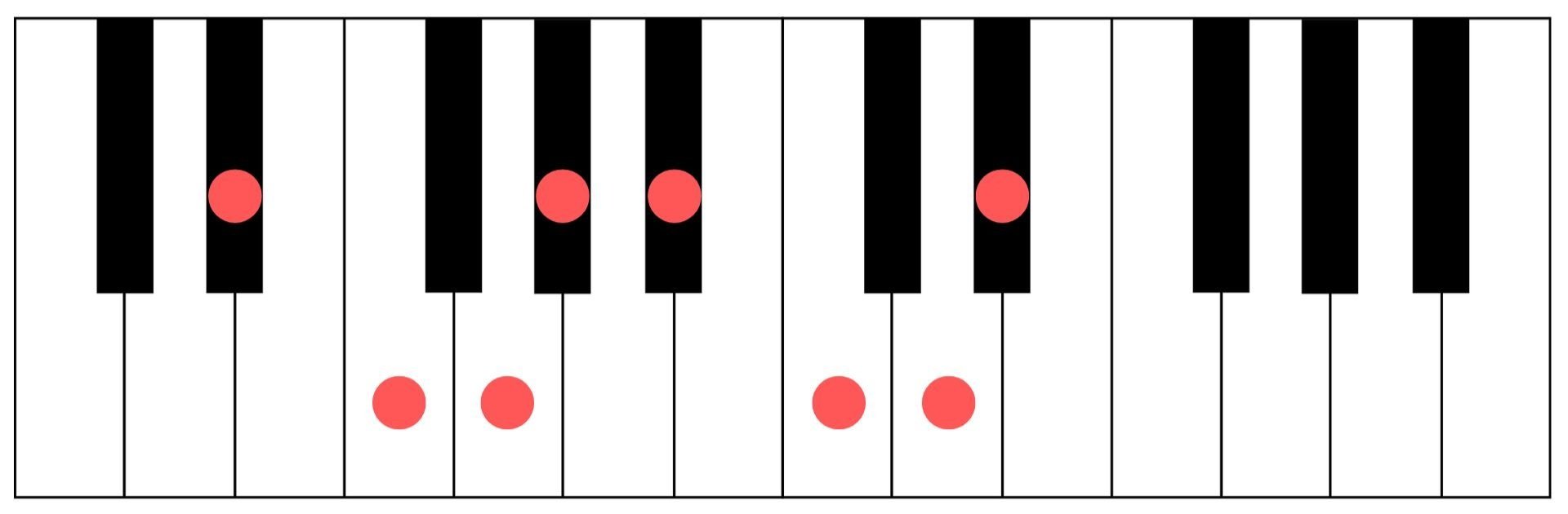
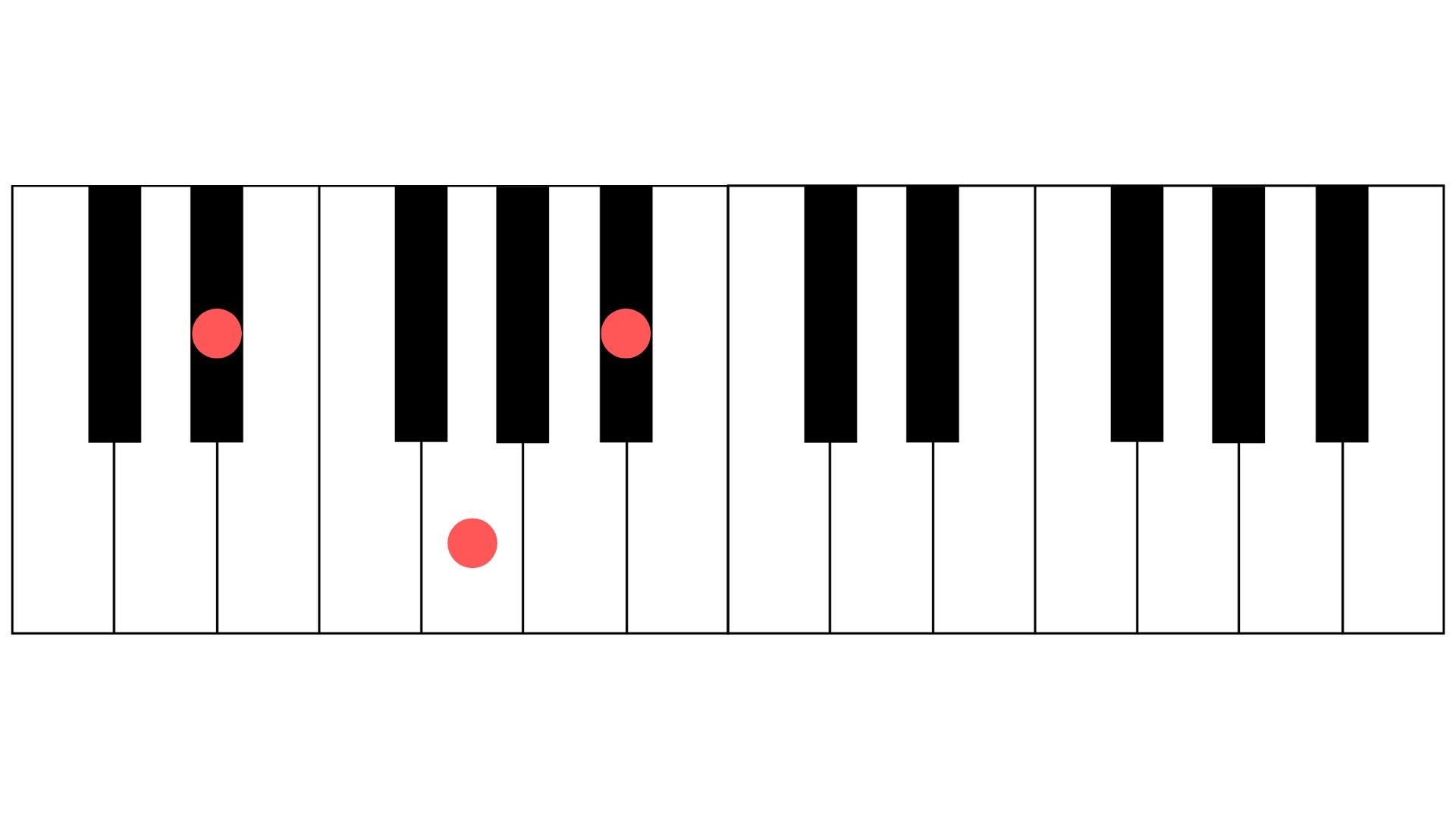
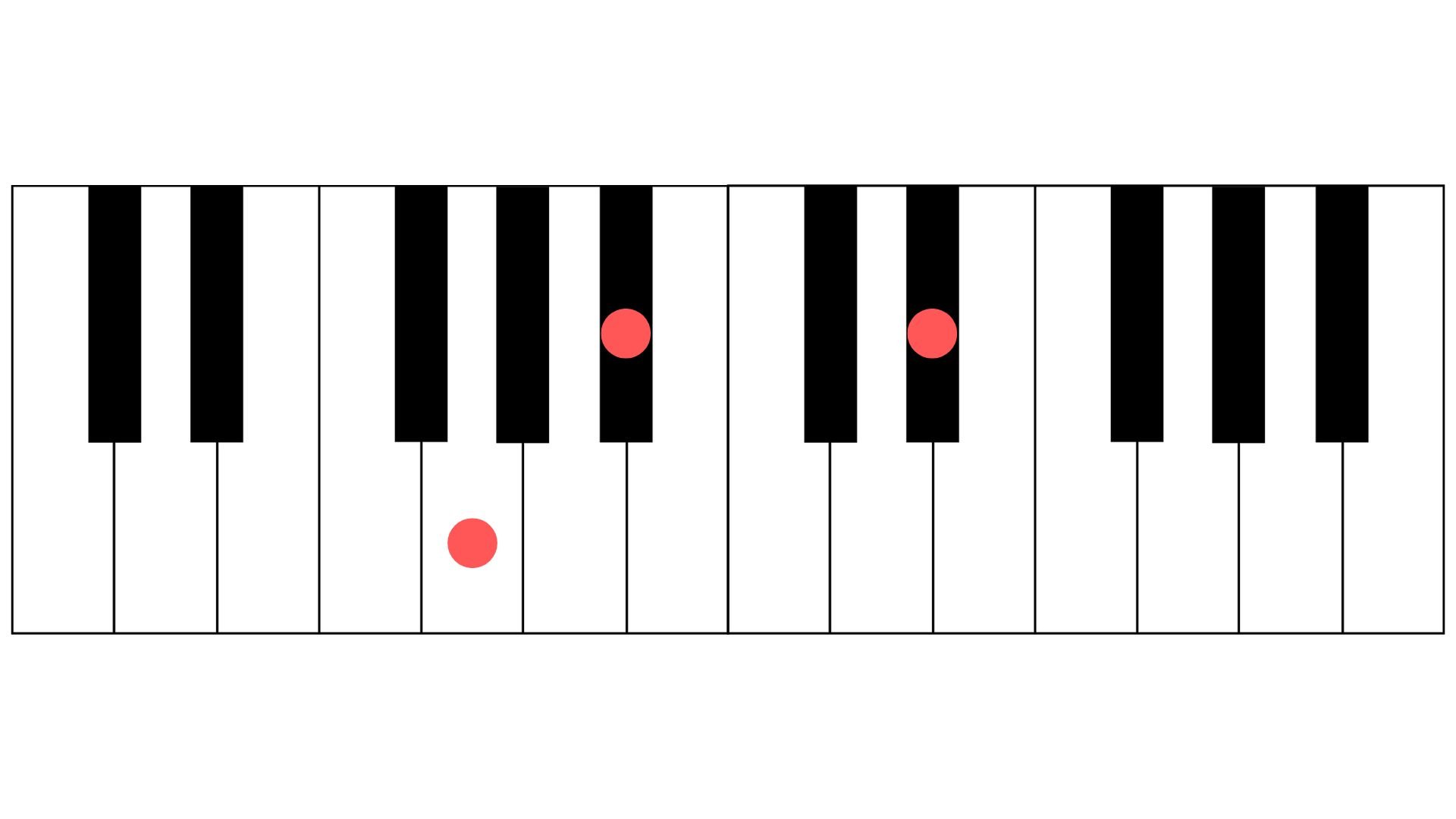

-
Inversions allow for smoother voice leading and create more fluid chord progressions. When moving from one chord to another, inversions help minimize large jumps or leaps between chord tones. This makes it easier to play chords and contributes to a more seamless and connected sound, enhancing the overall musical flow.
-
The highest note of a chord is naturally more noticeable to the human ear, making it useful when selecting chord inversions for song beginnings or endings.
The root position chord provides a stable and solid sound, serving as a strong foundation for harmony. However, since the top note is the 5th of the scale, it may leave listeners with a sense of incompleteness or anticipation of further musical development.
The 1st inversion chord, with the top note being the tonic note of the key, is the most suitable inversion for concluding a song, establishing a new key center, or signaling the end of a piece.
The second inversion chord has a brighter and expansive sound, emphasizing the third note of the home key. It is a pleasant choice for both song beginnings and endings due to its emphasis on the chord's major tonality.


-
When playing an Eb major scale with your right hand on the piano, you can use the following finger pattern:
Eb - F - G - Ab - Bb - C - D - Eb
3 1 2 3 4 1 2 3When playing an Eb major scale with your left hand on the piano, you can use the following finger pattern:
Eb - F - G - Ab - Bb - C - D - Eb
3 2 1 4 3 2 1 2/3


-
When playing 7th chords on the piano, it is important to understand that not all notes of the chord need to be played with one hand. You can disperse the notes between both the left hand and the right hand. Here is our recommended structure:
Left Hand - 1, 5, (optional 8)
Right Hand - 3, 5, 7, (optional 2 for flavor)
Note: This is just a recommendation. The notes do not have to be played specifically as shown. You can choose your own voicing.
-
Use the following mnemonic to help you remember:
Order of Sharps - Father Charles Goes Down And Ends Battle
Order of Flats - Battle Ends And Down Goes Charles’ Father
Note: In both cases, the first letter of each word in the phrase corresponds to the order of sharps or flats.
-
The circle of fifths can help you determine key signatures by providing a visual representation of the relationships between different keys. Here's how you can use the circle of fifths to determine key signatures:
Start at the top: The top of the circle represents the key of C major or A minor, which has no sharps or flats in its key signature.
Moving clockwise: Moving clockwise around the circle, each key is a fifth higher than the previous one. As you move around the circle, each clockwise movement adds one sharp to the key signature. For example, the first key after C major is G major, which has one sharp (F#). The next key, D major, has two sharps (F# and C#), and so on. To know which notes are sharp, use the following mnemonic: Father Charles Goes Down And Ends Battle.
Moving counter-clockwise: If you move counterclockwise from C major, each key is a fourth lower than the previous one. As you move around the circle, each movement adds one flat to the key signature. For example, the first key after C major is F major, which has 1 flat (Bb). Followed by Bb major (Bb, Eb), and then Eb major (Bb, Eb, Ab), and so on. To know which notes are flat, use the previous mnemonic but in reverse: Battle Ends And Down Goes Charles’ Father.
Note: Major keys and their relative minor keys share the same key signature. For example, C major and A minor have no sharps or flats, while G major and E minor have one sharp (F#), and so on.
Eb Key Signature
3 Flats: Bb Eb Ab
Order of Sharps: F C G D A E B
Order of Flats: B E A D G C F
-
To remember which diatonic chords are major and minor within a key, you can use the following pattern:
Major - minor - minor - Major - Major - minor - diminished
M m m M M m d
1 2 3 4 5 6 7Note: This pattern is consistent in all key signatures. In other words, the 1 chord is always major, the 2 chord is always minor, the 3 chord is always minor, and so on.
-
The Nashville Number System is a method of music notation that uses numbers to represent the chords and their relationships within a key. It is commonly used in the music industry–particularly in Nashville, Tennessee, hence its name–and is very common within worship teams. The reason why it is used is because it is the most flexible and efficient way to communicate chord progressions and harmonic structures in various keys without relying on specific chord names.
In the Nashville Number System, the numbers correspond to chords built on specific scale degrees of the major scale. Here’s how the system works for diatonic chords:
Chords 1, 4, 5 are always major chords.
Chords 2, 3, 6 are always minor chords.
The 7 chord is always diminished.
-
The Roman numeral system in diatonic chords is a way to represent chords based on their position within a major or minor key. It provides a standardized method to notate chords regardless of the key in which they are used. Here's how the Roman numeral system works for diatonic chords:
Uppercase Roman numerals (I, IV, V) represent major chords.
Lowercase Roman numerals (ii, iii, vi) represent minor chords.
A lowercase Roman numeral with a degree symbol (vii°) represents a diminished chord.
-
Learning the intervals in a major scale is important because it helps you:
Enhance familiarity with specific key signatures.
Build chords by understanding the intervallic relationships.
Transpose music to different keys accurately.
Improvise melodies more fluently by navigating intervals.
Understand music theory concepts like scales, modes, and chord progressions.
-
The perfect intervals consist of the unison (P1), fourth (P4), fifth (P5), and octave (P8). They are highly stable, possessing a strong, pure, and distinct sound. These intervals are often associated with resolution and stability, contributing to consonance and harmony in harmonic contexts.
On the other hand, the major intervals comprise the major 2nd (M2), major 3rd (M3), major 6th (M6), and major 7th (M7). They are not referred to as “perfect” because they are the only intervals that can be lowered to create "minor" intervals. For instance, a major third can be lowered to become a minor 3rd. In contrast, if you were to lower perfect intervals, they would become major intervals. For example, if you lower a perfect 4th, it becomes a major third. The exception to this rule is the perfect 5th, which becomes a diminished 5th when lowered, not a minor 5th.
-
Practice singing or playing the intervals of a major scale without relying on a reference pitch. For example, play the first note of the scale, and then sing or play the second note using the correct interval (e.g., a major second). Continue this exercise for each subsequent note in the scale. Here are some reference points from familiar melodies to help you:
Major 2nd: Happy Birthday
Major 3rd: When the Saints Go Marching In
Perfect 4th: Amazing Grace
Perfect 5th: Star Wars (Main Theme)
Major 6th: My Bonnie Lies Over the Ocean
Major 7th: Take On Me
Perfect 8th: Somewhere Over the Rainbow
-
To remember which diatonic 7th chords are major and minor within a key, you can use the following pattern:
Major 7 - minor 7 - minor 7 - Major 7 - Dominant 7 - minor 7 - half diminished
M7 m7 m7 M7 7 m7 ø7
1 2 3 4 5 6 7Note: This pattern is consistent in all key signatures, no matter which key you choose to play in.
-
The term "dominant" signifies that the chord is built on the fifth degree of the major scale, while the "7" indicates a lowered seventh interval from the root note of the chord, not the 7th interval of the home key.
The dominant 7 chord has a specific interval structure, consisting of a major third, perfect fifth, and lowered seventh (minor seventh). This combination creates a distinct sound, generating a strong sense of tension that seeks resolution to the 1 chord.
The reason for lowering the 7th of the chord is to ensure all notes adhere to the key signature of the home key. In the key of C major, for instance, the dominant chord is the fifth note (G), which forms a G major chord (G-B-D). Adding a seventh transforms it into a dominant 7th chord (G-B-D-F). The lowered seventh occurs because the key signature of the G chord includes an F#, whereas the home key's key signature requires it to be lowered to an F natural (a regular F) due to C having no sharps or flats.
-
Half Diminished 7th Chord (ø7):
Interval Structure: A half diminished 7th chord consists of a root, a minor third, a diminished fifth, and a minor seventh.
Symbol: The symbol used to denote a half diminished 7th chord is "ø7" or "-7(b5)".
Example: In the key of C major, the half diminished 7th chord built on the seventh degree (Bø7) would contain the notes B-D-F-A.
Diminished 7th Chord (°7):
Interval Structure: A diminished 7th chord consists of a root, a minor third, a diminished fifth, and a diminished seventh. It is essentially a stack of minor thirds.
Symbol: The symbol used to denote a diminished 7th chord is "dim7" or °7.
Example: In the key of C major, the diminished 7th chord built on the seventh degree (Bdim7) would contain the notes B-D-F-Ab.
Note: The diminished 7th chord is known for its symmetrical structure, as each interval between its notes is a minor third. It creates a highly dissonant and unresolved sound and can be used as a passing chord or for chromatic movement in chord progressions.
E Major Scale
E F# G# A B C# D# E
Scale Pattern: T - T - S - T - T - T - S
-
All major scales consist of eight notes that follow a specific pattern of tones (T) and semitones (S). A tone (also known as a whole step) corresponds to a two-fret distance on a guitar or a two-key distance on a piano, while a semitone (also known as a half step) corresponds to a one-fret distance on a guitar or a one-key distance on a piano. The formula is as follows:
T - T - S - T - T - T - S
Using the E major scale as an example, we apply the tone (T) or semitone (S) pattern starting from the note E:
E - F# - G# - A - B - C# - D# - E
^ ^ ^ ^ ^ ^ ^
T T S T T T SNote: By following this pattern, you can construct major scales in any key using tones (T) and semitones (S).
E Major Diatonic Chords
“Diatonic” means “Within the key.” Below are the chords that naturally belong to the key of E major, without any chromatic alteration.
Common major chord symbols: M, maj, +, △ Common minor chord symbols: m, min, -
Chord Type
Nash. #
Rom. #
Chord
Notes
Chord Type
Nash. #
Rom. #
Chord
Notes
Major
1
I
E
E G# B
minor
2m
ii
F#m
F# A C#
minor
3m
iii
G#m
G# B D#
Major
4
IV
A
A C# E
Major
5
V
B
B D# F#
minor
6m
vi
C#m
C# E G#
diminished
7°
vii°
D#dim
D# F# A
E Major Diatonic 7th Chords
These are the same as above, but in the form of 7th chords.
Common major chord symbols: M7, maj7, +7, △7 Common minor chord symbols: m7, min7, -7
Major 7
1
Imaj7
Emaj7
E G# B D#
minor 7
2m7
ii7
F#m7
F# A C# E
minor 7
3m7
iii7
G#m7
G# B D# F#
Major 7
4
IVmaj7
Amaj7
A C# E G#
Dominant 7*
5
V7
B7
B D# F# A
minor 7
6m
vi7
C#m7
C# E G# B
half dim 7*
7ø
viiø7
D#ø7
D# F# A C#
E Major Intervals
“Interval” refers to the distance between two notes. Below are the scale degrees and intervals in the key of E Major.
Major 2nd
F#
Major 3rd
G#
Perfect 4th
A
Perfect 5th
B
Major 6th
C#
Major 7th
D#
Octave
E
Unison
E
E Major Chord Inversions
“Inversion” describes the relationship of a triad’s lowest note to the other notes in the chord.
Choosing the right inversion will help to smooth out motion from chord to chord.
Root
E G# B
1st Inversion
G# B E
2nd Inversion
B E G#
E Major 7th Chord Inversions
“Inversion” describes the relationship of a chord’s lowest notes to the other notes in the chord.
It is common for the left hand to play octaves or fifths, while the right hand plays the chord in part or in full.
Root
E G# B D#
1st Inversion
G# B D# E
2nd Inversion
B D# E G#
3rd Inversion
D# E G# B
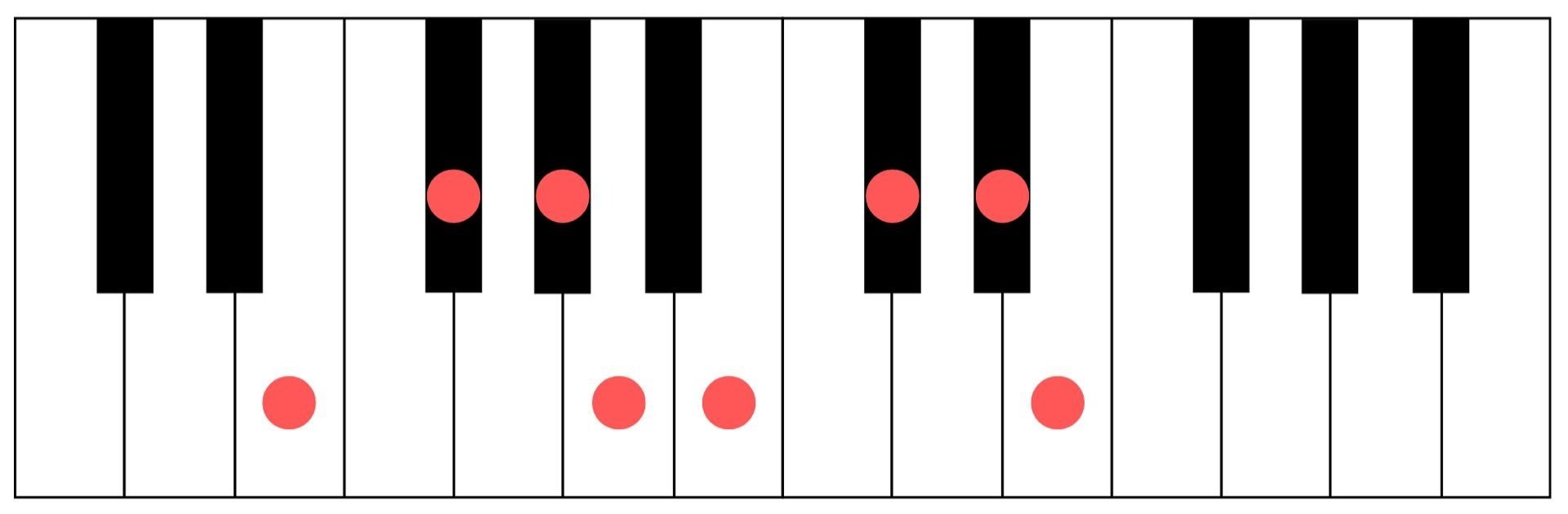


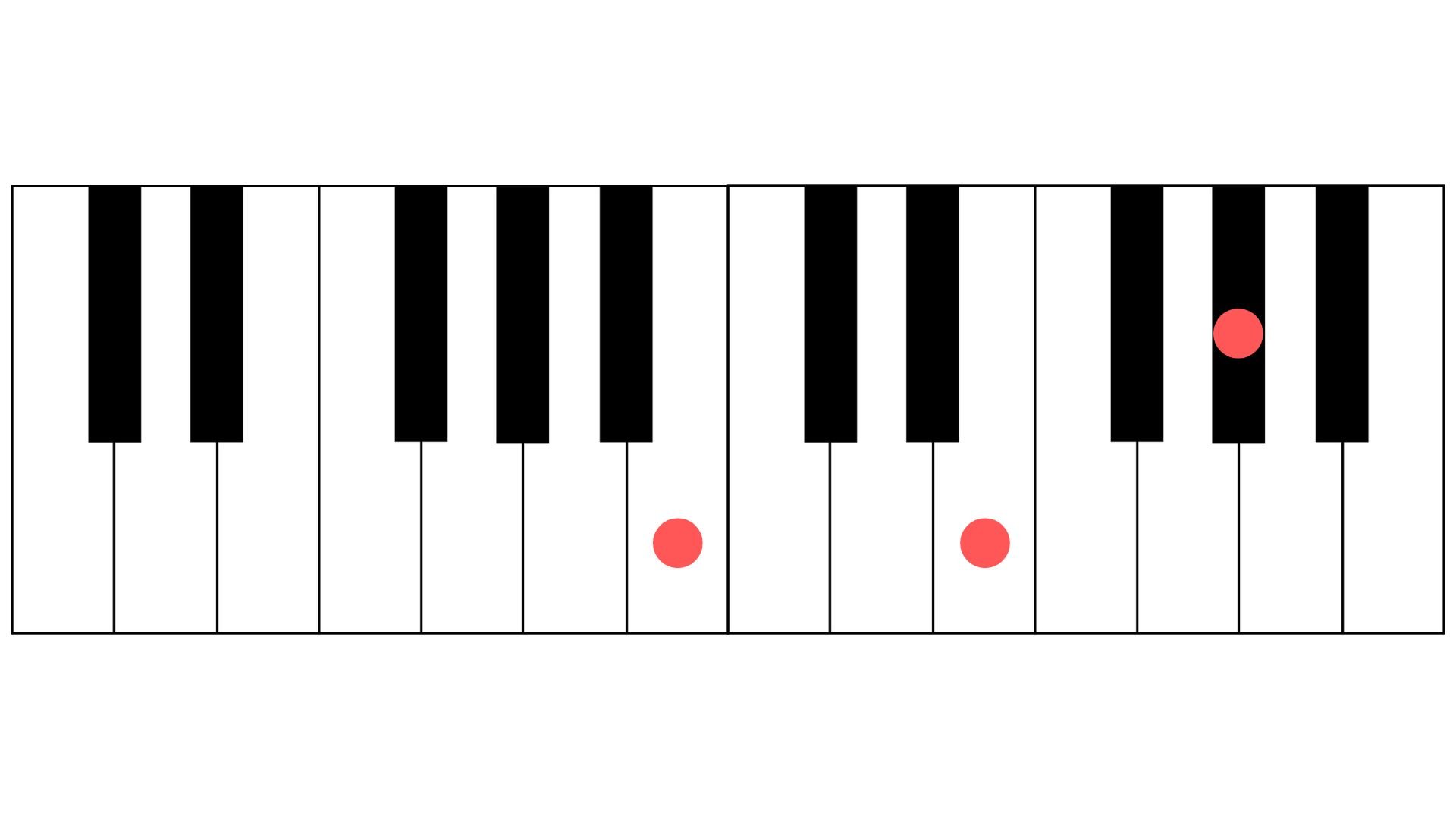
-
Inversions allow for smoother voice leading and create more fluid chord progressions. When moving from one chord to another, inversions help minimize large jumps or leaps between chord tones. This makes it easier to play chords and contributes to a more seamless and connected sound, enhancing the overall musical flow.
-
The highest note of a chord is naturally more noticeable to the human ear, making it useful when selecting chord inversions for song beginnings or endings.
The root position chord provides a stable and solid sound, serving as a strong foundation for harmony. However, since the top note is the 5th of the scale, it may leave listeners with a sense of incompleteness or anticipation of further musical development.
The 1st inversion chord, with the top note being the tonic note of the key, is the most suitable inversion for concluding a song, establishing a new key center, or signaling the end of a piece.
The second inversion chord has a brighter and expansive sound, emphasizing the third note of the home key. It is a pleasant choice for both song beginnings and endings due to its emphasis on the chord's major tonality.


-
When playing an E major scale with your right hand on the piano, you can use the following finger pattern:
E - F# - G# - A - B - C# - D# - E
1 2 3 1 2 3 4 5When playing an E major scale with your left hand on the piano, you can use the following finger pattern:
E - F# - G# - A - B - C# - D# - E
5 4 3 2 1 3 2 1


-
When playing 7th chords on the piano, it is important to understand that not all notes of the chord need to be played with one hand. You can disperse the notes between both the left hand and the right hand. Here is our recommended structure:
Left Hand - 1, 5, (optional 8)
Right Hand - 3, 5, 7, (optional 2 for flavor)
Note: This is just a recommendation. The notes do not have to be played specifically as shown. You can choose your own voicing.
-
Use the following mnemonic to help you remember:
Order of Sharps - Father Charles Goes Down And Ends Battle
Order of Flats - Battle Ends And Down Goes Charles’ Father
Note: In both cases, the first letter of each word in the phrase corresponds to the order of sharps or flats.
-
The circle of fifths can help you determine key signatures by providing a visual representation of the relationships between different keys. Here's how you can use the circle of fifths to determine key signatures:
Start at the top: The top of the circle represents the key of C major or A minor, which has no sharps or flats in its key signature.
Moving clockwise: Moving clockwise around the circle, each key is a fifth higher than the previous one. As you move around the circle, each clockwise movement adds one sharp to the key signature. For example, the first key after C major is G major, which has one sharp (F#). The next key, D major, has two sharps (F# and C#), and so on. To know which notes are sharp, use the following mnemonic: Father Charles Goes Down And Ends Battle.
Moving counter-clockwise: If you move counterclockwise from C major, each key is a fourth lower than the previous one. As you move around the circle, each movement adds one flat to the key signature. For example, the first key after C major is F major, which has 1 flat (Bb). Followed by Bb major (Bb, Eb), and then Eb major (Bb, Eb, Ab), and so on. To know which notes are flat, use the previous mnemonic but in reverse: Battle Ends And Down Goes Charles’ Father.
Note: Major keys and their relative minor keys share the same key signature. For example, C major and A minor have no sharps or flats, while G major and E minor have one sharp (F#), and so on.
E Key Signature
4 Sharps: F# C# G# D#
Order of Sharps: F C G D A E B
Order of Flats: B E A D G C F
-
To remember which diatonic chords are major and minor within a key, you can use the following pattern:
Major - minor - minor - Major - Major - minor - diminished
M m m M M m d
1 2 3 4 5 6 7Note: This pattern is consistent in all key signatures. In other words, the 1 chord is always major, the 2 chord is always minor, the 3 chord is always minor, and so on.
-
The Nashville Number System is a method of music notation that uses numbers to represent the chords and their relationships within a key. It is commonly used in the music industry–particularly in Nashville, Tennessee, hence its name–and is very common within worship teams. The reason why it is used is because it is the most flexible and efficient way to communicate chord progressions and harmonic structures in various keys without relying on specific chord names.
In the Nashville Number System, the numbers correspond to chords built on specific scale degrees of the major scale. Here’s how the system works for diatonic chords:
Chords 1, 4, 5 are always major chords.
Chords 2, 3, 6 are always minor chords.
The 7 chord is always diminished.
-
The Roman numeral system in diatonic chords is a way to represent chords based on their position within a major or minor key. It provides a standardized method to notate chords regardless of the key in which they are used. Here's how the Roman numeral system works for diatonic chords:
Uppercase Roman numerals (I, IV, V) represent major chords.
Lowercase Roman numerals (ii, iii, vi) represent minor chords.
A lowercase Roman numeral with a degree symbol (vii°) represents a diminished chord.
-
Learning the intervals in a major scale is important because it helps you:
Enhance familiarity with specific key signatures.
Build chords by understanding the intervallic relationships.
Transpose music to different keys accurately.
Improvise melodies more fluently by navigating intervals.
Understand music theory concepts like scales, modes, and chord progressions.
-
The perfect intervals consist of the unison (P1), fourth (P4), fifth (P5), and octave (P8). They are highly stable, possessing a strong, pure, and distinct sound. These intervals are often associated with resolution and stability, contributing to consonance and harmony in harmonic contexts.
On the other hand, the major intervals comprise the major 2nd (M2), major 3rd (M3), major 6th (M6), and major 7th (M7). They are not referred to as “perfect” because they are the only intervals that can be lowered to create "minor" intervals. For instance, a major third can be lowered to become a minor 3rd. In contrast, if you were to lower perfect intervals, they would become major intervals. For example, if you lower a perfect 4th, it becomes a major third. The exception to this rule is the perfect 5th, which becomes a diminished 5th when lowered, not a minor 5th.
-
Practice singing or playing the intervals of a major scale without relying on a reference pitch. For example, play the first note of the scale, and then sing or play the second note using the correct interval (e.g., a major second). Continue this exercise for each subsequent note in the scale. Here are some reference points from familiar melodies to help you:
Major 2nd: Happy Birthday
Major 3rd: When the Saints Go Marching In
Perfect 4th: Amazing Grace
Perfect 5th: Star Wars (Main Theme)
Major 6th: My Bonnie Lies Over the Ocean
Major 7th: Take On Me
Perfect 8th: Somewhere Over the Rainbow
-
To remember which diatonic 7th chords are major and minor within a key, you can use the following pattern:
Major 7 - minor 7 - minor 7 - Major 7 - Dominant 7 - minor 7 - half diminished
M7 m7 m7 M7 7 m7 ø7
1 2 3 4 5 6 7Note: This pattern is consistent in all key signatures, no matter which key you choose to play in.
-
The term "dominant" signifies that the chord is built on the fifth degree of the major scale, while the "7" indicates a lowered seventh interval from the root note of the chord, not the 7th interval of the home key.
The dominant 7 chord has a specific interval structure, consisting of a major third, perfect fifth, and lowered seventh (minor seventh). This combination creates a distinct sound, generating a strong sense of tension that seeks resolution to the 1 chord.
The reason for lowering the 7th of the chord is to ensure all notes adhere to the key signature of the home key. In the key of C major, for instance, the dominant chord is the fifth note (G), which forms a G major chord (G-B-D). Adding a seventh transforms it into a dominant 7th chord (G-B-D-F). The lowered seventh occurs because the key signature of the G chord includes an F#, whereas the home key's key signature requires it to be lowered to an F natural (a regular F) due to C having no sharps or flats.
-
Half Diminished 7th Chord (ø7):
Interval Structure: A half diminished 7th chord consists of a root, a minor third, a diminished fifth, and a minor seventh.
Symbol: The symbol used to denote a half diminished 7th chord is "ø7" or "-7(b5)".
Example: In the key of C major, the half diminished 7th chord built on the seventh degree (Bø7) would contain the notes B-D-F-A.
Diminished 7th Chord (°7):
Interval Structure: A diminished 7th chord consists of a root, a minor third, a diminished fifth, and a diminished seventh. It is essentially a stack of minor thirds.
Symbol: The symbol used to denote a diminished 7th chord is "dim7" or °7.
Example: In the key of C major, the diminished 7th chord built on the seventh degree (Bdim7) would contain the notes B-D-F-Ab.
Note: The diminished 7th chord is known for its symmetrical structure, as each interval between its notes is a minor third. It creates a highly dissonant and unresolved sound and can be used as a passing chord or for chromatic movement in chord progressions.
F Major Scale
F G A Bb C D E F
Scale Pattern: T - T - S - T - T - T - S
-
All major scales consist of eight notes that follow a specific pattern of tones (T) and semitones (S). A tone (also known as a whole step) corresponds to a two-fret distance on a guitar or a two-key distance on a piano, while a semitone (also known as a half step) corresponds to a one-fret distance on a guitar or a one-key distance on a piano. The formula is as follows:
T - T - S - T - T - T - S
Using the F major scale as an example, we apply the tone (T) or semitone (S) pattern starting from the note F:
F - G - A - Bb - C - D - E - F
^ ^ ^ ^ ^ ^ ^
T T S T T T SBy following this pattern, you can construct major scales in any key using tones (T) and semitones (S).
F Major Diatonic Chords
“Diatonic” means “Within the key.” Below are the chords that naturally belong to the key of F major, without any chromatic alteration.
Common major chord symbols: M, maj, +, △ Common minor chord symbols: m, min, -
Chord Types
Nash. #
Rom. #
Chord
Notes
Chord Types
Nash. #
Rom. #
Chord
Notes
Major
1
I
F
F A C
minor
2m
ii
Gm
G Bb D
minor
3m
iii
Am
A C E
Major
4
IV
Bb
Bb D F
Major
5
V
C
C E G
minor
6m
vi
Dm
D F A
diminished
7°
vii°
Edim
E G Bb
F Major Diatonic 7th Chords
These are the same as above, but in the form of 7th chords.
Common major chord symbols: M7, maj7, +7, △7 Common minor chord symbols: m7, min7, -7
Major 7
1
Imaj7
Fmaj7
F A C E
minor 7
2m7
ii7
Gm7
G Bb D F
minor 7
3m7
iii7
Am7
A C E G
Major 7
4
IVmaj7
Bbmaj7
Bb D F A
Dominant 7*
5
V7
C7
C E G Bb
minor 7
6m
vi7
Dm7
D F A C
half dim 7*
7ø
viiø7
Eø7
E G Bb D
F Major Intervals
“Interval” refers to the distance between two notes. Below are the scale degrees and intervals in the key of F Major.
Major 2nd
G
Major 3rd
A
Perfect 4th
Bb
Perfect 5th
C
Major 6th
D
Major 7th
E
Octave
F
Unison
F
F Major Chord Inversions
“Inversion” describes the relationship of a triad’s lowest note to the other notes in the chord.
Choosing the right inversion will help to smooth out motion from chord to chord.
Root
F A C
1st Inversion
A C F
2nd Inversion
C F A
F Major 7th Chord Inversions
“Inversion” describes the relationship of a chord’s lowest notes to the other notes in the chord.
It is common for the left hand to play octaves or fifths, while the right hand plays the chord in part or in full.
Root
F A C E
1st Inversion
A C E F
2nd Inversion
C E F A
3rd Inversion
E F A C


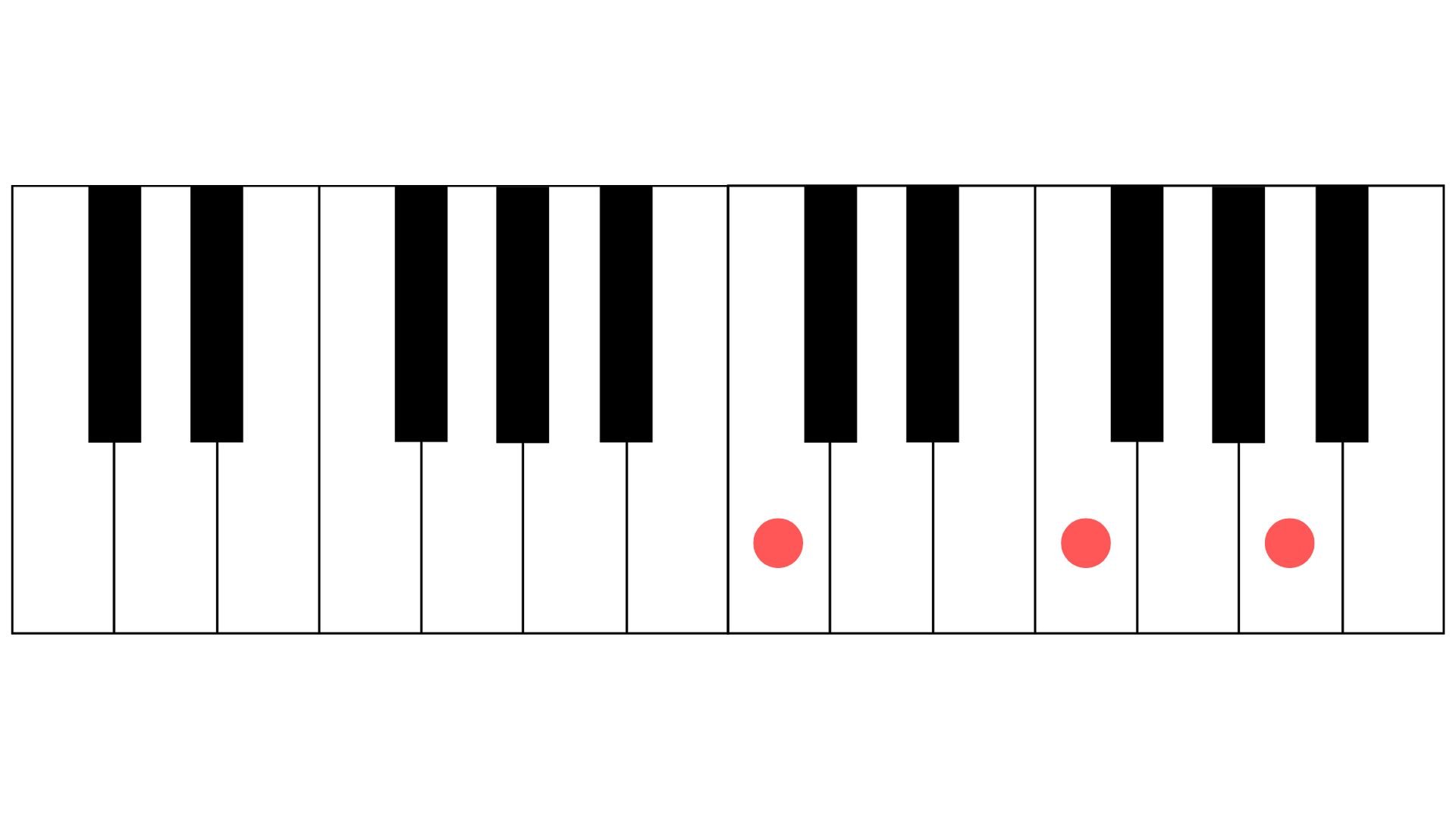
-
Inversions allow for smoother voice leading and create more fluid chord progressions. When moving from one chord to another, inversions help minimize large jumps or leaps between chord tones. This makes it easier to play chords and contributes to a more seamless and connected sound, enhancing the overall musical flow.
-
The highest note of a chord is naturally more noticeable to the human ear, making it useful when selecting chord inversions for song beginnings or endings.
The root position chord provides a stable and solid sound, serving as a strong foundation for harmony. However, since the top note is the 5th of the scale, it may leave listeners with a sense of incompleteness or anticipation of further musical development.
The 1st inversion chord, with the top note being the tonic note of the key, is the most suitable inversion for concluding a song, establishing a new key center, or signaling the end of a piece.
The second inversion chord has a brighter and expansive sound, emphasizing the third note of the home key. It is a pleasant choice for both song beginnings and endings due to its emphasis on the chord's major tonality.


-
When playing an F major scale with your right hand on the piano, you can use the following finger pattern:
F - G - A - Bb - C - D - E - F
1 2 3 4 1 2 3 4When playing an F major scale with your left hand on the piano, you can use the following finger pattern:
F - G - A - Bb - C - D - E - F
5 4 3 2 1 3 2 1


-
When playing 7th chords on the piano, it is important to understand that not all notes of the chord need to be played with one hand. You can disperse the notes between both the left hand and the right hand. Here is our recommended structure:
Left Hand - 1, 5, (optional 8)
Right Hand - 3, 5, 7, (optional 2 for flavor)
Note: This is just a recommendation. The notes do not have to be played specifically as shown. You can choose your own voicing.
-
Use the following mnemonic to help you remember:
Order of Sharps - Father Charles Goes Down And Ends Battle
Order of Flats - Battle Ends And Down Goes Charles’ Father
Note: In both cases, the first letter of each word in the phrase corresponds to the order of sharps or flats.
-
The circle of fifths can help you determine key signatures by providing a visual representation of the relationships between different keys. Here's how you can use the circle of fifths to determine key signatures:
Start at the top: The top of the circle represents the key of C major or A minor, which has no sharps or flats in its key signature.
Moving clockwise: Moving clockwise around the circle, each key is a fifth higher than the previous one. As you move around the circle, each clockwise movement adds one sharp to the key signature. For example, the first key after C major is G major, which has one sharp (F#). The next key, D major, has two sharps (F# and C#), and so on. To know which notes are sharp, use the following mnemonic: Father Charles Goes Down And Ends Battle.
Moving counter-clockwise: If you move counterclockwise from C major, each key is a fourth lower than the previous one. As you move around the circle, each movement adds one flat to the key signature. For example, the first key after C major is F major, which has 1 flat (Bb). Followed by Bb major (Bb, Eb), and then Eb major (Bb, Eb, Ab), and so on. To know which notes are flat, use the previous mnemonic but in reverse: Battle Ends And Down Goes Charles’ Father.
Note: Major keys and their relative minor keys share the same key signature. For example, C major and A minor have no sharps or flats, while G major and E minor have one sharp (F#), and so on.
F Key Signature
1 Flat: Bb
Order of Sharps: F C G D A E B
Order of Flats: B E A D G C F
-
To remember which diatonic chords are major and minor within a key, you can use the following pattern:
Major - minor - minor - Major - Major - minor - diminished
M m m M M m d
1 2 3 4 5 6 7Note: This pattern is consistent in all key signatures. In other words, the 1 chord is always major, the 2 chord is always minor, the 3 chord is always minor, and so on.
-
The Nashville Number System is a method of music notation that uses numbers to represent the chords and their relationships within a key. It is commonly used in the music industry–particularly in Nashville, Tennessee, hence its name–and is very common within worship teams. The reason why it is used is because it is the most flexible and efficient way to communicate chord progressions and harmonic structures in various keys without relying on specific chord names.
In the Nashville Number System, the numbers correspond to chords built on specific scale degrees of the major scale. Here’s how the system works for diatonic chords:
Chords 1, 4, 5 are always major chords.
Chords 2, 3, 6 are always minor chords.
The 7 chord is always diminished.
-
The Roman numeral system in diatonic chords is a way to represent chords based on their position within a major or minor key. It provides a standardized method to notate chords regardless of the key in which they are used. Here's how the Roman numeral system works for diatonic chords:
Uppercase Roman numerals (I, IV, V) represent major chords.
Lowercase Roman numerals (ii, iii, vi) represent minor chords.
A lowercase Roman numeral with a degree symbol (vii°) represents a diminished chord.
-
Learning the intervals in a major scale is important because it helps you:
Enhance familiarity with specific key signatures.
Build chords by understanding the intervallic relationships.
Transpose music to different keys accurately.
Improvise melodies more fluently by navigating intervals.
Understand music theory concepts like scales, modes, and chord progressions.
-
The perfect intervals consist of the unison (P1), fourth (P4), fifth (P5), and octave (P8). They are highly stable, possessing a strong, pure, and distinct sound. These intervals are often associated with resolution and stability, contributing to consonance and harmony in harmonic contexts.
On the other hand, the major intervals comprise the major 2nd (M2), major 3rd (M3), major 6th (M6), and major 7th (M7). They are not referred to as “perfect” because they are the only intervals that can be lowered to create "minor" intervals. For instance, a major third can be lowered to become a minor 3rd. In contrast, if you were to lower perfect intervals, they would become major intervals. For example, if you lower a perfect 4th, it becomes a major third. The exception to this rule is the perfect 5th, which becomes a diminished 5th when lowered, not a minor 5th.
-
Practice singing or playing the intervals of a major scale without relying on a reference pitch. For example, play the first note of the scale, and then sing or play the second note using the correct interval (e.g., a major second). Continue this exercise for each subsequent note in the scale. Here are some reference points from familiar melodies to help you:
Major 2nd: Happy Birthday
Major 3rd: When the Saints Go Marching In
Perfect 4th: Amazing Grace
Perfect 5th: Star Wars (Main Theme)
Major 6th: My Bonnie Lies Over the Ocean
Major 7th: Take On Me
Perfect 8th: Somewhere Over the Rainbow
-
To remember which diatonic 7th chords are major and minor within a key, you can use the following pattern:
Major 7 - minor 7 - minor 7 - Major 7 - Dominant 7 - minor 7 - half diminished
M7 m7 m7 M7 7 m7 ø7
1 2 3 4 5 6 7Note: This pattern is consistent in all key signatures, no matter which key you choose to play in.
-
The term "dominant" signifies that the chord is built on the fifth degree of the major scale, while the "7" indicates a lowered seventh interval from the root note of the chord, not the 7th interval of the home key.
The dominant 7 chord has a specific interval structure, consisting of a major third, perfect fifth, and lowered seventh (minor seventh). This combination creates a distinct sound, generating a strong sense of tension that seeks resolution to the 1 chord.
The reason for lowering the 7th of the chord is to ensure all notes adhere to the key signature of the home key. In the key of C major, for instance, the dominant chord is the fifth note (G), which forms a G major chord (G-B-D). Adding a seventh transforms it into a dominant 7th chord (G-B-D-F). The lowered seventh occurs because the key signature of the G chord includes an F#, whereas the home key's key signature requires it to be lowered to an F natural (a regular F) due to C having no sharps or flats.
-
Half Diminished 7th Chord (ø7):
Interval Structure: A half diminished 7th chord consists of a root, a minor third, a diminished fifth, and a minor seventh.
Symbol: The symbol used to denote a half diminished 7th chord is "ø7" or "-7(b5)".
Example: In the key of C major, the half diminished 7th chord built on the seventh degree (Bø7) would contain the notes B-D-F-A.
Diminished 7th Chord (°7):
Interval Structure: A diminished 7th chord consists of a root, a minor third, a diminished fifth, and a diminished seventh. It is essentially a stack of minor thirds.
Symbol: The symbol used to denote a diminished 7th chord is "dim7" or °7.
Example: In the key of C major, the diminished 7th chord built on the seventh degree (Bdim7) would contain the notes B-D-F-Ab.
Note: The diminished 7th chord is known for its symmetrical structure, as each interval between its notes is a minor third. It creates a highly dissonant and unresolved sound and can be used as a passing chord or for chromatic movement in chord progressions.
F# Major Scale
F# G# A# B C# D# E# F#
Scale Pattern: T - T - S - T - T - T - S
-
All major scales consist of eight notes that follow a specific pattern of tones (T) and semitones (S). A tone (also known as a whole step) corresponds to a two-fret distance on a guitar or a two-key distance on a piano, while a semitone (also known as a half step) corresponds to a one-fret distance on a guitar or a one-key distance on a piano. The formula is as follows:
T - T - S - T - T - T - S
Using the F# major scale as an example, we apply the tone (T) or semitone (S) pattern starting from the note F#:
F# - G# - A# - B - C# - D# - E# - F#
^ ^ ^ ^ ^ ^ ^
T T S T T T SBy following this pattern, you can construct major scales in any key using tones (T) and semitones (S).
F# Major Diatonic Chords
“Diatonic” means “Within the key.” Below are the chords that naturally belong to the key of F# major, without any chromatic alteration.
Common major chord symbols: M, maj, +, △ Common minor chord symbols: m, min, -
Chord Type
Nash. #
Rom. #
Chord
Notes
Chord Type
Nash. #
Rom. #
Chord
Notes
Major
1
I
F#
F# A# C#
minor
2m
ii
G#m
G# B D#
minor
3m
iii
A#m
A# C# E#
Major
4
IV
B
B D# F#
Major
5
V
C#
C# E# G#
minor
6m
vi
D#m
D# F# A#
diminished
7°
vii°
E#dim
E# G# B
F# Major Diatonic 7th Chords
These are the same as above, but in the form of 7th chords.
Common major chord symbols: M7, maj7, +7, △7 Common minor chord symbols: m7, min7, -7
Major 7
1
Imaj7
F#M7
F# A# C# E#
minor 7
2m7
ii7
G#m7
G# B D# F#
minor 7
3m7
iii7
A#m7
A# C# E# G#
Major 7
4
IVmaj7
BM7
B D# F# A#
Dominant 7*
5
V7
C#7
C# E# G# B
minor 7
6m
vi7
D#m7
D# F# A# C#
half dim 7*
7ø
viiø7
E#ø7
E# G# B D#
F# Major Intervals
“Interval” refers to the distance between two notes. Below are the scale degrees and intervals in the key of F# Major.
Major 2nd
G#
Major 3rd
A#
Perfect 4th
B
Perfect 5th
C#
Major 6th
D#
Major 7th
E#
Octave
F#
Unison
F#
F# Major Chord Inversions
“Inversion” describes the relationship of a triad’s lowest note to the other notes in the chord.
Choosing the right inversion will help to smooth out motion from chord to chord.
Root
F# A# C#
1st Inversion
A# C# F#
2nd Inversion
C# F# A#
F# Major 7th Chord Inversions
“Inversion” describes the relationship of a chord’s lowest notes to the other notes in the chord.
It is common for the left hand to play octaves or fifths, while the right hand plays the chord in part or in full.
Root
F# A# C# E#
1st Inversion
A# C# E# F#
2nd Inversion
C# E# F# A#
3rd Inversion
E# F# A# C#

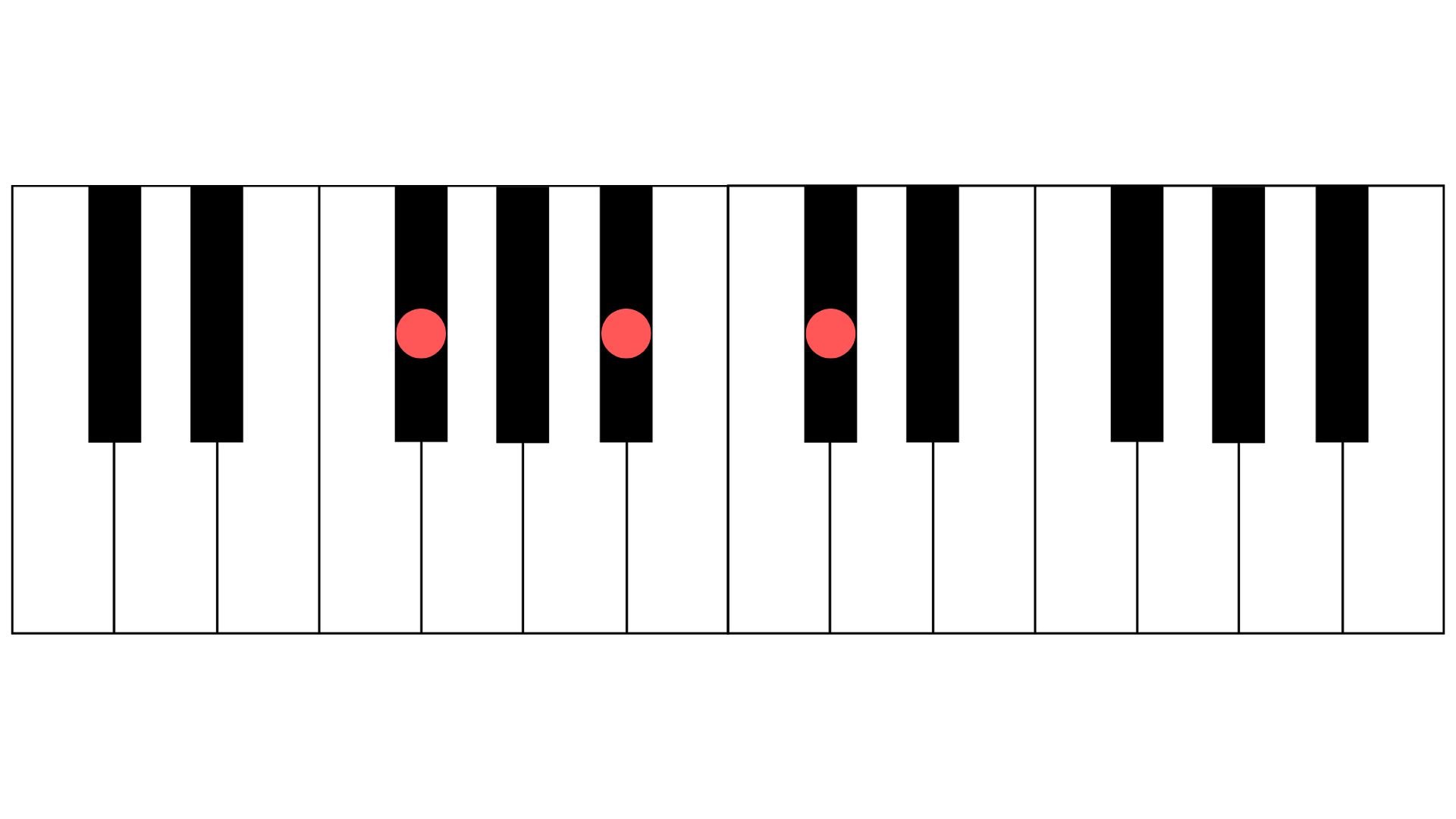

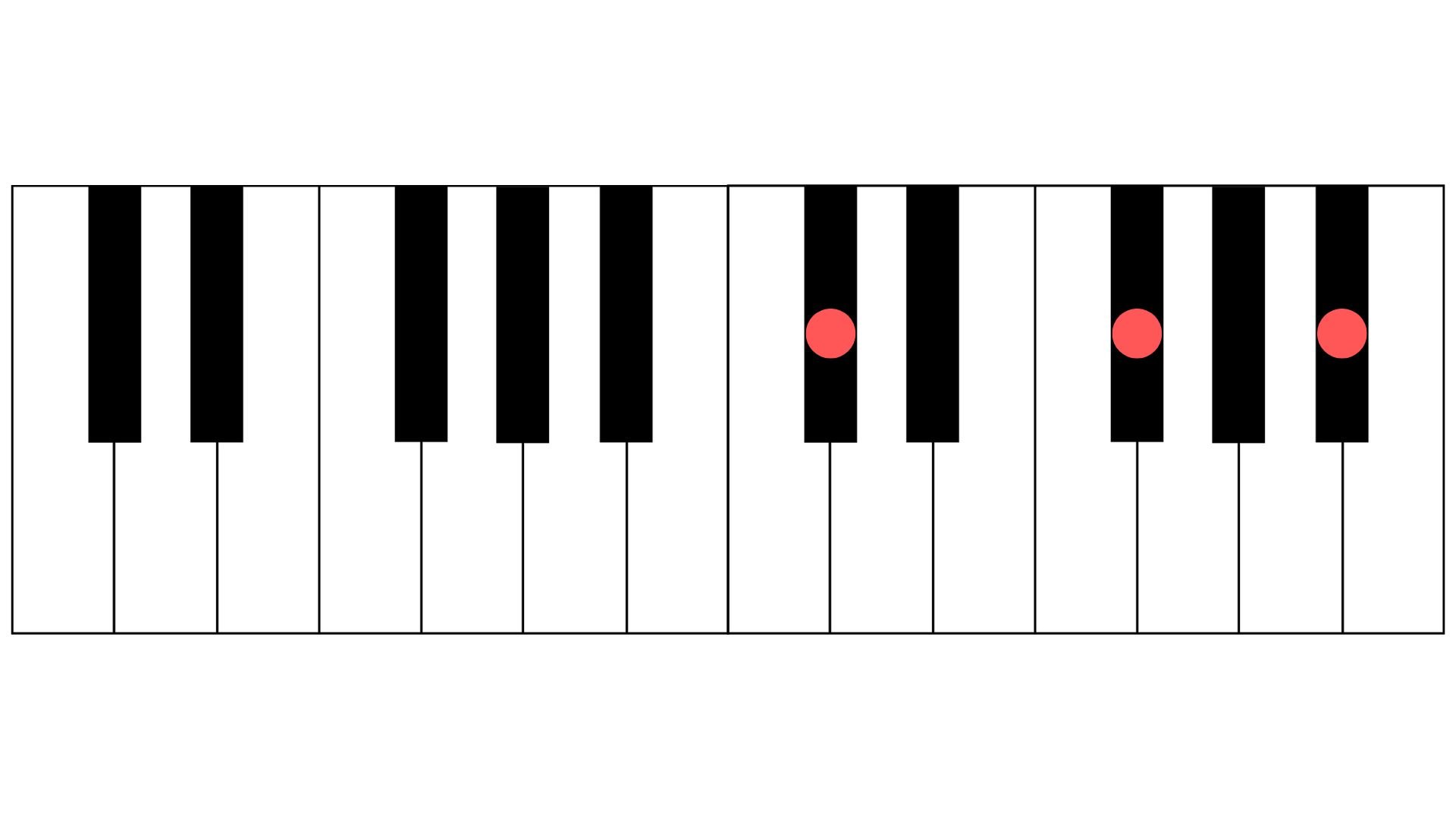
-
Inversions allow for smoother voice leading and create more fluid chord progressions. When moving from one chord to another, inversions help minimize large jumps or leaps between chord tones. This makes it easier to play chords and contributes to a more seamless and connected sound, enhancing the overall musical flow.
-
The highest note of a chord is naturally more noticeable to the human ear, making it useful when selecting chord inversions for song beginnings or endings.
The root position chord provides a stable and solid sound, serving as a strong foundation for harmony. However, since the top note is the 5th of the scale, it may leave listeners with a sense of incompleteness or anticipation of further musical development.
The 1st inversion chord, with the top note being the tonic note of the key, is the most suitable inversion for concluding a song, establishing a new key center, or signaling the end of a piece.
The second inversion chord has a brighter and expansive sound, emphasizing the third note of the home key. It is a pleasant choice for both song beginnings and endings due to its emphasis on the chord's major tonality.
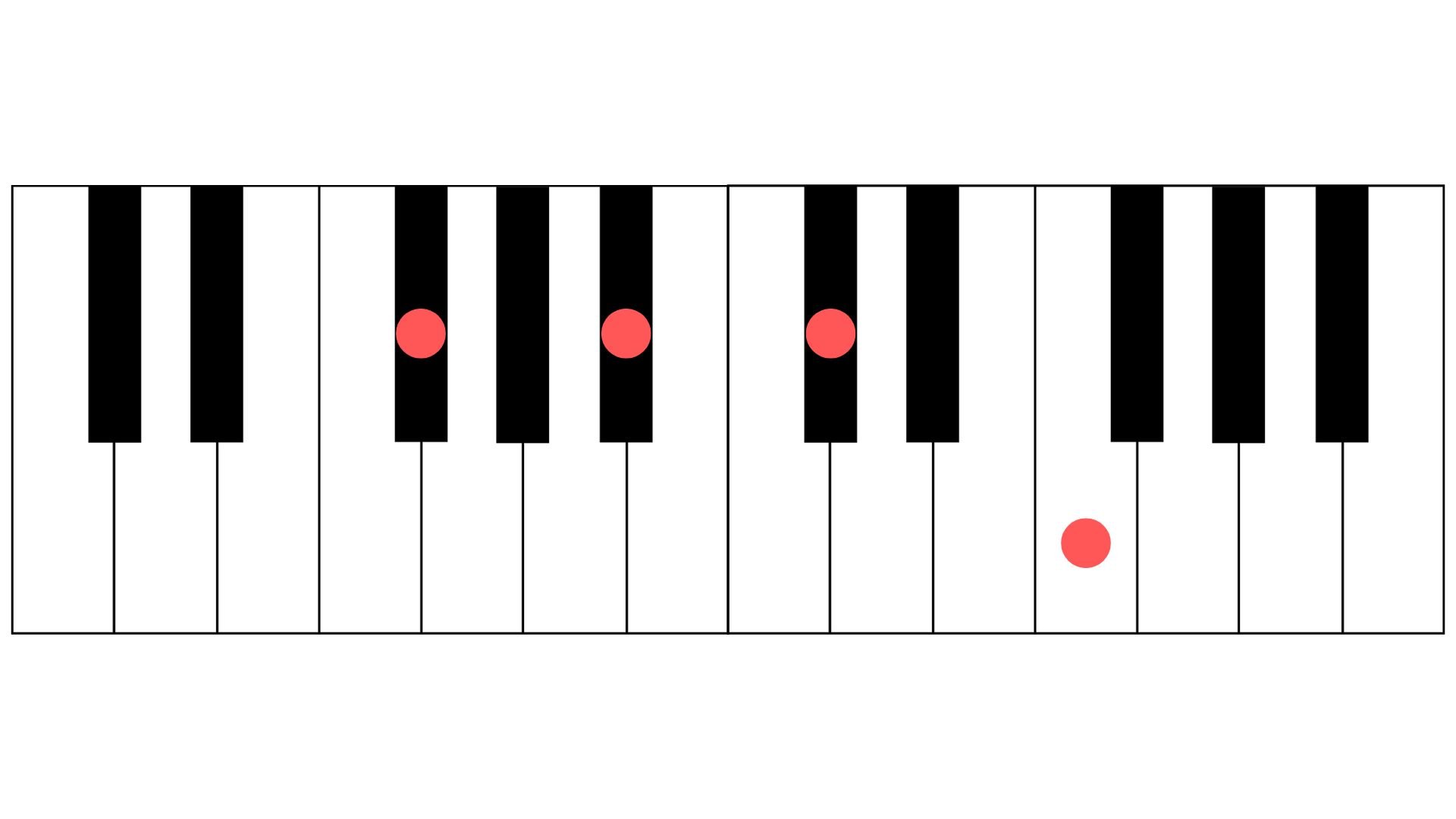
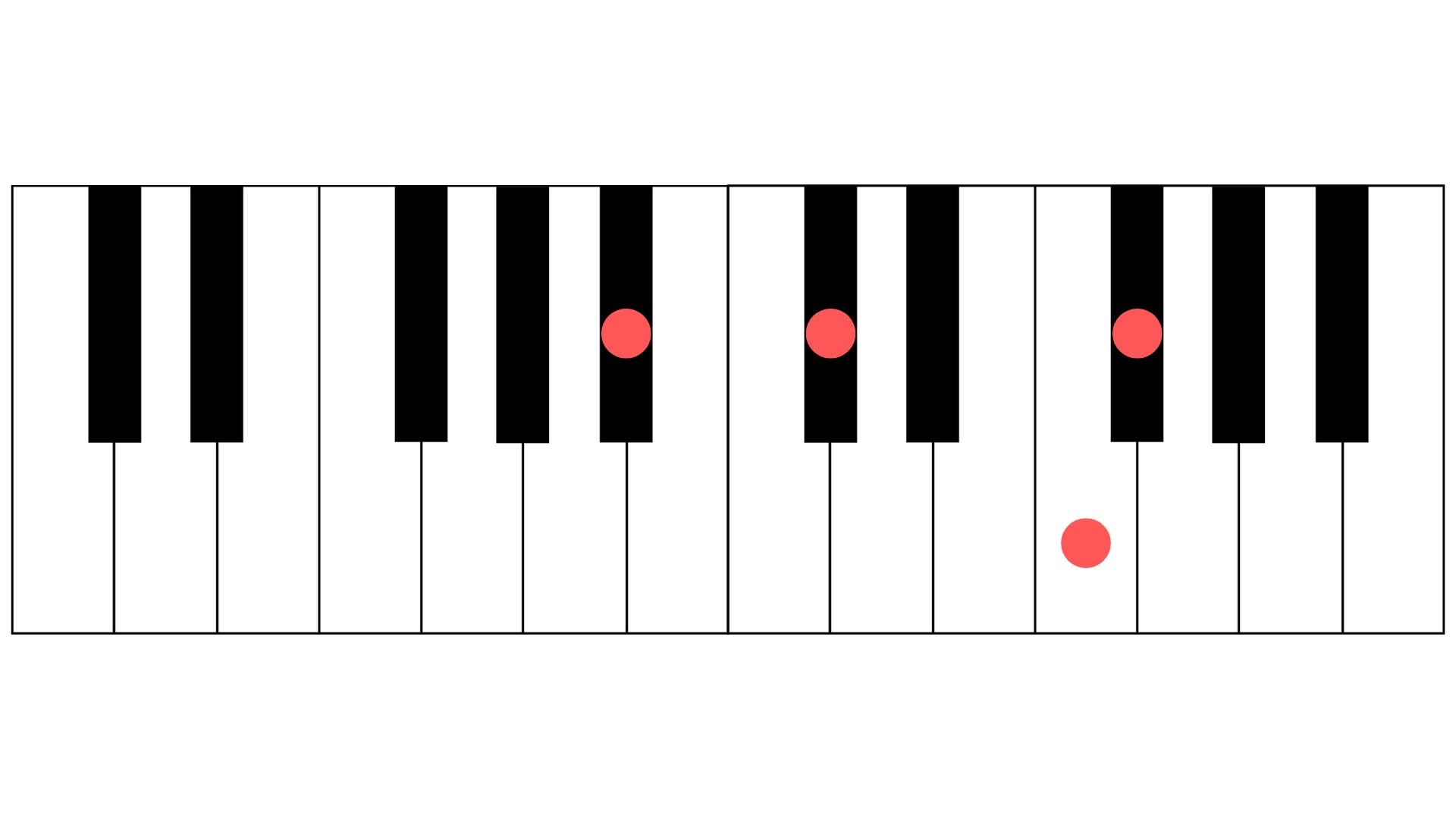
-
When playing an F# major scale with your right hand on the piano, you can use the following finger pattern:
F# - G# - A# - B - C# - D# - E# - F#
2 3 4 1 2 3 1 2When playing an F# major scale with your left hand on the piano, you can use the following finger pattern:
F# - G# - A# - B - C# - D# - E# - F#
4 3 2 1 3 2 1 2

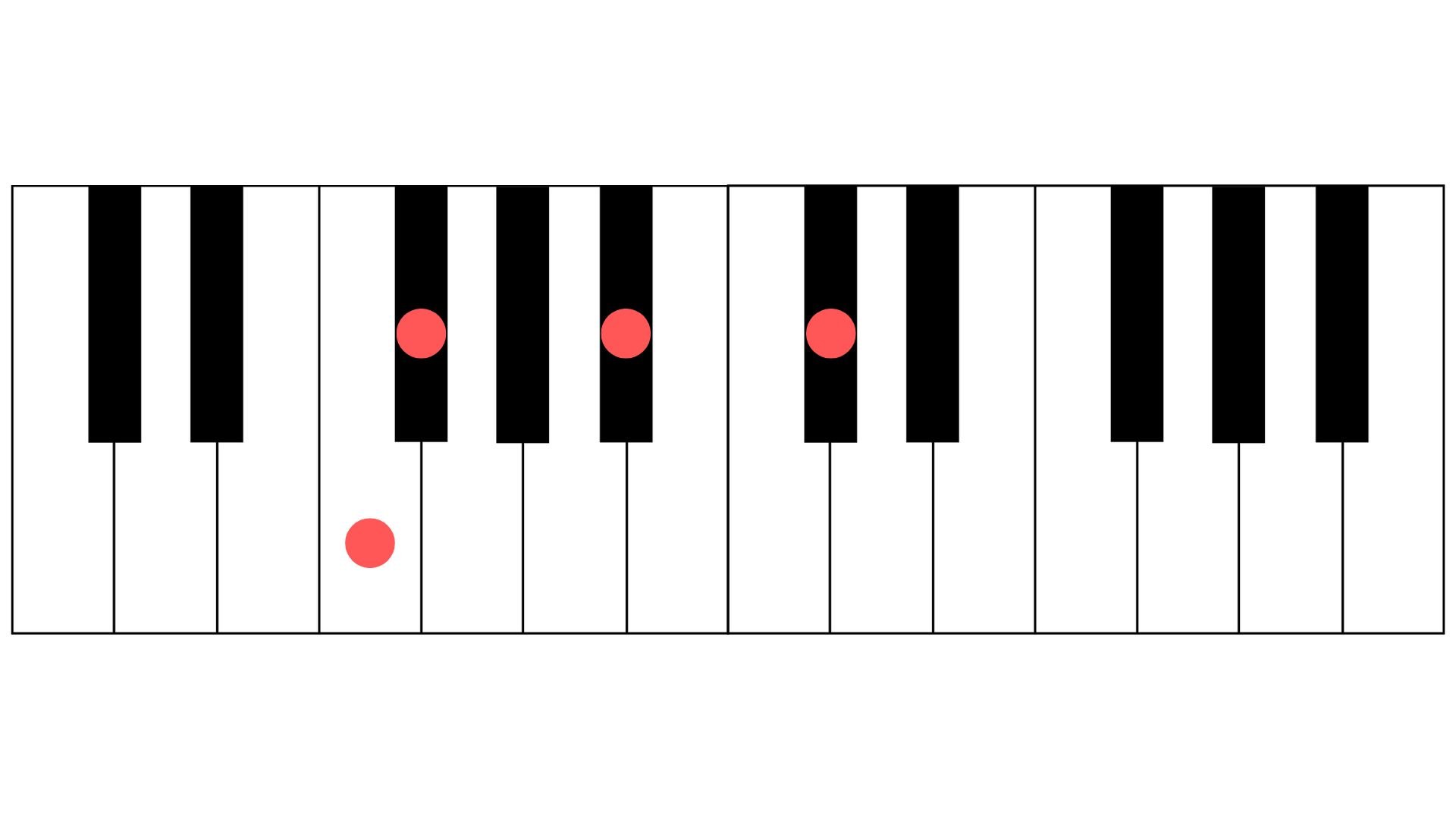
-
When playing 7th chords on the piano, it is important to understand that not all notes of the chord need to be played with one hand. You can disperse the notes between both the left hand and the right hand. Here is our recommended structure:
Left Hand - 1, 5, (optional 8)
Right Hand - 3, 5, 7, (optional 2 for flavor)
Note: This is just a recommendation. The notes do not have to be played specifically as shown. You can choose your own voicing.
-
To remember which diatonic 7th chords are major and minor within a key, you can use the following pattern:
Major 7 - minor 7 - minor 7 - Major 7 - Dominant 7 - minor 7 - half diminished
M7 m7 m7 M7 7 m7 ø7
1 2 3 4 5 6 7Note: This pattern is consistent in all key signatures, no matter which key you choose to play in.
-
The term "dominant" signifies that the chord is built on the fifth degree of the major scale, while the "7" indicates a lowered seventh interval from the root note of the chord, not the 7th interval of the home key.
The dominant 7 chord has a specific interval structure, consisting of a major third, perfect fifth, and lowered seventh (minor seventh). This combination creates a distinct sound, generating a strong sense of tension that seeks resolution to the 1 chord.
The reason for lowering the 7th of the chord is to ensure all notes adhere to the key signature of the home key. In the key of C major, for instance, the dominant chord is the fifth note (G), which forms a G major chord (G-B-D). Adding a seventh transforms it into a dominant 7th chord (G-B-D-F). The lowered seventh occurs because the key signature of the G chord includes an F#, whereas the home key's key signature requires it to be lowered to an F natural (a regular F) due to C having no sharps or flats.
-
Half Diminished 7th Chord (ø7):
Interval Structure: A half diminished 7th chord consists of a root, a minor third, a diminished fifth, and a minor seventh.
Symbol: The symbol used to denote a half diminished 7th chord is "ø7" or "-7(b5)".
Example: In the key of C major, the half diminished 7th chord built on the seventh degree (Bø7) would contain the notes B-D-F-A.
Diminished 7th Chord (°7):
Interval Structure: A diminished 7th chord consists of a root, a minor third, a diminished fifth, and a diminished seventh. It is essentially a stack of minor thirds.
Symbol: The symbol used to denote a diminished 7th chord is "dim7" or °7.
Example: In the key of C major, the diminished 7th chord built on the seventh degree (Bdim7) would contain the notes B-D-F-Ab.
Note: The diminished 7th chord is known for its symmetrical structure, as each interval between its notes is a minor third. It creates a highly dissonant and unresolved sound and can be used as a passing chord or for chromatic movement in chord progressions.
-
Use the following mnemonic to help you remember:
Order of Sharps - Father Charles Goes Down And Ends Battle
Order of Flats - Battle Ends And Down Goes Charles’ Father
Note: In both cases, the first letter of each word in the phrase corresponds to the order of sharps or flats.
-
The circle of fifths can help you determine key signatures by providing a visual representation of the relationships between different keys. Here's how you can use the circle of fifths to determine key signatures:
Start at the top: The top of the circle represents the key of C major or A minor, which has no sharps or flats in its key signature.
Moving clockwise: Moving clockwise around the circle, each key is a fifth higher than the previous one. As you move around the circle, each clockwise movement adds one sharp to the key signature. For example, the first key after C major is G major, which has one sharp (F#). The next key, D major, has two sharps (F# and C#), and so on. To know which notes are sharp, use the following mnemonic: Father Charles Goes Down And Ends Battle.
Moving counter-clockwise: If you move counterclockwise from C major, each key is a fourth lower than the previous one. As you move around the circle, each movement adds one flat to the key signature. For example, the first key after C major is F major, which has 1 flat (Bb). Followed by Bb major (Bb, Eb), and then Eb major (Bb, Eb, Ab), and so on. To know which notes are flat, use the previous mnemonic but in reverse: Battle Ends And Down Goes Charles’ Father.
Note: Major keys and their relative minor keys share the same key signature. For example, C major and A minor have no sharps or flats, while G major and E minor have one sharp (F#), and so on.
F# Key Signature
6 Sharps: F# C# G# D# A# E#
Order of Sharps: F C G D A E B
Order of Flats: B E A D G C F
-
Learning the intervals in a major scale is important because it helps you:
Enhance familiarity with specific key signatures.
Build chords by understanding the intervallic relationships.
Transpose music to different keys accurately.
Improvise melodies more fluently by navigating intervals.
Understand music theory concepts like scales, modes, and chord progressions.
-
The perfect intervals consist of the unison (P1), fourth (P4), fifth (P5), and octave (P8). They are highly stable, possessing a strong, pure, and distinct sound. These intervals are often associated with resolution and stability, contributing to consonance and harmony in harmonic contexts.
On the other hand, the major intervals comprise the major 2nd (M2), major 3rd (M3), major 6th (M6), and major 7th (M7). They are not referred to as “perfect” because they are the only intervals that can be lowered to create "minor" intervals. For instance, a major third can be lowered to become a minor 3rd. In contrast, if you were to lower perfect intervals, they would become major intervals. For example, if you lower a perfect 4th, it becomes a major third. The exception to this rule is the perfect 5th, which becomes a diminished 5th when lowered, not a minor 5th.
-
Practice singing or playing the intervals of a major scale without relying on a reference pitch. For example, play the first note of the scale, and then sing or play the second note using the correct interval (e.g., a major second). Continue this exercise for each subsequent note in the scale. Here are some reference points from familiar melodies to help you:
Major 2nd: Happy Birthday
Major 3rd: When the Saints Go Marching In
Perfect 4th: Amazing Grace
Perfect 5th: Star Wars (Main Theme)
Major 6th: My Bonnie Lies Over the Ocean
Major 7th: Take On Me
Perfect 8th: Somewhere Over the Rainbow
-
To remember which diatonic chords are major and minor within a key, you can use the following pattern:
Major - minor - minor - Major - Major - minor - diminished
M m m M M m d
1 2 3 4 5 6 7Note: This pattern is consistent in all key signatures. In other words, the 1 chord is always major, the 2 chord is always minor, the 3 chord is always minor, and so on.
-
The Nashville Number System is a method of music notation that uses numbers to represent the chords and their relationships within a key. It is commonly used in the music industry–particularly in Nashville, Tennessee, hence its name–and is very common within worship teams. The reason why it is used is because it is the most flexible and efficient way to communicate chord progressions and harmonic structures in various keys without relying on specific chord names.
In the Nashville Number System, the numbers correspond to chords built on specific scale degrees of the major scale. Here’s how the system works for diatonic chords:
Chords 1, 4, 5 are always major chords.
Chords 2, 3, 6 are always minor chords.
The 7 chord is always diminished.
-
The Roman numeral system in diatonic chords is a way to represent chords based on their position within a major or minor key. It provides a standardized method to notate chords regardless of the key in which they are used. Here's how the Roman numeral system works for diatonic chords:
Uppercase Roman numerals (I, IV, V) represent major chords.
Lowercase Roman numerals (ii, iii, vi) represent minor chords.
A lowercase Roman numeral with a degree symbol (vii°) represents a diminished chord.
Gb Major Scale
Gb Ab Bb Cb Db Eb F Gb
Scale Pattern: T - T - S - T - T - T - S
-
All major scales consist of eight notes that follow a specific pattern of tones (T) and semitones (S). A tone (also known as a whole step) corresponds to a two-fret distance on a guitar or a two-key distance on a piano, while a semitone (also known as a half step) corresponds to a one-fret distance on a guitar or a one-key distance on a piano. The formula is as follows:
T - T - S - T - T - T - S
Using the Gb major scale as an example, we apply the tone (T) or semitone (S) pattern starting from the note Gb:
Gb - Ab - Bb - Cb - Db - Eb - F - Gb
^ ^ ^ ^ ^ ^ ^
T T S T T T SBy following this pattern, you can construct major scales in any key using tones (T) and semitones (S).
Gb Major Diatonic Chords
“Diatonic” means “Within the key.” Below are the chords that naturally belong to the key of Gb major, without any chromatic alteration.
Common major chord symbols: M, maj, +, △ Common minor chord symbols: m, min, -
Chord Type
Nash. #
Rom. #
Chord
Notes
Chord Type
Nash. #
Rom. #
Chord
Notes
Major
1
I
Gb
Gb Bb Db
minor
2m
ii
Abm
Ab Cb Eb
minor
3m
iii
Bbm
Bb Db F
Major
4
IV
Cb
Cb Eb Gb
Major
5
V
Db
Db F Ab
minor
6m
vi
Ebm
Eb Gb Bb
diminished
7°
vii°
Fdim
F Ab Cb
Gb Major Diatonic 7th Chords
These are the same as above, but in the form of 7th chords.
Common major chord symbols: M7, maj7, +7, △7 Common minor chord symbols: m7, min7, -7
Major 7
1
Imaj7
GbM7
Gb Bb Db F
minor 7
2m7
ii7
Abm7
Ab Cb Eb Gb
minor 7
3m7
iii7
Bbm7
Bb Db F Ab
Major 7
4
IVmaj7
CbM7
Cb Eb Gb Bb
Dominant 7*
5
V7
Db7
Db F Ab Cb
minor 7
6m
vi7
Ebm7
Eb Gb Bb Db
half dim 7*
7ø
viiø7
Fø7
F Ab Cb Eb
Gb Major Intervals
“Interval” refers to the distance between two notes. Below are the scale degrees and intervals in the key of Gb Major.
Major 2nd
Ab
Major 3rd
Bb
Perfect 4th
Cb
Perfect 5th
Db
Major 6th
Eb
Major 7th
F
Octave
Gb
Unison
Gb
Gb Major Chord Inversions
“Inversion” describes the relationship of a triad’s lowest note to the other notes in the chord.
Choosing the right inversion will help to smooth out motion from chord to chord.
Root
Gb Bb Db
1st Inversion
Bb Db Gb
2nd Inversion
Db Gb Bb
Gb Major 7th Chord Inversions
“Inversion” describes the relationship of a chord’s lowest notes to the other notes in the chord.
It is common for the left hand to play octaves or fifths, while the right hand plays the chord in part or in full.
Root
Gb Bb Db F
1st Inversion
Bb Db F Gb
2nd Inversion
Db F Gb Bb
3rd Inversion
F Gb Bb Db
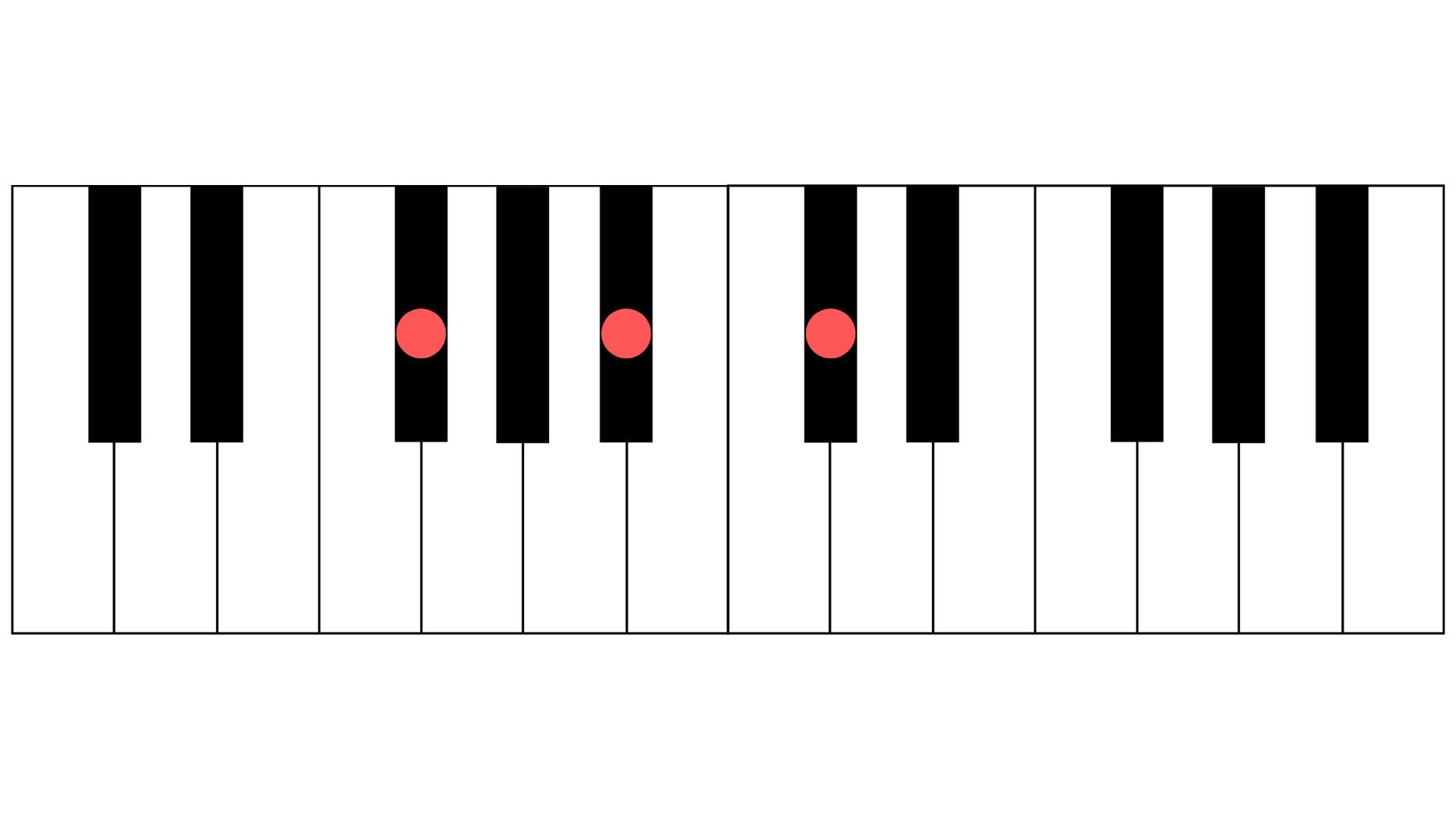

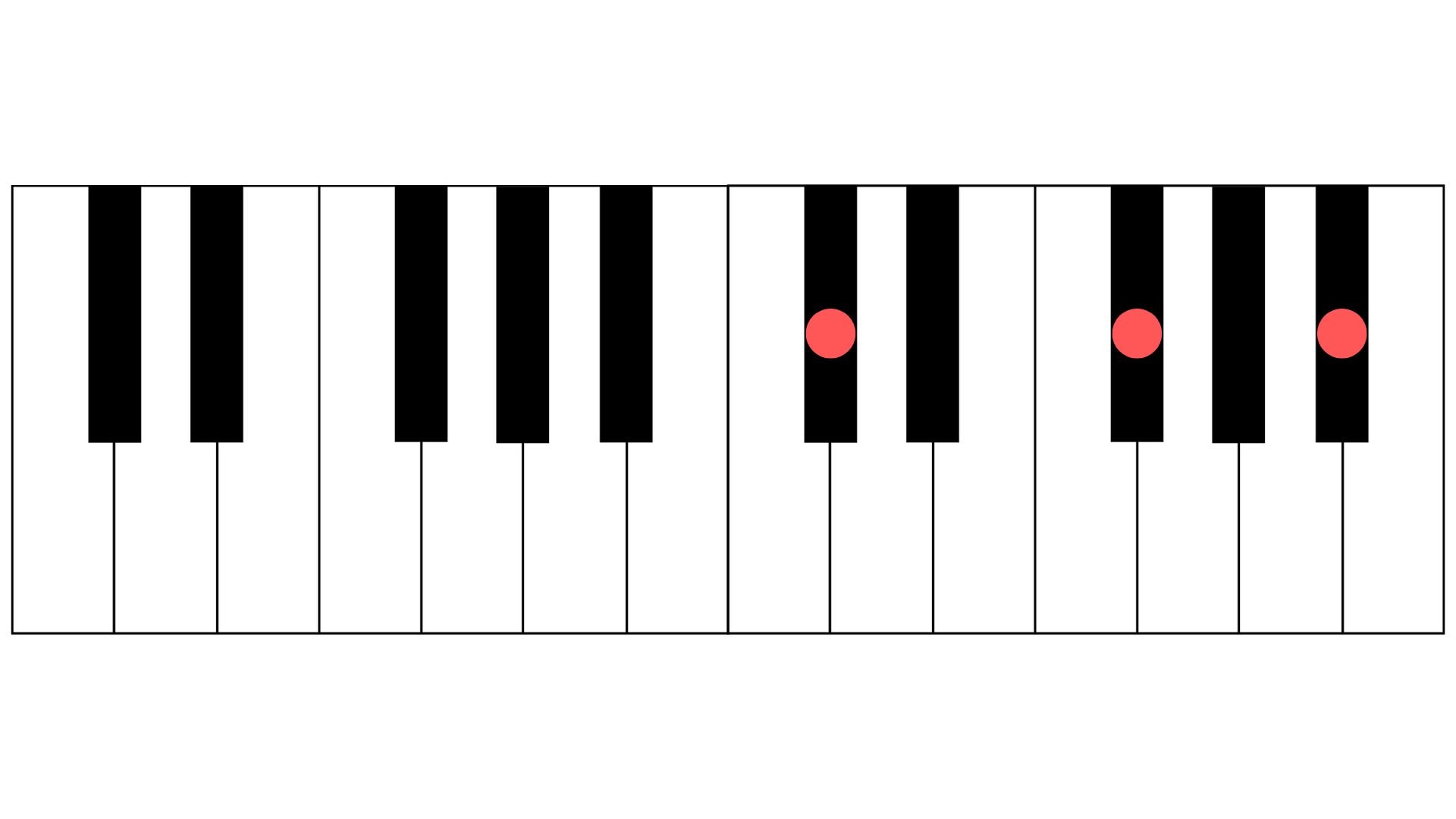
-
Inversions allow for smoother voice leading and create more fluid chord progressions. When moving from one chord to another, inversions help minimize large jumps or leaps between chord tones. This makes it easier to play chords and contributes to a more seamless and connected sound, enhancing the overall musical flow.
-
The highest note of a chord is naturally more noticeable to the human ear, making it useful when selecting chord inversions for song beginnings or endings.
The root position chord provides a stable and solid sound, serving as a strong foundation for harmony. However, since the top note is the 5th of the scale, it may leave listeners with a sense of incompleteness or anticipation of further musical development.
The 1st inversion chord, with the top note being the tonic note of the key, is the most suitable inversion for concluding a song, establishing a new key center, or signaling the end of a piece.
The second inversion chord has a brighter and expansive sound, emphasizing the third note of the home key. It is a pleasant choice for both song beginnings and endings due to its emphasis on the chord's major tonality.


-
When playing a Gb major scale with your right hand on the piano, you can use the following finger pattern:
Gb - Ab - Bb - Cb - Db - Eb - F - Gb
2 3 4 1 2 3 1 2When playing a Gb major scale with your left hand on the piano, you can use the following finger pattern:
Gb - Ab - Bb - Cb - Db - Eb - F - Gb
4 3 2 1 3 2 1 2
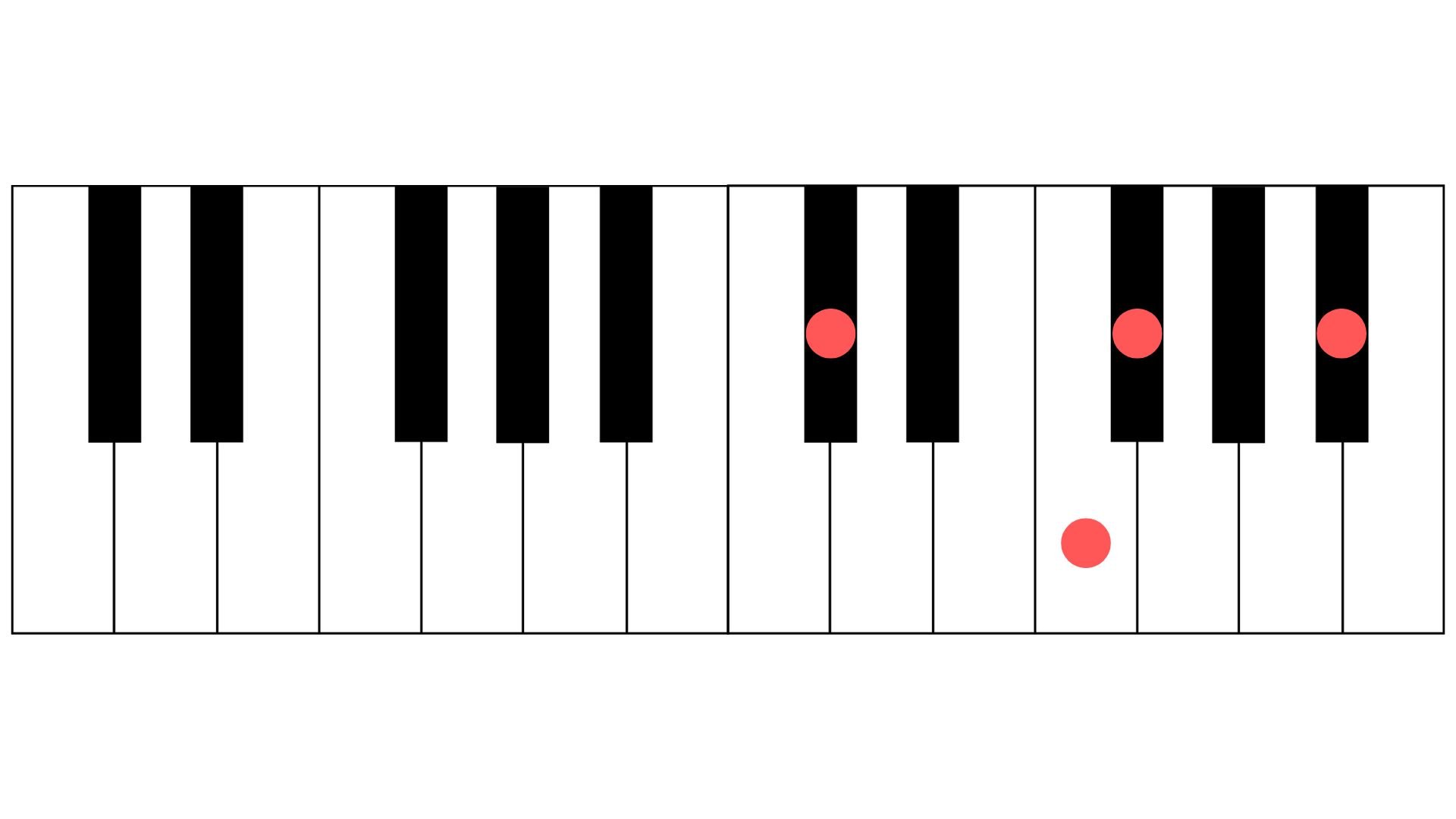

-
When playing 7th chords on the piano, it is important to understand that not all notes of the chord need to be played with one hand. You can disperse the notes between both the left hand and the right hand. Here is our recommended structure:
Left Hand - 1, 5, (optional 8)
Right Hand - 3, 5, 7, (optional 2 for flavor)
Note: This is just a recommendation. The notes do not have to be played specifically as shown. You can choose your own voicing.
-
Use the following mnemonic to help you remember:
Order of Sharps - Father Charles Goes Down And Ends Battle
Order of Flats - Battle Ends And Down Goes Charles’ Father
Note: In both cases, the first letter of each word in the phrase corresponds to the order of sharps or flats.
-
The circle of fifths can help you determine key signatures by providing a visual representation of the relationships between different keys. Here's how you can use the circle of fifths to determine key signatures:
Start at the top: The top of the circle represents the key of C major or A minor, which has no sharps or flats in its key signature.
Moving clockwise: Moving clockwise around the circle, each key is a fifth higher than the previous one. As you move around the circle, each clockwise movement adds one sharp to the key signature. For example, the first key after C major is G major, which has one sharp (F#). The next key, D major, has two sharps (F# and C#), and so on. To know which notes are sharp, use the following mnemonic: Father Charles Goes Down And Ends Battle.
Moving counter-clockwise: If you move counterclockwise from C major, each key is a fourth lower than the previous one. As you move around the circle, each movement adds one flat to the key signature. For example, the first key after C major is F major, which has 1 flat (Bb). Followed by Bb major (Bb, Eb), and then Eb major (Bb, Eb, Ab), and so on. To know which notes are flat, use the previous mnemonic but in reverse: Battle Ends And Down Goes Charles’ Father.
Note: Major keys and their relative minor keys share the same key signature. For example, C major and A minor have no sharps or flats, while G major and E minor have one sharp (F#), and so on.
Gb Key Signature
6 Flats: Bb Eb Ab Db Gb Cb
Order of Sharps: F C G D A E B
Order of Flats: B E A D G C F
-
Learning the intervals in a major scale is important because it helps you:
Enhance familiarity with specific key signatures.
Build chords by understanding the intervallic relationships.
Transpose music to different keys accurately.
Improvise melodies more fluently by navigating intervals.
Understand music theory concepts like scales, modes, and chord progressions.
-
The perfect intervals consist of the unison (P1), fourth (P4), fifth (P5), and octave (P8). They are highly stable, possessing a strong, pure, and distinct sound. These intervals are often associated with resolution and stability, contributing to consonance and harmony in harmonic contexts.
On the other hand, the major intervals comprise the major 2nd (M2), major 3rd (M3), major 6th (M6), and major 7th (M7). They are not referred to as “perfect” because they are the only intervals that can be lowered to create "minor" intervals. For instance, a major third can be lowered to become a minor 3rd. In contrast, if you were to lower perfect intervals, they would become major intervals. For example, if you lower a perfect 4th, it becomes a major third. The exception to this rule is the perfect 5th, which becomes a diminished 5th when lowered, not a minor 5th.
-
Practice singing or playing the intervals of a major scale without relying on a reference pitch. For example, play the first note of the scale, and then sing or play the second note using the correct interval (e.g., a major second). Continue this exercise for each subsequent note in the scale. Here are some reference points from familiar melodies to help you:
Major 2nd: Happy Birthday
Major 3rd: When the Saints Go Marching In
Perfect 4th: Amazing Grace
Perfect 5th: Star Wars (Main Theme)
Major 6th: My Bonnie Lies Over the Ocean
Major 7th: Take On Me
Perfect 8th: Somewhere Over the Rainbow
-
To remember which diatonic 7th chords are major and minor within a key, you can use the following pattern:
Major 7 - minor 7 - minor 7 - Major 7 - Dominant 7 - minor 7 - half diminished
M7 m7 m7 M7 7 m7 ø7
1 2 3 4 5 6 7Note: This pattern is consistent in all key signatures, no matter which key you choose to play in.
-
The term "dominant" signifies that the chord is built on the fifth degree of the major scale, while the "7" indicates a lowered seventh interval from the root note of the chord, not the 7th interval of the home key.
The dominant 7 chord has a specific interval structure, consisting of a major third, perfect fifth, and lowered seventh (minor seventh). This combination creates a distinct sound, generating a strong sense of tension that seeks resolution to the 1 chord.
The reason for lowering the 7th of the chord is to ensure all notes adhere to the key signature of the home key. In the key of C major, for instance, the dominant chord is the fifth note (G), which forms a G major chord (G-B-D). Adding a seventh transforms it into a dominant 7th chord (G-B-D-F). The lowered seventh occurs because the key signature of the G chord includes an F#, whereas the home key's key signature requires it to be lowered to an F natural (a regular F) due to C having no sharps or flats.
-
Half Diminished 7th Chord (ø7):
Interval Structure: A half diminished 7th chord consists of a root, a minor third, a diminished fifth, and a minor seventh.
Symbol: The symbol used to denote a half diminished 7th chord is "ø7" or "-7(b5)".
Example: In the key of C major, the half diminished 7th chord built on the seventh degree (Bø7) would contain the notes B-D-F-A.
Diminished 7th Chord (°7):
Interval Structure: A diminished 7th chord consists of a root, a minor third, a diminished fifth, and a diminished seventh. It is essentially a stack of minor thirds.
Symbol: The symbol used to denote a diminished 7th chord is "dim7" or °7.
Example: In the key of C major, the diminished 7th chord built on the seventh degree (Bdim7) would contain the notes B-D-F-Ab.
Note: The diminished 7th chord is known for its symmetrical structure, as each interval between its notes is a minor third. It creates a highly dissonant and unresolved sound and can be used as a passing chord or for chromatic movement in chord progressions.
-
To remember which diatonic chords are major and minor within a key, you can use the following pattern:
Major - minor - minor - Major - Major - minor - diminished
M m m M M m d
1 2 3 4 5 6 7Note: This pattern is consistent in all key signatures. In other words, the 1 chord is always major, the 2 chord is always minor, the 3 chord is always minor, and so on.
-
The Nashville Number System is a method of music notation that uses numbers to represent the chords and their relationships within a key. It is commonly used in the music industry–particularly in Nashville, Tennessee, hence its name–and is very common within worship teams. The reason why it is used is because it is the most flexible and efficient way to communicate chord progressions and harmonic structures in various keys without relying on specific chord names.
In the Nashville Number System, the numbers correspond to chords built on specific scale degrees of the major scale. Here’s how the system works for diatonic chords:
Chords 1, 4, 5 are always major chords.
Chords 2, 3, 6 are always minor chords.
The 7 chord is always diminished.
-
The Roman numeral system in diatonic chords is a way to represent chords based on their position within a major or minor key. It provides a standardized method to notate chords regardless of the key in which they are used. Here's how the Roman numeral system works for diatonic chords:
Uppercase Roman numerals (I, IV, V) represent major chords.
Lowercase Roman numerals (ii, iii, vi) represent minor chords.
A lowercase Roman numeral with a degree symbol (vii°) represents a diminished chord.
G Major Scale
G A B C D E F# G
Scale Pattern: T - T - S - T - T - T - S
-
All major scales consist of eight notes that follow a specific pattern of tones (T) and semitones (S). A tone (also known as a whole step) corresponds to a two-fret distance on a guitar or a two-key distance on a piano, while a semitone (also known as a half step) corresponds to a one-fret distance on a guitar or a one-key distance on a piano. The formula is as follows:
T - T - S - T - T - T - S
Using the G major scale as an example, we apply the tone (T) or semitone (S) pattern starting from the note G:
G - A - B - C - D - E - F# - G
^ ^ ^ ^ ^ ^ ^
T T S T T T SBy following this pattern, you can construct major scales in any key using tones (T) and semitones (S).
G Major Diatonic Chords
“Diatonic” means “Within the key.” Below are the chords that naturally belong to the key of G major, without any chromatic alteration.
Common major chord symbols: M, maj, +, △ Common minor chord symbols: m, min, -
Chord Type
Nash. #
Rom. #
Chord
Notes
Chord Type
Nash. #
Rom. #
Chord
Notes
Major
1
I
G
G B D
minor
2m
ii
Am
A C E
minor
3m
iii
Bm
B D F#
Major
4
IV
C
C E G
Major
5
V
D
D F# A
minor
6m
vi
Em
E G B
diminished
7°
vii°
F#dim
F# A C
G Major Diatonic 7th Chords
These are the same as above, but in the form of 7th chords.
Common major chord symbols: M7, maj7, +7, △7 Common minor chord symbols: m7, min7, -7
Major 7
1
Imaj7
Gmaj7
G B D F#
minor 7
2m7
ii7
Am7
A C E G
minor 7
3m7
iii7
Bm7
B D F# A
Major 7
4
IVmaj7
Cmaj7
C E G B
Dominant 7*
5
V7
D7
D F# A C
minor 7
6m
vi7
Em7
E G B D
half dim 7*
7ø
viiø7
F#ø7
F# A C E
G Major Intervals
“Interval” refers to the distance between two notes. Below are the scale degrees and intervals in the key of A Major.
Major 2nd
A
Major 3rd
B
Perfect 4th
C
Perfect 5th
D
Major 6th
E
Major 7th
F#
Octave
G
-
To remember which diatonic chords are major and minor within a key, you can use the following pattern:
Major - minor - minor - Major - Major - minor - diminished
M m m M M m d
1 2 3 4 5 6 7Note: This pattern is consistent in all key signatures. In other words, the 1 chord is always major, the 2 chord is always minor, the 3 chord is always minor, and so on.
-
The Nashville Number System is a method of music notation that uses numbers to represent the chords and their relationships within a key. It is commonly used in the music industry–particularly in Nashville, Tennessee, hence its name–and is very common within worship teams. The reason why it is used is because it is the most flexible and efficient way to communicate chord progressions and harmonic structures in various keys without relying on specific chord names.
In the Nashville Number System, the numbers correspond to chords built on specific scale degrees of the major scale. Here’s how the system works for diatonic chords:
Chords 1, 4, 5 are always major chords.
Chords 2, 3, 6 are always minor chords.
The 7 chord is always diminished.
-
The Roman numeral system in diatonic chords is a way to represent chords based on their position within a major or minor key. It provides a standardized method to notate chords regardless of the key in which they are used. Here's how the Roman numeral system works for diatonic chords:
Uppercase Roman numerals (I, IV, V) represent major chords.
Lowercase Roman numerals (ii, iii, vi) represent minor chords.
A lowercase Roman numeral with a degree symbol (vii°) represents a diminished chord.
Unison
G
G Major Chord Inversions
“Inversion” describes the relationship of a triad’s lowest note to the other notes in the chord.
Choosing the right inversion will help to smooth out motion from chord to chord.
Root
G B D
1st Inversion
B D G
2nd Inversion
D G B
G Major 7th Chord Inversions
“Inversion” describes the relationship of a chord’s lowest notes to the other notes in the chord.
It is common for the left hand to play octaves or fifths, while the right hand plays the chord in part or in full.
Root
G B D F#
1st Inversion
B D F# G
2nd Inversion
D F# G B
3rd Inversion
F# G B D

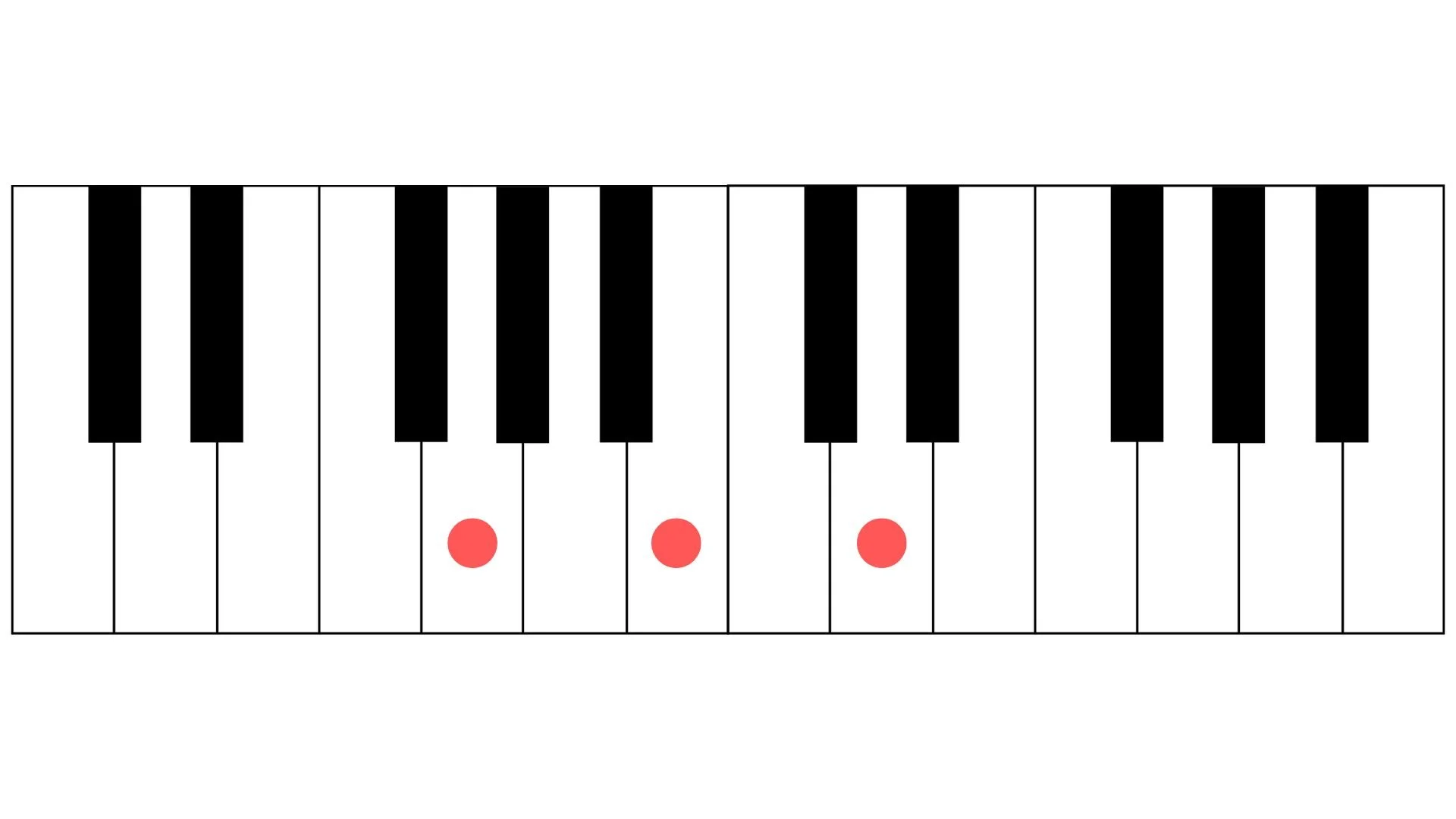

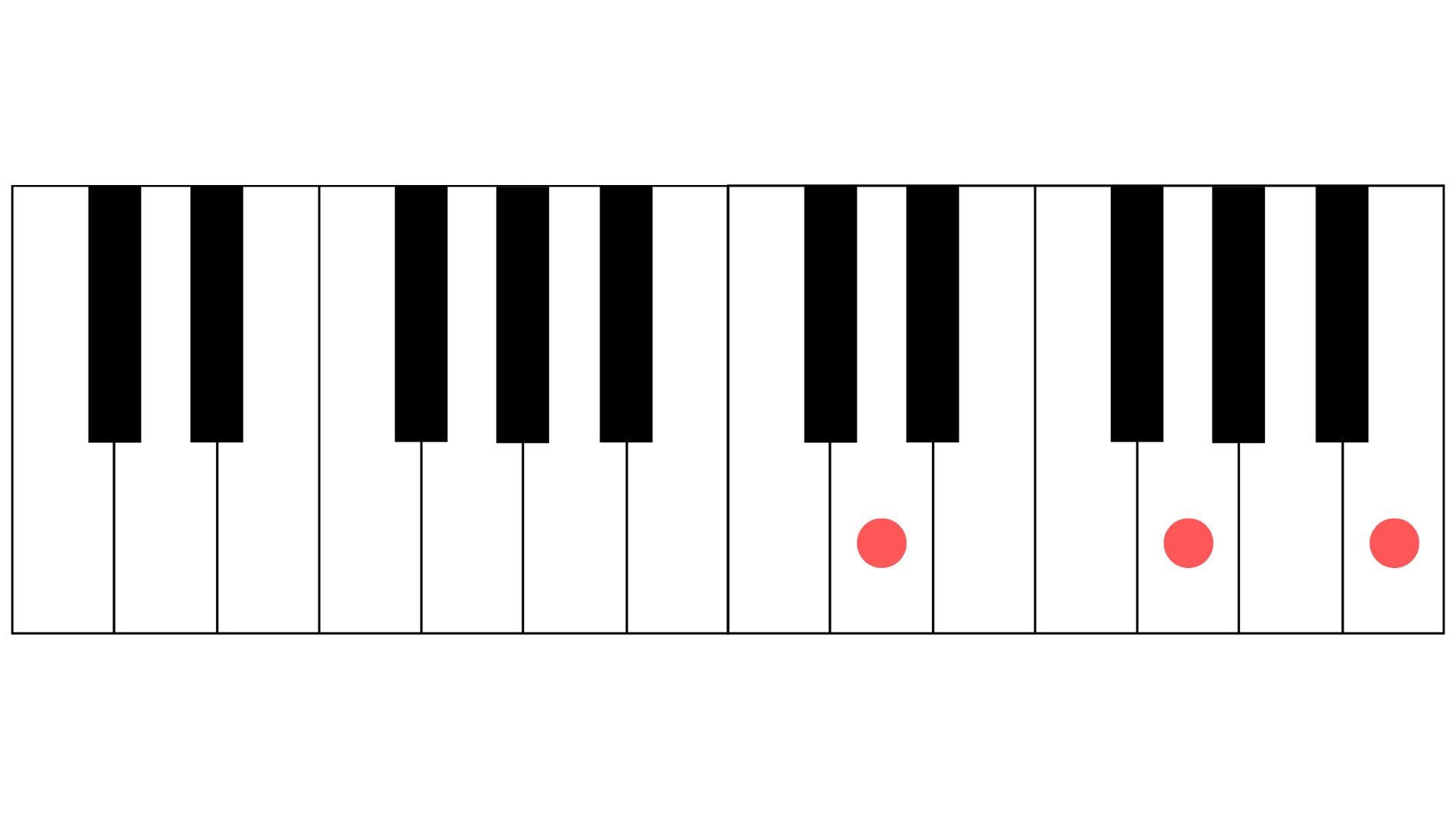
-
Inversions allow for smoother voice leading and create more fluid chord progressions. When moving from one chord to another, inversions help minimize large jumps or leaps between chord tones. This makes it easier to play chords and contributes to a more seamless and connected sound, enhancing the overall musical flow.
-
The highest note of a chord is naturally more noticeable to the human ear, making it useful when selecting chord inversions for song beginnings or endings.
The root position chord provides a stable and solid sound, serving as a strong foundation for harmony. However, since the top note is the 5th of the scale, it may leave listeners with a sense of incompleteness or anticipation of further musical development.
The 1st inversion chord, with the top note being the tonic note of the key, is the most suitable inversion for concluding a song, establishing a new key center, or signaling the end of a piece.
The second inversion chord has a brighter and expansive sound, emphasizing the third note of the home key. It is a pleasant choice for both song beginnings and endings due to its emphasis on the chord's major tonality.


-
When playing a G major scale with your right hand on the piano, you can use the following finger pattern:
G - A - B - C - D - E - F# - G
1 2 3 1 2 3 4 5When playing a G major scale with your left hand on the piano, you can use the following finger pattern:
G - A - B - C - D - E - F# - G
5 4 3 2 1 3 2 1


-
When playing 7th chords on the piano, it is important to understand that not all notes of the chord need to be played with one hand. You can disperse the notes between both the left hand and the right hand. Here is our recommended structure:
Left Hand - 1, 5, (optional 8)
Right Hand - 3, 5, 7, (optional 2 for flavor)
Note: This is just a recommendation. The notes do not have to be played specifically as shown. You can choose your own voicing.
-
Use the following mnemonic to help you remember:
Order of Sharps - Father Charles Goes Down And Ends Battle
Order of Flats - Battle Ends And Down Goes Charles’ Father
Note: In both cases, the first letter of each word in the phrase corresponds to the order of sharps or flats.
-
The circle of fifths can help you determine key signatures by providing a visual representation of the relationships between different keys. Here's how you can use the circle of fifths to determine key signatures:
Start at the top: The top of the circle represents the key of C major or A minor, which has no sharps or flats in its key signature.
Moving clockwise: Moving clockwise around the circle, each key is a fifth higher than the previous one. As you move around the circle, each clockwise movement adds one sharp to the key signature. For example, the first key after C major is G major, which has one sharp (F#). The next key, D major, has two sharps (F# and C#), and so on. To know which notes are sharp, use the following mnemonic: Father Charles Goes Down And Ends Battle.
Moving counter-clockwise: If you move counterclockwise from C major, each key is a fourth lower than the previous one. As you move around the circle, each movement adds one flat to the key signature. For example, the first key after C major is F major, which has 1 flat (Bb). Followed by Bb major (Bb, Eb), and then Eb major (Bb, Eb, Ab), and so on. To know which notes are flat, use the previous mnemonic but in reverse: Battle Ends And Down Goes Charles’ Father.
Note: Major keys and their relative minor keys share the same key signature. For example, C major and A minor have no sharps or flats, while G major and E minor have one sharp (F#), and so on.
G Key Signature
1 Sharp: F#
Order of Sharps: F C G D A E B
Order of Flats: B E A D G C F
-
Learning the intervals in a major scale is important because it helps you:
Enhance familiarity with specific key signatures.
Build chords by understanding the intervallic relationships.
Transpose music to different keys accurately.
Improvise melodies more fluently by navigating intervals.
Understand music theory concepts like scales, modes, and chord progressions.
-
The perfect intervals consist of the unison (P1), fourth (P4), fifth (P5), and octave (P8). They are highly stable, possessing a strong, pure, and distinct sound. These intervals are often associated with resolution and stability, contributing to consonance and harmony in harmonic contexts.
On the other hand, the major intervals comprise the major 2nd (M2), major 3rd (M3), major 6th (M6), and major 7th (M7). They are not referred to as “perfect” because they are the only intervals that can be lowered to create "minor" intervals. For instance, a major third can be lowered to become a minor 3rd. In contrast, if you were to lower perfect intervals, they would become major intervals. For example, if you lower a perfect 4th, it becomes a major third. The exception to this rule is the perfect 5th, which becomes a diminished 5th when lowered, not a minor 5th.
-
Practice singing or playing the intervals of a major scale without relying on a reference pitch. For example, play the first note of the scale, and then sing or play the second note using the correct interval (e.g., a major second). Continue this exercise for each subsequent note in the scale. Here are some reference points from familiar melodies to help you:
Major 2nd: Happy Birthday
Major 3rd: When the Saints Go Marching In
Perfect 4th: Amazing Grace
Perfect 5th: Star Wars (Main Theme)
Major 6th: My Bonnie Lies Over the Ocean
Major 7th: Take On Me
Perfect 8th: Somewhere Over the Rainbow
-
To remember which diatonic 7th chords are major and minor within a key, you can use the following pattern:
Major 7 - minor 7 - minor 7 - Major 7 - Dominant 7 - minor 7 - half diminished
M7 m7 m7 M7 7 m7 ø7
1 2 3 4 5 6 7Note: This pattern is consistent in all key signatures, no matter which key you choose to play in.
-
The term "dominant" signifies that the chord is built on the fifth degree of the major scale, while the "7" indicates a lowered seventh interval from the root note of the chord, not the 7th interval of the home key.
The dominant 7 chord has a specific interval structure, consisting of a major third, perfect fifth, and lowered seventh (minor seventh). This combination creates a distinct sound, generating a strong sense of tension that seeks resolution to the 1 chord.
The reason for lowering the 7th of the chord is to ensure all notes adhere to the key signature of the home key. In the key of C major, for instance, the dominant chord is the fifth note (G), which forms a G major chord (G-B-D). Adding a seventh transforms it into a dominant 7th chord (G-B-D-F). The lowered seventh occurs because the key signature of the G chord includes an F#, whereas the home key's key signature requires it to be lowered to an F natural (a regular F) due to C having no sharps or flats.
-
Half Diminished 7th Chord (ø7):
Interval Structure: A half diminished 7th chord consists of a root, a minor third, a diminished fifth, and a minor seventh.
Symbol: The symbol used to denote a half diminished 7th chord is "ø7" or "-7(b5)".
Example: In the key of C major, the half diminished 7th chord built on the seventh degree (Bø7) would contain the notes B-D-F-A.
Diminished 7th Chord (°7):
Interval Structure: A diminished 7th chord consists of a root, a minor third, a diminished fifth, and a diminished seventh. It is essentially a stack of minor thirds.
Symbol: The symbol used to denote a diminished 7th chord is "dim7" or °7.
Example: In the key of C major, the diminished 7th chord built on the seventh degree (Bdim7) would contain the notes B-D-F-Ab.
Note: The diminished 7th chord is known for its symmetrical structure, as each interval between its notes is a minor third. It creates a highly dissonant and unresolved sound and can be used as a passing chord or for chromatic movement in chord progressions.
Ab Major Scale
Ab Bb C Db Eb F G Ab
Scale Pattern: T - T - S - T - T - T - S
-
All major scales consist of eight notes that follow a specific pattern of tones (T) and semitones (S). A tone (also known as a whole step) corresponds to a two-fret distance on a guitar or a two-key distance on a piano, while a semitone (also known as a half step) corresponds to a one-fret distance on a guitar or a one-key distance on a piano. The formula is as follows:
T - T - S - T - T - T - S
Using the Ab major scale as an example, we apply the tone (T) or semitone (S) pattern starting from the note Ab:
Ab - Bb - C - Db - Eb - F - G - Ab
^ ^ ^ ^ ^ ^ ^
T T S T T T SBy following this pattern, you can construct major scales in any key using tones (T) and semitones (S).
Ab Major Diatonic Chords
“Diatonic” means “Within the key.” Below are the chords that naturally belong to the key of Ab major, without any chromatic alteration.
Common major chord symbols: M, maj, +, △ Common minor chord symbols: m, min, -
Chord Type
Nash. #
Rom. #
Chord
Notes
Chord Type
Nash. #
Rom. #
Chord
Notes
Major
1
I
Ab
Ab C Eb
minor
2m
ii
Bbm
Bb Db F
minor
3m
iii
Cm
C Eb G
Major
4
IV
Db
Db F Ab
Major
5
V
Eb
Eb G Bb
minor
6m
vi
Fm
F Ab C
diminished
7°
vii°
Gdim
G Bb Db
Ab Major Diatonic 7th Chords
These are the same as above, but in the form of 7th chords.
Common major chord symbols: M7, maj7, +7, △7 Common minor chord symbols: m7, min7, -7
Major 7
1
Imaj7
AbM7
Ab C Eb G
minor 7
2m7
ii7
Bbm7
Bb Db F Ab
minor 7
3m7
iii7
Cm7
C Eb G Bb
Major 7
4
IVmaj7
DbM7
Db F Ab C
Dominant 7*
5
V7
Eb7
Eb G Bb Db
minor 7
6m
vi7
Fm7
F Ab C Eb
half dim 7*
7ø
viiø7
Gø7
G Bb Db F
Ab Major Intervals
“Interval” refers to the distance between two notes. Below are the scale degrees and intervals in the key of Ab Major.
Major 2nd
Bb
Major 3rd
C
Perfect 4th
Db
Perfect 5th
Eb
Major 6th
F
Major 7th
G
Octave
Ab
Unison
Ab
Ab Major Chord Inversions
“Inversion” describes the relationship of a triad’s lowest note to the other notes in the chord.
Choosing the right inversion will help to smooth out motion from chord to chord.
Root
Ab C Eb
1st Inversion
C Eb Ab
2nd Inversion
Eb Ab C
Ab Major 7th Chord Inversions
“Inversion” describes the relationship of a chord’s lowest notes to the other notes in the chord.
It is common for the left hand to play octaves or fifths, while the right hand plays the chord in part or in full.
Root
Ab C Eb G
1st Inversion
C Eb G Ab
2nd Inversion
Eb G Ab C
3rd Inversion
G Ab C Eb


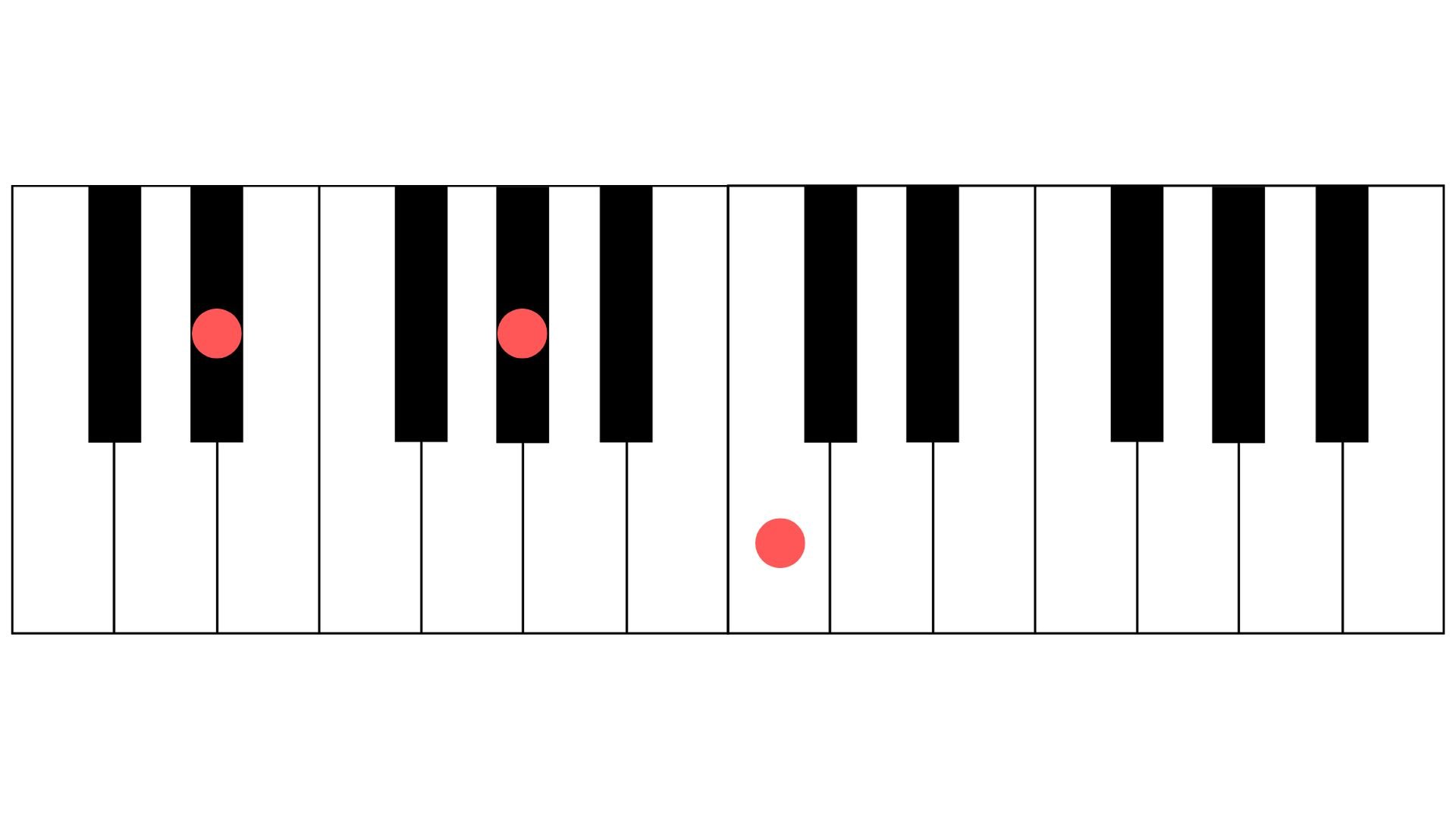
-
Inversions allow for smoother voice leading and create more fluid chord progressions. When moving from one chord to another, inversions help minimize large jumps or leaps between chord tones. This makes it easier to play chords and contributes to a more seamless and connected sound, enhancing the overall musical flow.
-
The highest note of a chord is naturally more noticeable to the human ear, making it useful when selecting chord inversions for song beginnings or endings.
The root position chord provides a stable and solid sound, serving as a strong foundation for harmony. However, since the top note is the 5th of the scale, it may leave listeners with a sense of incompleteness or anticipation of further musical development.
The 1st inversion chord, with the top note being the tonic note of the key, is the most suitable inversion for concluding a song, establishing a new key center, or signaling the end of a piece.
The second inversion chord has a brighter and expansive sound, emphasizing the third note of the home key. It is a pleasant choice for both song beginnings and endings due to its emphasis on the chord's major tonality.


-
When playing an Ab major scale with your right hand on the piano, you can use the following finger pattern:
Ab - Bb - C - Db - Eb - F - G - Ab
2 3 1 2 3 1 2 3When playing an Ab major scale with your left hand on the piano, you can use the following finger pattern:
Ab - Bb - C - Db - Eb - F - G - Ab
3 2 1 4 3 2 1 2


-
When playing 7th chords on the piano, it is important to understand that not all notes of the chord need to be played with one hand. You can disperse the notes between both the left hand and the right hand. Here is our recommended structure:
Left Hand - 1, 5, (optional 8)
Right Hand - 3, 5, 7, (optional 2 for flavor)
Note: This is just a recommendation. The notes do not have to be played specifically as shown. You can choose your own voicing.
-
Use the following mnemonic to help you remember:
Order of Sharps - Father Charles Goes Down And Ends Battle
Order of Flats - Battle Ends And Down Goes Charles’ Father
Note: In both cases, the first letter of each word in the phrase corresponds to the order of sharps or flats.
-
The circle of fifths can help you determine key signatures by providing a visual representation of the relationships between different keys. Here's how you can use the circle of fifths to determine key signatures:
Start at the top: The top of the circle represents the key of C major or A minor, which has no sharps or flats in its key signature.
Moving clockwise: Moving clockwise around the circle, each key is a fifth higher than the previous one. As you move around the circle, each clockwise movement adds one sharp to the key signature. For example, the first key after C major is G major, which has one sharp (F#). The next key, D major, has two sharps (F# and C#), and so on. To know which notes are sharp, use the following mnemonic: Father Charles Goes Down And Ends Battle.
Moving counter-clockwise: If you move counterclockwise from C major, each key is a fourth lower than the previous one. As you move around the circle, each movement adds one flat to the key signature. For example, the first key after C major is F major, which has 1 flat (Bb). Followed by Bb major (Bb, Eb), and then Eb major (Bb, Eb, Ab), and so on. To know which notes are flat, use the previous mnemonic but in reverse: Battle Ends And Down Goes Charles’ Father.
Note: Major keys and their relative minor keys share the same key signature. For example, C major and A minor have no sharps or flats, while G major and E minor have one sharp (F#), and so on.
Ab Key Signature
4 Flats: Bb Eb Ab Db
Order of Sharps: F C G D A E B
Order of Flats: B E A D G C F
-
To remember which diatonic chords are major and minor within a key, you can use the following pattern:
Major - minor - minor - Major - Major - minor - diminished
M m m M M m d
1 2 3 4 5 6 7Note: This pattern is consistent in all key signatures. In other words, the 1 chord is always major, the 2 chord is always minor, the 3 chord is always minor, and so on.
-
The Nashville Number System is a method of music notation that uses numbers to represent the chords and their relationships within a key. It is commonly used in the music industry–particularly in Nashville, Tennessee, hence its name–and is very common within worship teams. The reason why it is used is because it is the most flexible and efficient way to communicate chord progressions and harmonic structures in various keys without relying on specific chord names.
In the Nashville Number System, the numbers correspond to chords built on specific scale degrees of the major scale. Here’s how the system works for diatonic chords:
Chords 1, 4, 5 are always major chords.
Chords 2, 3, 6 are always minor chords.
The 7 chord is always diminished.
-
The Roman numeral system in diatonic chords is a way to represent chords based on their position within a major or minor key. It provides a standardized method to notate chords regardless of the key in which they are used. Here's how the Roman numeral system works for diatonic chords:
Uppercase Roman numerals (I, IV, V) represent major chords.
Lowercase Roman numerals (ii, iii, vi) represent minor chords.
A lowercase Roman numeral with a degree symbol (vii°) represents a diminished chord.
-
Learning the intervals in a major scale is important because it helps you:
Enhance familiarity with specific key signatures.
Build chords by understanding the intervallic relationships.
Transpose music to different keys accurately.
Improvise melodies more fluently by navigating intervals.
Understand music theory concepts like scales, modes, and chord progressions.
-
The perfect intervals consist of the unison (P1), fourth (P4), fifth (P5), and octave (P8). They are highly stable, possessing a strong, pure, and distinct sound. These intervals are often associated with resolution and stability, contributing to consonance and harmony in harmonic contexts.
On the other hand, the major intervals comprise the major 2nd (M2), major 3rd (M3), major 6th (M6), and major 7th (M7). They are not referred to as “perfect” because they are the only intervals that can be lowered to create "minor" intervals. For instance, a major third can be lowered to become a minor 3rd. In contrast, if you were to lower perfect intervals, they would become major intervals. For example, if you lower a perfect 4th, it becomes a major third. The exception to this rule is the perfect 5th, which becomes a diminished 5th when lowered, not a minor 5th.
-
Practice singing or playing the intervals of a major scale without relying on a reference pitch. For example, play the first note of the scale, and then sing or play the second note using the correct interval (e.g., a major second). Continue this exercise for each subsequent note in the scale. Here are some reference points from familiar melodies to help you:
Major 2nd: Happy Birthday
Major 3rd: When the Saints Go Marching In
Perfect 4th: Amazing Grace
Perfect 5th: Star Wars (Main Theme)
Major 6th: My Bonnie Lies Over the Ocean
Major 7th: Take On Me
Perfect 8th: Somewhere Over the Rainbow
-
To remember which diatonic 7th chords are major and minor within a key, you can use the following pattern:
Major 7 - minor 7 - minor 7 - Major 7 - Dominant 7 - minor 7 - half diminished
M7 m7 m7 M7 7 m7 ø7
1 2 3 4 5 6 7Note: This pattern is consistent in all key signatures, no matter which key you choose to play in.
-
The term "dominant" signifies that the chord is built on the fifth degree of the major scale, while the "7" indicates a lowered seventh interval from the root note of the chord, not the 7th interval of the home key.
The dominant 7 chord has a specific interval structure, consisting of a major third, perfect fifth, and lowered seventh (minor seventh). This combination creates a distinct sound, generating a strong sense of tension that seeks resolution to the 1 chord.
The reason for lowering the 7th of the chord is to ensure all notes adhere to the key signature of the home key. In the key of C major, for instance, the dominant chord is the fifth note (G), which forms a G major chord (G-B-D). Adding a seventh transforms it into a dominant 7th chord (G-B-D-F). The lowered seventh occurs because the key signature of the G chord includes an F#, whereas the home key's key signature requires it to be lowered to an F natural (a regular F) due to C having no sharps or flats.
-
Half Diminished 7th Chord (ø7):
Interval Structure: A half diminished 7th chord consists of a root, a minor third, a diminished fifth, and a minor seventh.
Symbol: The symbol used to denote a half diminished 7th chord is "ø7" or "-7(b5)".
Example: In the key of C major, the half diminished 7th chord built on the seventh degree (Bø7) would contain the notes B-D-F-A.
Diminished 7th Chord (°7):
Interval Structure: A diminished 7th chord consists of a root, a minor third, a diminished fifth, and a diminished seventh. It is essentially a stack of minor thirds.
Symbol: The symbol used to denote a diminished 7th chord is "dim7" or °7.
Example: In the key of C major, the diminished 7th chord built on the seventh degree (Bdim7) would contain the notes B-D-F-Ab.
Note: The diminished 7th chord is known for its symmetrical structure, as each interval between its notes is a minor third. It creates a highly dissonant and unresolved sound and can be used as a passing chord or for chromatic movement in chord progressions.
A Major Scale
A B C# D E F# G# A
Scale Pattern: T - T - S - T - T - T - S
-
All major scales consist of eight notes that follow a specific pattern of tones (T) and semitones (S). A tone (also known as a whole step) corresponds to a two-fret distance on a guitar or a two-key distance on a piano, while a semitone (also known as a half step) corresponds to a one-fret distance on a guitar or a one-key distance on a piano. The formula is as follows:
T - T - S - T - T - T - S
Using the A major scale as an example, we apply the tone (T) or semitone (S) pattern starting from the note A:
A - B - C# - D - E - F# - G# - A
^ ^ ^ ^ ^ ^ ^
T T S T T T SBy following this pattern, you can construct major scales in any key using tones (T) and semitones (S).
A Major Diatonic Chords
“Diatonic” means “Within the key.” Below are the chords that naturally belong to the key of A major, without any chromatic alteration.
Common major chord symbols: M, maj, +, △ Common minor chord symbols: m, min, -
Chord Type
Nash. #
Rom. #
Chord
Notes
Chord Type
Nash. #
Rom. #
Chord
Notes
Major
1
I
A
A C# E
minor
2m
ii
Bm
B D F#
minor
3m
iii
C#m
C# E G#
Major
4
IV
D
D F# A
Major
5
V
E
E G# B
minor
6m
vi
F#m
F# A C#
diminished
7°
vii°
G#dim
G# B D
A Major Diatonic 7th Chords
These are the same as above, but in the form of 7th chords.
Common major chord symbols: M7, maj7, +7, △7 Common minor chord symbols: m7, min7, -7
Major 7
1
Imaj7
Amaj7
A C# E G#
minor 7
2m7
ii7
Bm7
B D F# A
minor 7
3m7
iii7
C#m7
C# E G# B
Major 7
4
IVmaj7
Dmaj7
D F# A C#
Dominant 7*
5
V7
E7
E G# B D
minor 7
6m
vi7
F#m7
F# A C# E
half dim 7*
7ø
viiø7
G#ø7
G# B D F#
A Major Intervals
“Interval” refers to the distance between two notes. Below are the scale degrees and intervals in the key of A Major.
Major 2nd
B
Major 3rd
C#
Perfect 4th
D
Perfect 5th
E
Major 6th
F#
Major 7th
G#
Octave
A
-
To remember which diatonic chords are major and minor within a key, you can use the following pattern:
Major - minor - minor - Major - Major - minor - diminished
M m m M M m d
1 2 3 4 5 6 7Note: This pattern is consistent in all key signatures. In other words, the 1 chord is always major, the 2 chord is always minor, the 3 chord is always minor, and so on.
-
The Nashville Number System is a method of music notation that uses numbers to represent the chords and their relationships within a key. It is commonly used in the music industry–particularly in Nashville, Tennessee, hence its name–and is very common within worship teams. The reason why it is used is because it is the most flexible and efficient way to communicate chord progressions and harmonic structures in various keys without relying on specific chord names.
In the Nashville Number System, the numbers correspond to chords built on specific scale degrees of the major scale. Here’s how the system works for diatonic chords:
Chords 1, 4, 5 are always major chords.
Chords 2, 3, 6 are always minor chords.
The 7 chord is always diminished.
-
The Roman numeral system in diatonic chords is a way to represent chords based on their position within a major or minor key. It provides a standardized method to notate chords regardless of the key in which they are used. Here's how the Roman numeral system works for diatonic chords:
Uppercase Roman numerals (I, IV, V) represent major chords.
Lowercase Roman numerals (ii, iii, vi) represent minor chords.
A lowercase Roman numeral with a degree symbol (vii°) represents a diminished chord.
Unison
A
A Major Chord Inversions
“Inversion” describes the relationship of a triad’s lowest note to the other notes in the chord.
Choosing the right inversion will help to smooth out motion from chord to chord.
Root
A C# E
1st Inversion
C# E A
2nd Inversion
E A C#
A Major 7th Chord Inversions
“Inversion” describes the relationship of a chord’s lowest notes to the other notes in the chord.
It is common for the left hand to play octaves or fifths, while the right hand plays the chord in part or in full.
Root
A C# E G#
1st Inversion
C# E G# A
2nd Inversion
E G# A C#
3rd Inversion
G# A C# E
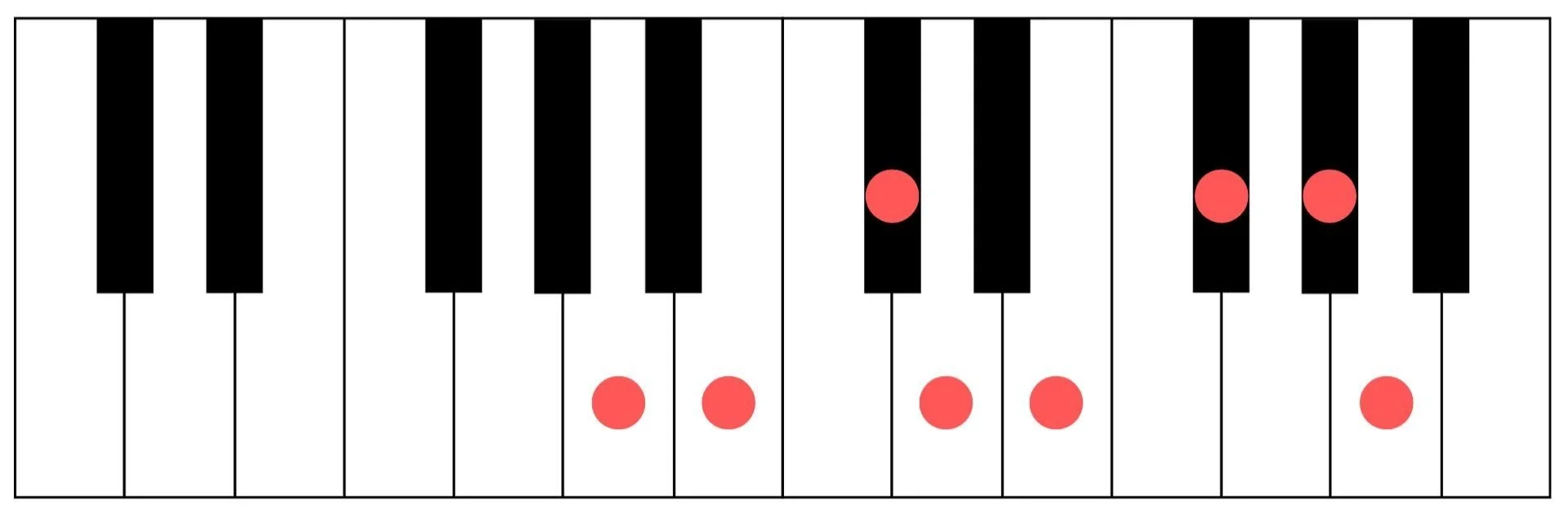


-
Inversions allow for smoother voice leading and create more fluid chord progressions. When moving from one chord to another, inversions help minimize large jumps or leaps between chord tones. This makes it easier to play chords and contributes to a more seamless and connected sound, enhancing the overall musical flow.
-
The highest note of a chord is naturally more noticeable to the human ear, making it useful when selecting chord inversions for song beginnings or endings.
The root position chord provides a stable and solid sound, serving as a strong foundation for harmony. However, since the top note is the 5th of the scale, it may leave listeners with a sense of incompleteness or anticipation of further musical development.
The 1st inversion chord, with the top note being the tonic note of the key, is the most suitable inversion for concluding a song, establishing a new key center, or signaling the end of a piece.
The second inversion chord has a brighter and expansive sound, emphasizing the third note of the home key. It is a pleasant choice for both song beginnings and endings due to its emphasis on the chord's major tonality.


-
When playing an A major scale with your right hand on the piano, you can use the following finger pattern:
A - B - C# - D - E - F# - G# - A
1 2 3 1 2 3 4 5When playing a A major scale with your left hand on the piano, you can use the following finger pattern:
A - B - C# - D - E - F# - G# - A
5 4 3 2 1 3 2 1


-
When playing 7th chords on the piano, it is important to understand that not all notes of the chord need to be played with one hand. You can disperse the notes between both the left hand and the right hand. Here is our recommended structure:
Left Hand - 1, 5, (optional 8)
Right Hand - 3, 5, 7, (optional 2 for flavor)
Note: This is just a recommendation. The notes do not have to be played specifically as shown. You can choose your own voicing.
-
Use the following mnemonic to help you remember:
Order of Sharps - Father Charles Goes Down And Ends Battle
Order of Flats - Battle Ends And Down Goes Charles’ Father
Note: In both cases, the first letter of each word in the phrase corresponds to the order of sharps or flats.
-
The circle of fifths can help you determine key signatures by providing a visual representation of the relationships between different keys. Here's how you can use the circle of fifths to determine key signatures:
Start at the top: The top of the circle represents the key of C major or A minor, which has no sharps or flats in its key signature.
Moving clockwise: Moving clockwise around the circle, each key is a fifth higher than the previous one. As you move around the circle, each clockwise movement adds one sharp to the key signature. For example, the first key after C major is G major, which has one sharp (F#). The next key, D major, has two sharps (F# and C#), and so on. To know which notes are sharp, use the following mnemonic: Father Charles Goes Down And Ends Battle.
Moving counter-clockwise: If you move counterclockwise from C major, each key is a fourth lower than the previous one. As you move around the circle, each movement adds one flat to the key signature. For example, the first key after C major is F major, which has 1 flat (Bb). Followed by Bb major (Bb, Eb), and then Eb major (Bb, Eb, Ab), and so on. To know which notes are flat, use the previous mnemonic but in reverse: Battle Ends And Down Goes Charles’ Father.
Note: Major keys and their relative minor keys share the same key signature. For example, C major and A minor have no sharps or flats, while G major and E minor have one sharp (F#), and so on.
A Key Signature
3 Sharps: F# C# G#
Order of Sharps: F C G D A E B
Order of Flats: B E A D G C F
-
Learning the intervals in a major scale is important because it helps you:
Enhance familiarity with specific key signatures.
Build chords by understanding the intervallic relationships.
Transpose music to different keys accurately.
Improvise melodies more fluently by navigating intervals.
Understand music theory concepts like scales, modes, and chord progressions.
-
The perfect intervals consist of the unison (P1), fourth (P4), fifth (P5), and octave (P8). They are highly stable, possessing a strong, pure, and distinct sound. These intervals are often associated with resolution and stability, contributing to consonance and harmony in harmonic contexts.
On the other hand, the major intervals comprise the major 2nd (M2), major 3rd (M3), major 6th (M6), and major 7th (M7). They are not referred to as “perfect” because they are the only intervals that can be lowered to create "minor" intervals. For instance, a major third can be lowered to become a minor 3rd. In contrast, if you were to lower perfect intervals, they would become major intervals. For example, if you lower a perfect 4th, it becomes a major third. The exception to this rule is the perfect 5th, which becomes a diminished 5th when lowered, not a minor 5th.
-
Practice singing or playing the intervals of a major scale without relying on a reference pitch. For example, play the first note of the scale, and then sing or play the second note using the correct interval (e.g., a major second). Continue this exercise for each subsequent note in the scale. Here are some reference points from familiar melodies to help you:
Major 2nd: Happy Birthday
Major 3rd: When the Saints Go Marching In
Perfect 4th: Amazing Grace
Perfect 5th: Star Wars (Main Theme)
Major 6th: My Bonnie Lies Over the Ocean
Major 7th: Take On Me
Perfect 8th: Somewhere Over the Rainbow
-
To remember which diatonic 7th chords are major and minor within a key, you can use the following pattern:
Major 7 - minor 7 - minor 7 - Major 7 - Dominant 7 - minor 7 - half diminished
M7 m7 m7 M7 7 m7 ø7
1 2 3 4 5 6 7Note: This pattern is consistent in all key signatures, no matter which key you choose to play in.
-
The term "dominant" signifies that the chord is built on the fifth degree of the major scale, while the "7" indicates a lowered seventh interval from the root note of the chord, not the 7th interval of the home key.
The dominant 7 chord has a specific interval structure, consisting of a major third, perfect fifth, and lowered seventh (minor seventh). This combination creates a distinct sound, generating a strong sense of tension that seeks resolution to the 1 chord.
The reason for lowering the 7th of the chord is to ensure all notes adhere to the key signature of the home key. In the key of C major, for instance, the dominant chord is the fifth note (G), which forms a G major chord (G-B-D). Adding a seventh transforms it into a dominant 7th chord (G-B-D-F). The lowered seventh occurs because the key signature of the G chord includes an F#, whereas the home key's key signature requires it to be lowered to an F natural (a regular F) due to C having no sharps or flats.
-
Half Diminished 7th Chord (ø7):
Interval Structure: A half diminished 7th chord consists of a root, a minor third, a diminished fifth, and a minor seventh.
Symbol: The symbol used to denote a half diminished 7th chord is "ø7" or "-7(b5)".
Example: In the key of C major, the half diminished 7th chord built on the seventh degree (Bø7) would contain the notes B-D-F-A.
Diminished 7th Chord (°7):
Interval Structure: A diminished 7th chord consists of a root, a minor third, a diminished fifth, and a diminished seventh. It is essentially a stack of minor thirds.
Symbol: The symbol used to denote a diminished 7th chord is "dim7" or °7.
Example: In the key of C major, the diminished 7th chord built on the seventh degree (Bdim7) would contain the notes B-D-F-Ab.
Note: The diminished 7th chord is known for its symmetrical structure, as each interval between its notes is a minor third. It creates a highly dissonant and unresolved sound and can be used as a passing chord or for chromatic movement in chord progressions.
Are you accessing this page from a mobile device? Unfortunately, this page can only be viewed on desktop.


The ultimate guide to understanding key signatures!
Learn how to identify keys and key signatures quickly and easily. Plus, download our key signature cheat sheets!